Post by : Avinab Raana
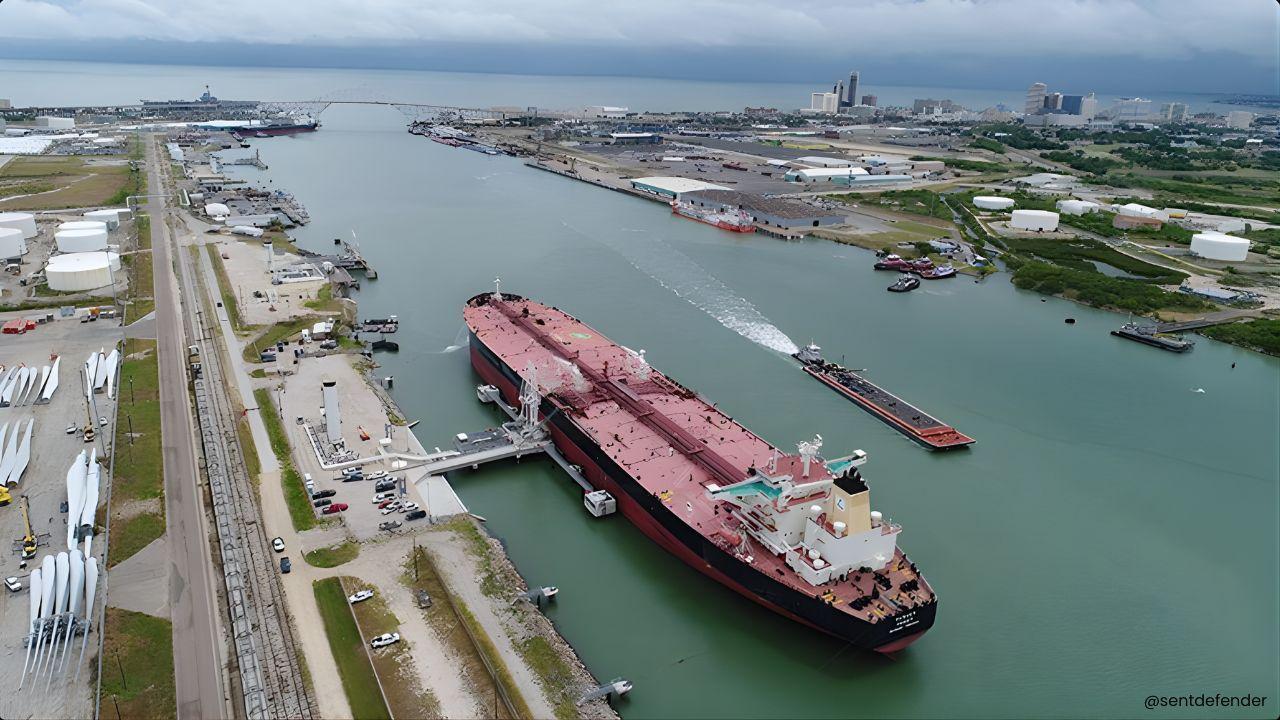
Photo : X / @sentdefender
A recent decision to allow foreign-flagged vessels to operate temporarily within U.S. domestic shipping routes has reignited debate across the maritime industry. The waiver, introduced to ease supply chain disruptions during a period of geopolitical tension, has raised concerns about its potential impact on the long-standing Jones Act framework.
The Jones Act has, for over a century, served as a cornerstone of U.S. maritime policy, requiring that goods transported between domestic ports be carried on American-built, owned, and crewed vessels. Designed to protect national security and support domestic shipbuilding, the law has consistently been defended as a critical pillar of economic and strategic resilience.
Despite initial concerns, industry analysis suggests that the temporary waiver is unlikely to undermine the U.S.-flag fleet. The limited duration of the policy, combined with strong underlying demand, means that domestic vessels are expected to remain fully utilized. Rather than replacing U.S. ships, foreign-flag vessels are more likely to fill short-term gaps in capacity.
Current market conditions further support this outlook. Elevated global freight rates have reduced the cost advantage typically associated with foreign-flag vessels. As a result, the economic incentive to displace domestic ships is minimal, reinforcing the idea that international vessels will act as a supplement rather than a substitute during the waiver period.
The waiver highlights a broader issue within the U.S. maritime sector, the limited size of the Jones Act-compliant fleet relative to national demand. While the policy provides short-term flexibility, it also underscores the need for long-term investment in shipbuilding capacity and fleet expansion to enhance domestic resilience.
The current situation reflects a delicate balancing act between maintaining a protected domestic industry and ensuring flexibility during times of crisis. Policymakers appear to be navigating this challenge by allowing temporary relief measures without altering the fundamental structure of the Jones Act.
As the waiver plays out, it may serve as a reference point for future decisions on maritime regulation. The key takeaway is clear—short-term adjustments can coexist with long-term protection, provided they are carefully calibrated. In a rapidly changing global environment, the ability to adapt without compromising core strategic assets may define the future of maritime policy in the United States.
Jones Act waiver, US shipping policy, foreign flag vessels, maritime regulation, US tanker fleet, cabotage law, shipping analysis, energy logistics








Advances in Aerospace Technology and Commercial Aviation Recovery
Insights into breakthrough aerospace technologies and commercial aviation’s recovery amid 2025 chall

Defense Modernization and Strategic Spending Trends
Explore key trends in global defense modernization and strategic military spending shaping 2025 secu

Tens of Thousands Protest in Serbia on Anniversary of Deadly Roof Collapse
Tens of thousands in Novi Sad mark a year since a deadly station roof collapse that killed 16, prote

Canada PM Carney Apologizes to Trump Over Controversial Reagan Anti-Tariff Ad
Canadian PM Mark Carney apologized to President Trump over an Ontario anti-tariff ad quoting Reagan,

The ad that stirred a hornets nest, and made Canadian PM Carney say sorry to Trump
Canadian PM Mark Carney apologizes to US President Trump after a tariff-related ad causes diplomatic

Bengaluru-Mumbai Superfast Train Approved After 30-Year Wait
Railways approves new superfast train connecting Bengaluru and Mumbai, ending a 30-year demand, easi



