Post by : Saif
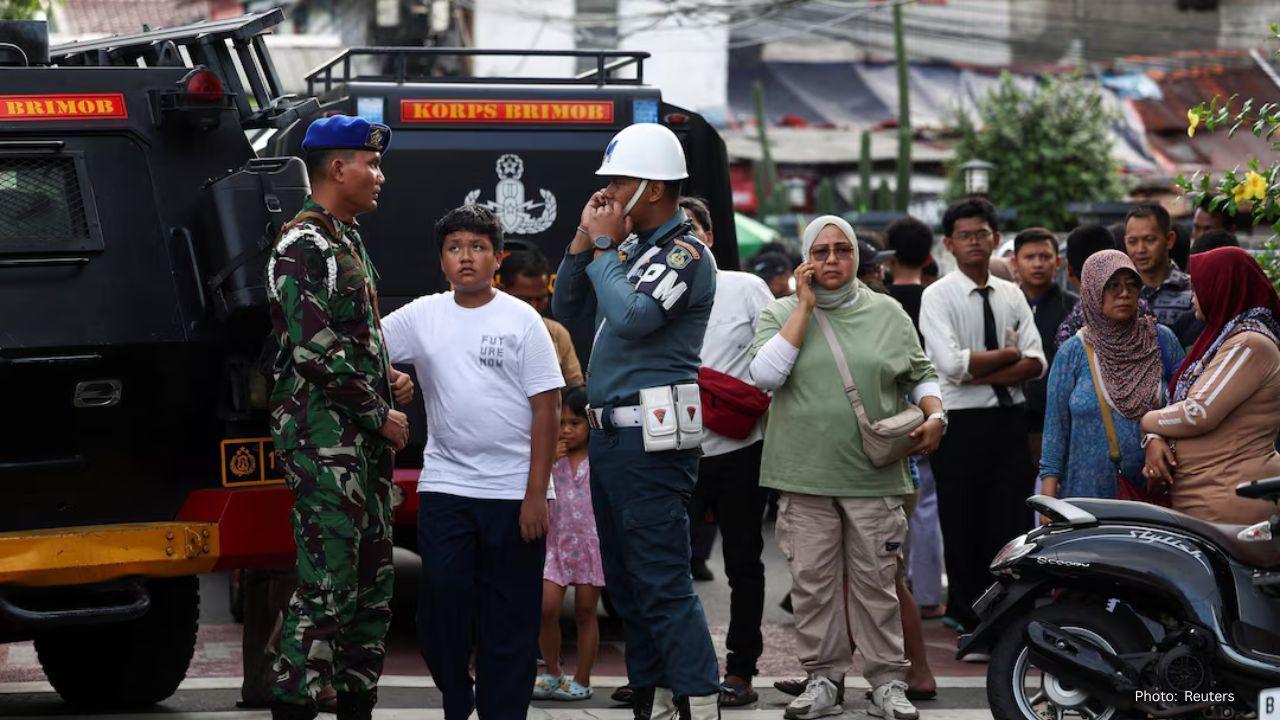
Indonesia has been shocked by a bombing at a school mosque in Jakarta that left 96 people injured. Police say the person behind the attack was a 17-year-old student who acted alone and was influenced by violent online content. New information from police investigations shows that the teenager had written a 42-page diary describing his personal struggles, loneliness, and plans for the attack.
The attack happened during Friday prayers in early November. Worshippers had gathered at the school mosque when several small bombs exploded, sending glass, shoes, and prayer mats flying across the courtyard. Although seven bombs were planted, only four exploded properly. Police believe this reduced the number of injuries and prevented the tragedy from becoming even worse.
Investigators have spent days reading through the suspect’s diary, checking his online activity, and searching his home. Police say the teenager lived a very quiet and isolated life. He rarely spoke to others, spent most of his time in his room, and was active online. The diary, which police found during a raid, was written mostly in English and had the title “Diary Reb,” which investigators think means “diary of struggle.” In the diary, he wrote about his emotional pain, his loneliness, and his desire to be recognised by people online. Police said he had been deeply affected after his parents divorced and his mother remarried, and he struggled to express his feelings to family or friends.
According to police, the suspect was inspired by a Telegram group where members praised violent attacks carried out by white supremacists in other countries. The group discussed attacks such as the 2019 shootings at two mosques in New Zealand and the 1999 school attack at Columbine High School in the United States. Police said the teenager wanted to be noticed by other members of this online community and believed that carrying out a violent act would earn him approval. A police spokesperson said he was lonely and searching for a sense of belonging that he did not find in real life.
The teenager learned how to build the bombs by watching YouTube videos and bought the materials online, including potassium chloride and nails. He even managed to get these items delivered without drawing any attention, which police now say is a major security warning. He hid his actions by telling his father that the items were for cosplay and hobbies, which prevented his family from suspecting anything. Police are now investigating how these dangerous materials were purchased without raising warnings.
He planned the attack in detail. His diary included sketches of the mosque and school buildings that marked exactly where the bombs would be placed. Police believe he chose Friday prayer time because that is when the mosque would be most crowded, increasing the number of victims. In his writing, he also mentioned thoughts of ending his own life and wanting to hurt others at the same time. One of the bombs may have been a suicide device, but because the explosion failed, he survived and is now recovering in the hospital.
The teenager has not yet been formally named because he is treated as a minor under Indonesian law. Before he can face charges, the country’s parole and probation office must decide whether he is mentally and legally fit to stand trial. Authorities must also determine whether he should stay with the state or be returned to his parents while legal action continues.
The case has raised wider concerns about how young Indonesians are exposed to harmful online content. Indonesia has a large youth population, and about two-thirds of its social media users are members of Generation Z. Many officials worry that easily available violent material online could influence more young people who feel lonely, unsupported, or disconnected from society. The bombing also happened just as police arrested five other suspects accused of recruiting 110 children aged 10 to 18 into extremist networks, which shows how serious the problem has become.
Telegram said that it does not allow content that promotes violence and that it uses tools to remove harmful posts every day. Google, which owns YouTube, has not commented yet. But many people are now asking whether online platforms are doing enough to protect young users from dangerous content.
The Jakarta bombing has shocked the public and forced a difficult conversation about mental health, online safety, and youth isolation. The incident shows how quickly a lonely teenager, without support or guidance, can be drawn into extreme ideas and attempt to carry out a violent act. As Indonesia continues its investigation, many hope that stronger protection, better support for young people, and improved online monitoring can prevent future tragedies like this one.
#trending #latest #IndonesiaNews #JakartaAttack #YouthRadicalisation #OnlineSafety #Terrorism #armustnews










Advances in Aerospace Technology and Commercial Aviation Recovery
Insights into breakthrough aerospace technologies and commercial aviation’s recovery amid 2025 chall

Defense Modernization and Strategic Spending Trends
Explore key trends in global defense modernization and strategic military spending shaping 2025 secu

Tens of Thousands Protest in Serbia on Anniversary of Deadly Roof Collapse
Tens of thousands in Novi Sad mark a year since a deadly station roof collapse that killed 16, prote

Canada PM Carney Apologizes to Trump Over Controversial Reagan Anti-Tariff Ad
Canadian PM Mark Carney apologized to President Trump over an Ontario anti-tariff ad quoting Reagan,

The ad that stirred a hornets nest, and made Canadian PM Carney say sorry to Trump
Canadian PM Mark Carney apologizes to US President Trump after a tariff-related ad causes diplomatic

Bengaluru-Mumbai Superfast Train Approved After 30-Year Wait
Railways approves new superfast train connecting Bengaluru and Mumbai, ending a 30-year demand, easi



