Post by : Saif
A tragic accident at Indonesia’s largest landfill has claimed the lives of seven people after a huge mound of garbage suddenly collapsed. Authorities confirmed that the rescue operation has now ended after all victims were found and accounted for.
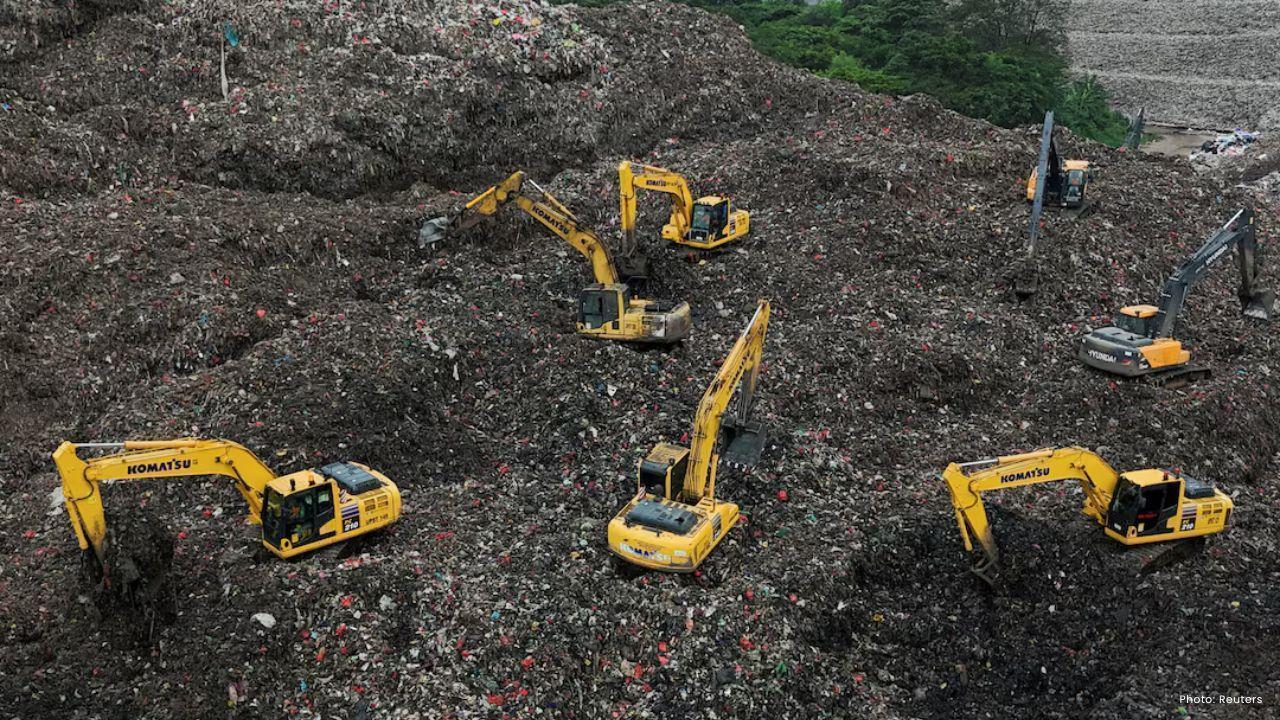
The disaster took place at the Bantargebang landfill, located on the outskirts of Jakarta in Bekasi, West Java. The site is the biggest landfill in Indonesia and handles thousands of tons of waste every day. According to officials, the collapse happened on Sunday when a large mountain of garbage suddenly slid down, burying people working near the dumping area.
Local rescue teams worked for two days searching through massive piles of waste to find victims. After recovering the final body, officials announced that the rescue operation had officially ended.
Authorities confirmed that seven people died in the incident, while six others survived the collapse. The victims included truck drivers and food stall owners who were working at or near the landfill when the disaster occurred.
The collapse was believed to have been triggered by heavy rainfall, which made the giant pile of garbage unstable. Continuous rain from Saturday evening weakened the structure of the waste mound, eventually causing it to slide like a landslide.
Rescue teams used heavy machinery and modern technology during the search operation. More than 200 rescue workers, including police, military personnel, and emergency responders, were involved in the effort. Excavators were used to move large piles of garbage, while thermal drones helped detect heat signals that could indicate trapped survivors.
At first, officials believed that more people might still be missing. Early reports suggested that several workers and drivers could be trapped under the garbage. However, police later confirmed that two people who were initially reported missing had safely returned home, reducing the number of victims.
The Bantargebang landfill is a massive facility that plays a critical role in managing waste from the Jakarta metropolitan area. The landfill covers around 110 hectares, an area larger than many large parks or industrial zones. Every day it receives between 6,500 and 7,000 tons of garbage from the capital and surrounding regions.
Because of the enormous amount of waste stored there, large piles of garbage have formed over the years. These piles can sometimes reach heights similar to multi-story buildings. When heavy rain falls, the weight of wet garbage can make the piles unstable, increasing the risk of landslides.
Environmental experts have long warned that Indonesia faces serious challenges in managing its waste. Rapid urban growth, rising consumer waste, and limited recycling systems have placed heavy pressure on landfills around the country.
Officials say the Bantargebang site has been operating for decades and has accumulated millions of tons of garbage. The facility remains essential for Jakarta’s waste disposal system, but the incident has renewed concerns about safety and environmental risks.
Indonesia’s Environment Ministry has previously acknowledged that the landfill reflects deeper problems in the country’s waste management system. Authorities say better recycling programs, waste reduction efforts, and modern treatment facilities are needed to reduce reliance on massive open dumping sites.
The deadly collapse also highlights the difficult working conditions faced by people who depend on landfill areas for their livelihood. Many truck drivers, scavengers, and small food vendors spend long hours near waste sites every day. These workers often operate close to unstable waste piles and heavy machinery, which can create dangerous situations.
After the tragedy, local officials promised to review safety measures at the landfill. Investigations are expected to examine whether stronger monitoring systems or structural controls could prevent similar accidents in the future.
Landfill disasters are not uncommon in developing countries where waste management systems struggle to keep up with growing cities. Large garbage dumps can become unstable, especially during heavy rainfall or when waste piles grow too high.
Experts say modern waste management methods such as waste-to-energy plants, recycling facilities, and controlled landfill systems could help reduce these risks. Such systems are designed to process waste safely while limiting the size and instability of garbage piles.
In the meantime, the families of the victims are mourning the sudden loss of their loved ones. Local authorities and rescue teams have expressed condolences to the affected families and promised support during this difficult time.
The tragic incident serves as a reminder of the hidden dangers inside large waste sites and the urgent need for safer and more sustainable waste management systems.
As cities continue to grow and produce more garbage every year, governments around the world will face increasing pressure to find safer ways to handle waste without putting workers and nearby communities at risk.
#trending #latest #armustnews #IndonesiaNews #LandfillCollapse #Jakarta #EnvironmentalDisaster #WasteManagement #AsiaNews #BreakingNews #ClimateAndEnvironment #GlobalNews







Advances in Aerospace Technology and Commercial Aviation Recovery
Insights into breakthrough aerospace technologies and commercial aviation’s recovery amid 2025 chall

Defense Modernization and Strategic Spending Trends
Explore key trends in global defense modernization and strategic military spending shaping 2025 secu

Tens of Thousands Protest in Serbia on Anniversary of Deadly Roof Collapse
Tens of thousands in Novi Sad mark a year since a deadly station roof collapse that killed 16, prote

Canada PM Carney Apologizes to Trump Over Controversial Reagan Anti-Tariff Ad
Canadian PM Mark Carney apologized to President Trump over an Ontario anti-tariff ad quoting Reagan,

The ad that stirred a hornets nest, and made Canadian PM Carney say sorry to Trump
Canadian PM Mark Carney apologizes to US President Trump after a tariff-related ad causes diplomatic

Bengaluru-Mumbai Superfast Train Approved After 30-Year Wait
Railways approves new superfast train connecting Bengaluru and Mumbai, ending a 30-year demand, easi



