Post by : Saif
India’s first bullet train project should not simply be described as delayed because of the scale and complexity involved, according to Masafumi Shukuri, chairman of the International High-Speed Rail Association and the Japan Transport and Tourism Research Institute.
Speaking on the sidelines of the Kautilya Economic Conclave, Shukuri said even Japan, despite having more than six decades of experience with high-speed rail, would find it difficult to build a 500-km high-speed rail corridor within 10 years.
He said India is building its first high-speed rail corridor under different conditions, while also dealing with issues such as land acquisition and the disruption caused by the COVID-19 pandemic.
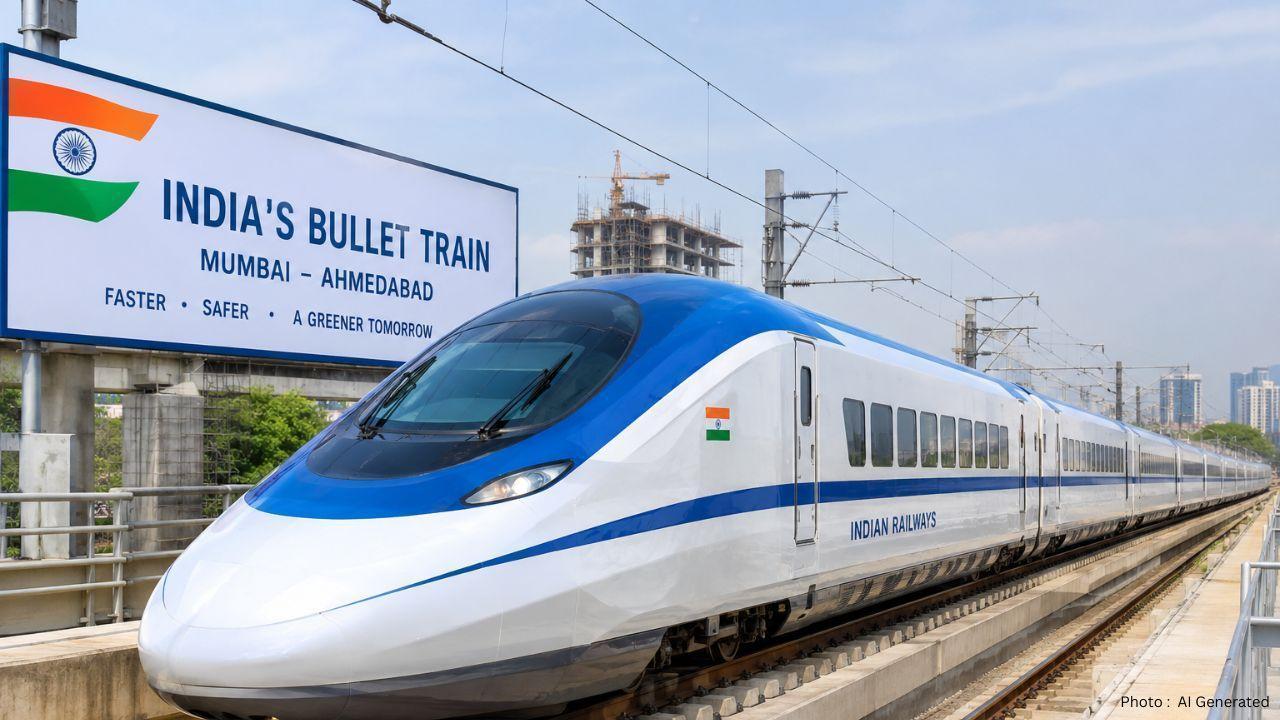
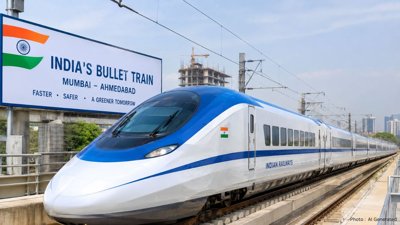
The Mumbai-Ahmedabad High Speed Rail project covers about 508 km and is India's first bullet train corridor.
The project was initially expected to be completed in 2022. The first operational section between Surat and Vapi in Gujarat is now scheduled to begin services by the end of 2027, while the complete corridor is expected to be ready by 2029.
Shukuri described the project as a massive undertaking, particularly because high-speed rail is being introduced in India for the first time.
Shukuri pointed to several unexpected challenges that affected the project's progress.
Land acquisition took time, while the COVID-19 pandemic caused major disruption to construction and other activities. He said these factors need to be considered when assessing the project's timeline.
Despite these difficulties, he said work on the Mumbai-Ahmedabad corridor has continued strongly.
India is also developing an indigenous high-speed train for the project.
BEML is developing the B28 bullet train in Bengaluru. The train has a design speed of 280 kmph and is expected to operate at up to 250 kmph.
Manufacturing is scheduled to be completed in 2027, followed by testing and trials before commercial operations. The first services on the priority section are expected to use Indian-made trains.
Japan was originally expected to provide Shinkansen trains for the Mumbai-Ahmedabad corridor. However, its next-generation E10 train is still under development.
Indian officials have said the E10 trains would not be available soon enough for the initial operations, leading to a decision to begin the corridor with Indian-designed high-speed trains.
Shukuri said using Indian-made trains is acceptable, but safety and reliability must remain priorities.
He stressed the importance of training staff, developing technical skills and conducting enough trials before commercial operations begin.
The project also involves signalling and operation-control systems, with discussions between India and Japan continuing over some parts of the technology and equipment.
The Mumbai-Ahmedabad corridor is expected to become the foundation for India's wider high-speed rail ambitions. Its progress will be closely watched as the country prepares to introduce faster passenger rail services.
For now, officials are targeting operations on the Surat-Vapi section by the end of 2027, followed by completion of the full Mumbai-Ahmedabad corridor in 2029.
#trending #latest#IndiaBulletTrain #BulletTrain #MumbaiAhmedabadBulletTrain #HighSpeedRail #IndianRailways #MakeInIndia #RailInfrastructure #HighSpeedTrain #IndiaInfrastructure #RailwayNews



Advances in Aerospace Technology and Commercial Aviation Recovery
Insights into breakthrough aerospace technologies and commercial aviation’s recovery amid 2025 chall

Defense Modernization and Strategic Spending Trends
Explore key trends in global defense modernization and strategic military spending shaping 2025 secu

Tens of Thousands Protest in Serbia on Anniversary of Deadly Roof Collapse
Tens of thousands in Novi Sad mark a year since a deadly station roof collapse that killed 16, prote

Canada PM Carney Apologizes to Trump Over Controversial Reagan Anti-Tariff Ad
Canadian PM Mark Carney apologized to President Trump over an Ontario anti-tariff ad quoting Reagan,

The ad that stirred a hornets nest, and made Canadian PM Carney say sorry to Trump
Canadian PM Mark Carney apologizes to US President Trump after a tariff-related ad causes diplomatic

Bengaluru-Mumbai Superfast Train Approved After 30-Year Wait
Railways approves new superfast train connecting Bengaluru and Mumbai, ending a 30-year demand, easi



