Post by : Saif
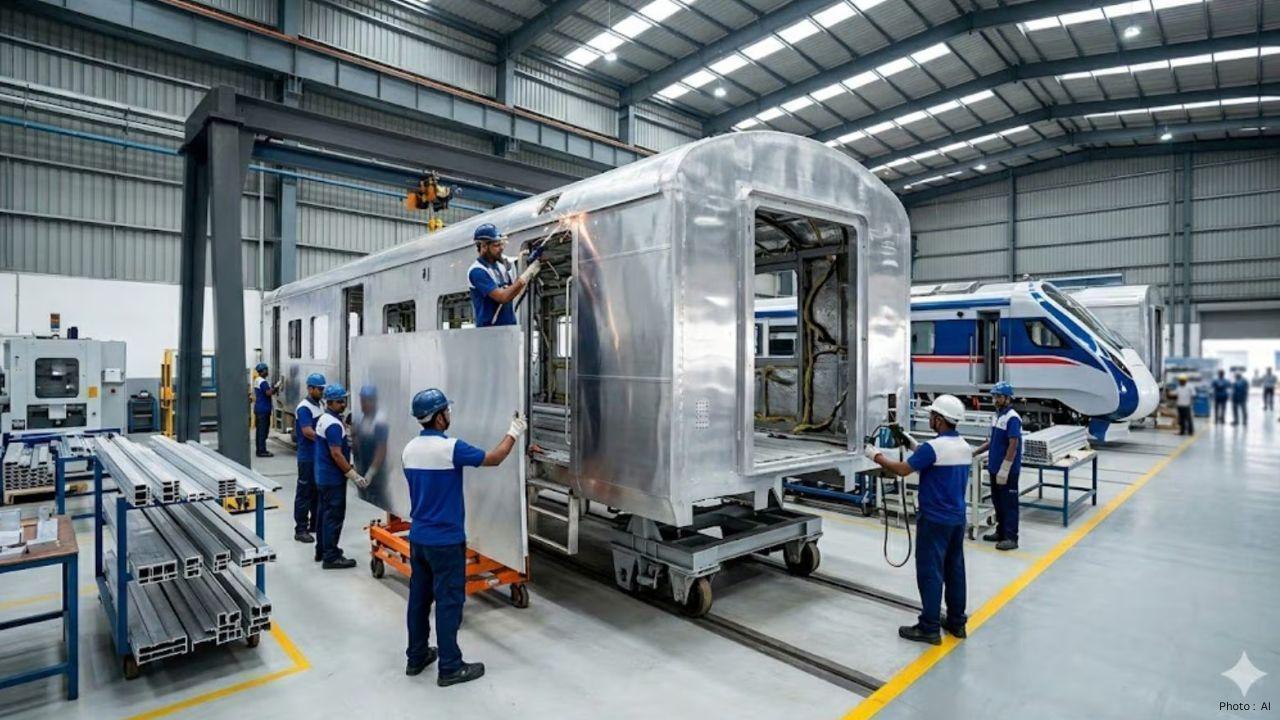
Manufacturing aluminium railway coaches entirely within India could become one of the most important developments in the country's transportation sector over the next few years. The planned achievement, expected by the financial year 2026-27, reflects a growing effort to build advanced railway technology domestically while reducing reliance on overseas expertise and imported systems.
The project represents more than the production of a new type of railway coach. It highlights a broader shift in how India is approaching industrial development, transportation modernization, and technological capability. As the country continues investing heavily in rail infrastructure, the ability to design and manufacture advanced passenger coaches locally is expected to play a significant role in shaping the future of railway travel.
For many years, steel has been the primary material used in train coach construction. Steel remains strong, durable, and widely available. However, railway systems in several advanced economies have increasingly turned toward aluminium because of its practical advantages. The material is lighter, more energy efficient, and often requires less maintenance over the long term.
A reduction in vehicle weight may appear like a small technical improvement, but its effects can be substantial. Lighter coaches generally consume less energy during operation. Trains can accelerate more efficiently, resulting in smoother performance and lower operating costs. Reduced weight also means less strain on tracks, wheels, and supporting infrastructure, helping railway authorities manage maintenance requirements more effectively.
The decision to develop local manufacturing capabilities for this technology is closely connected to India's broader economic ambitions. Countries that possess advanced engineering and transportation manufacturing sectors often enjoy stronger industrial growth and greater technological independence. Producing sophisticated railway equipment requires skilled workers, modern factories, precision engineering, and strong research capabilities.
As domestic production expands, opportunities are likely to emerge across multiple sectors. Component suppliers, engineering firms, metal processors, technology companies, and logistics providers may all benefit from increased demand. This creates a wider industrial ecosystem rather than supporting only a single manufacturing facility.
Employment generation is another important factor. Large transportation projects typically create jobs both directly and indirectly. Engineers, technicians, machine operators, designers, quality inspectors, and supply chain specialists are all needed to support modern manufacturing operations. The growth of these industries can help develop a more skilled workforce while creating long-term career opportunities.
The railway sector remains one of the most important pillars of India's transportation network. Millions of passengers rely on trains every day for work, education, business, and personal travel. As demand continues to rise, the need for modern, efficient, and comfortable rolling stock becomes increasingly important.
Passengers today expect better travel experiences than in previous decades. Comfort, safety, reliability, cleanliness, and operational efficiency have become major priorities. New-generation coach designs can help meet these expectations by offering improved interiors, better ride quality, enhanced safety features, and modern passenger amenities.
The move toward advanced manufacturing also supports national goals related to self-reliance. Building complex transportation systems within the country reduces dependence on foreign suppliers and strengthens domestic capabilities. Greater control over production can improve flexibility, support future innovation, and provide better protection against disruptions in global supply chains.
Another important aspect of aluminium coach production is environmental sustainability. Transportation systems worldwide are under pressure to improve energy efficiency and reduce environmental impact. Lighter trains generally require less energy to operate, making them an attractive option for rail networks seeking long-term sustainability benefits.
Investment in modern rail technology can also contribute to stronger economic competitiveness. Efficient transportation networks support trade, improve connectivity, and help businesses move people and goods more effectively. As infrastructure improves, broader economic benefits often follow through increased productivity and regional development.
The success of this effort will depend on several factors. Manufacturing advanced railway equipment requires strict quality standards, continuous innovation, and a highly trained workforce. Companies involved in production must ensure that every stage of the process meets international benchmarks for safety and reliability. Achieving these standards is essential for building confidence among railway operators and passengers alike.
Research and development will remain equally important. Technological progress does not stop once production begins. Manufacturers must continue improving designs, enhancing efficiency, and adapting to changing transportation needs. Long-term competitiveness depends on the ability to innovate and respond to evolving market demands.
The development also carries significance beyond national borders. As manufacturing expertise grows, opportunities may emerge to supply railway equipment to international markets. Several countries are expanding rail infrastructure and seeking reliable partners for transportation projects. A strong domestic industry could position India as a competitive participant in the global railway manufacturing sector.
Transportation has always been closely linked to economic growth. Investments in modern trains, better infrastructure, and advanced manufacturing capabilities create benefits that extend far beyond the railway industry itself. Improved mobility supports business activity, strengthens regional connections, and contributes to overall national development.
Planned introduction of fully domestically manufactured aluminium railway coaches represents a significant step in India's industrial and transportation journey. It reflects a commitment to modernization, technological advancement, and long-term self-reliance. If successfully implemented, the initiative could strengthen manufacturing capabilities, create employment opportunities, improve passenger travel, and support the continued transformation of the country's railway network. The project is not simply about building new coaches. It is about building the capacity, confidence, and expertise needed for the next chapter of India's transportation future.
#trending #latest #IndianRailways #AluminiumCoaches #RailwayIndustry #RailModernization #MakeInIndia #AtmanirbharBharat #TransportationNews #InfrastructureDevelopment #RailTechnology






Advances in Aerospace Technology and Commercial Aviation Recovery
Insights into breakthrough aerospace technologies and commercial aviation’s recovery amid 2025 chall

Defense Modernization and Strategic Spending Trends
Explore key trends in global defense modernization and strategic military spending shaping 2025 secu

Tens of Thousands Protest in Serbia on Anniversary of Deadly Roof Collapse
Tens of thousands in Novi Sad mark a year since a deadly station roof collapse that killed 16, prote

Canada PM Carney Apologizes to Trump Over Controversial Reagan Anti-Tariff Ad
Canadian PM Mark Carney apologized to President Trump over an Ontario anti-tariff ad quoting Reagan,

The ad that stirred a hornets nest, and made Canadian PM Carney say sorry to Trump
Canadian PM Mark Carney apologizes to US President Trump after a tariff-related ad causes diplomatic

Bengaluru-Mumbai Superfast Train Approved After 30-Year Wait
Railways approves new superfast train connecting Bengaluru and Mumbai, ending a 30-year demand, easi



