Post by : Avinab Raana
Photo : X / Business Insider
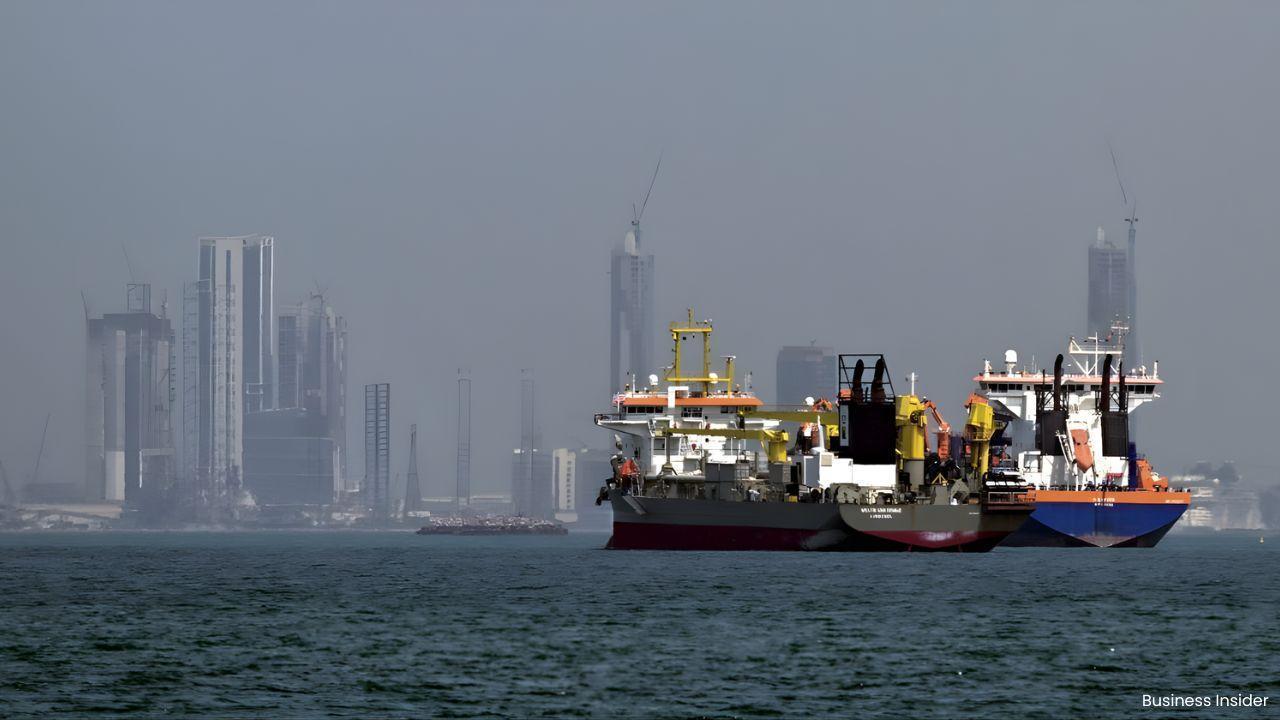
India Inc is beginning to feel the real impact of the ongoing Middle East conflict, as disruptions across key global trade routes ripple through supply chains. What started as a regional geopolitical crisis has now translated into tangible business challenges, with companies across sectors reporting delays, cost pressures, and uncertainty in critical imports.
The disruption of major maritime corridors has slowed down the movement of goods, leading to shipment delays and tightening availability of essential raw materials. Industries dependent on global sourcing are witnessing early signs of stress, particularly in sectors reliant on energy inputs and imported components. The uncertainty surrounding delivery timelines is beginning to affect production planning and inventory cycles.
Rising energy costs are further compounding the situation for Indian businesses. As instability in the Middle East impacts global oil flows, fuel prices have surged, increasing transportation and operational expenses. This dual pressure logistics disruption and higher energy costs is forcing companies to reassess budgets, pricing strategies, and overall cost management.
Despite the challenges, Indian industry leaders have expressed confidence in the government’s response measures. Efforts to diversify energy sourcing, stabilize markets, and support trade continuity are helping to cushion the immediate impact. The coordinated approach between policymakers and businesses is emerging as a key factor in maintaining economic stability during this period of uncertainty.
Companies are actively recalibrating their supply chain strategies to navigate the disruption. From exploring alternative sourcing routes to increasing domestic procurement and building buffer inventories, businesses are shifting focus toward resilience. The emphasis is no longer just on efficiency, but on flexibility and risk mitigation.
The current situation is shaping up to be a critical test for India’s economic framework. While disruptions are evident, the country’s growing domestic capabilities and diversification strategies are helping it absorb external shocks more effectively. The push toward self-reliance is now proving to be a strategic advantage.
The unfolding crisis highlights the fragile nature of global supply chains in the face of geopolitical tensions. For India, this moment is not just about managing disruptions—it is about building a more resilient and adaptive economic model for the future. As the Middle East conflict continues to evolve, India Inc stands at a crucial turning point—balancing immediate challenges with long-term transformation in an increasingly uncertain global trade environment.
India supply chain crisis, Middle East conflict impact, India Inc logistics, shipment delays India, raw material shortage, trade disruption India, energy supply India, global supply chain








Advances in Aerospace Technology and Commercial Aviation Recovery
Insights into breakthrough aerospace technologies and commercial aviation’s recovery amid 2025 chall

Defense Modernization and Strategic Spending Trends
Explore key trends in global defense modernization and strategic military spending shaping 2025 secu

Tens of Thousands Protest in Serbia on Anniversary of Deadly Roof Collapse
Tens of thousands in Novi Sad mark a year since a deadly station roof collapse that killed 16, prote

Canada PM Carney Apologizes to Trump Over Controversial Reagan Anti-Tariff Ad
Canadian PM Mark Carney apologized to President Trump over an Ontario anti-tariff ad quoting Reagan,

The ad that stirred a hornets nest, and made Canadian PM Carney say sorry to Trump
Canadian PM Mark Carney apologizes to US President Trump after a tariff-related ad causes diplomatic

Bengaluru-Mumbai Superfast Train Approved After 30-Year Wait
Railways approves new superfast train connecting Bengaluru and Mumbai, ending a 30-year demand, easi



