Post by : Avinab Raana
Photo : X / Seatrade Maritime
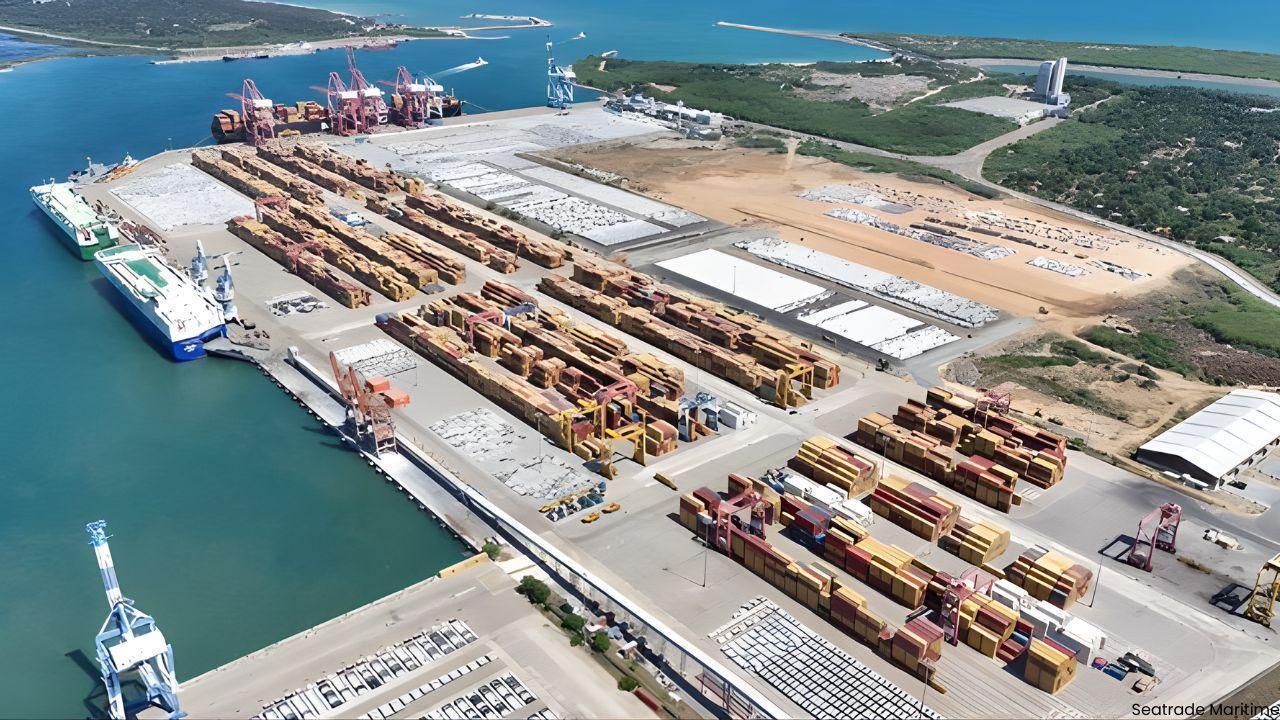
A dramatic shift in global shipping routes is unfolding as geopolitical tensions in the Middle East force container lines to rethink their traditional corridors. At the center of this transformation is Sri Lanka’s Hambantota International Port, which is rapidly scaling its capacity to absorb diverted cargo flows that were once destined for the Arabian Gulf.
With vessels increasingly avoiding high-risk zones such as the Strait of Hormuz, ports across South Asia are witnessing an unexpected surge in traffic. Hambantota, strategically positioned along the East–West shipping corridor, has emerged as one of the biggest beneficiaries of this disruption, turning crisis into opportunity.
To accommodate this sudden influx, Hambantota Port has aggressively expanded its operational footprint, doubling its roll-on/roll-off (RoRo) yard capacity while increasing container yard space by nearly 30%. This rapid scaling reflects not only rising demand but also the port’s ability to respond swiftly to global supply chain disruptions.
The surge in vehicle transshipment and container volumes has pushed yard utilization to record highs, marking a turning point in the port’s operational trajectory. What was once considered an underutilized facility is now functioning at peak efficiency, handling volumes that signal a structural shift in maritime trade patterns.
Hambantota’s growing importance is deeply rooted in geography. Located just a few nautical miles from one of the world’s busiest shipping lanes connecting Asia and Europe, the port offers minimal deviation for vessels seeking alternative routes. This proximity allows shipping lines to reroute operations without significant delays, ensuring continuity in global trade flows.
Unlike congested ports in the region, Hambantota had the advantage of available capacity, enabling it to quickly absorb redirected cargo. This unique positioning has transformed it into a critical transshipment hub at a time when reliability and flexibility are becoming the most valuable assets in maritime logistics.
Beyond immediate expansion, Hambantota Port is investing heavily in future-ready infrastructure to cement its role as a regional logistics powerhouse. Plans are underway to significantly enhance container handling capacity, supported by investments in advanced cargo handling equipment, including cranes and terminal systems.
These developments are not just reactive—they represent a long-term vision to reposition Hambantota as a dominant player in Indian Ocean trade. As global shipping networks continue to evolve, the port is aligning itself with emerging demand patterns, ensuring it remains relevant in an increasingly competitive landscape.
What is happening at Hambantota is more than a temporary spike—it signals a broader restructuring of global shipping routes. As geopolitical risks persist, shipping companies are prioritizing resilience, diversification, and route flexibility over traditional efficiency models.
This shift is likely to redefine how ports compete, with those capable of scaling quickly and offering strategic advantages gaining a decisive edge. Hambantota’s rapid transformation illustrates how emerging ports can disrupt established logistics hierarchies when global conditions change.
The rise of Hambantota Port underscores a powerful reality: global trade is no longer static—it is highly responsive to geopolitical and economic pressures. Ports that can adapt in real time will shape the next era of maritime logistics.
As shipping lines continue to diversify routes and reduce dependency on volatile regions, Hambantota’s expansion could mark the beginning of a new logistics map—one where agility, location, and infrastructure define success in an increasingly unpredictable world.
#trending #latest,#HambantotaPort #GlobalShipping #PortExpansion #SupplyChainShift #MaritimeLogistics









Advances in Aerospace Technology and Commercial Aviation Recovery
Insights into breakthrough aerospace technologies and commercial aviation’s recovery amid 2025 chall

Defense Modernization and Strategic Spending Trends
Explore key trends in global defense modernization and strategic military spending shaping 2025 secu

Tens of Thousands Protest in Serbia on Anniversary of Deadly Roof Collapse
Tens of thousands in Novi Sad mark a year since a deadly station roof collapse that killed 16, prote

Canada PM Carney Apologizes to Trump Over Controversial Reagan Anti-Tariff Ad
Canadian PM Mark Carney apologized to President Trump over an Ontario anti-tariff ad quoting Reagan,

The ad that stirred a hornets nest, and made Canadian PM Carney say sorry to Trump
Canadian PM Mark Carney apologizes to US President Trump after a tariff-related ad causes diplomatic

Bengaluru-Mumbai Superfast Train Approved After 30-Year Wait
Railways approves new superfast train connecting Bengaluru and Mumbai, ending a 30-year demand, easi



