Post by : Avinab Raana
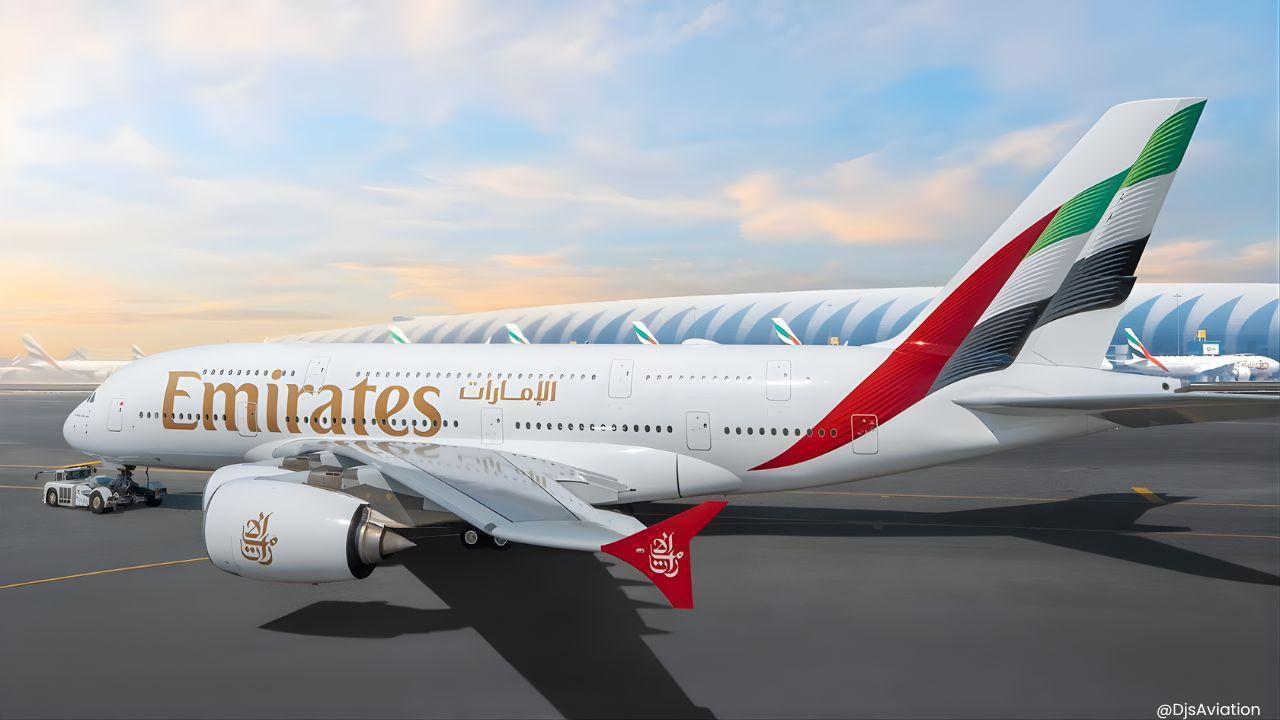
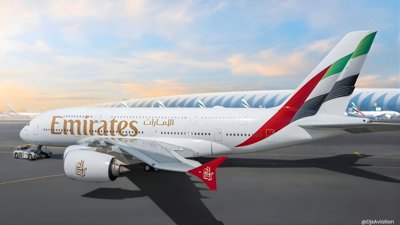
Photo : X / @DjsAviation
In a move that signals a turning point for global aviation, Emirates has sharply reduced operations of its largest Airbus A380 aircraft, cutting flights on its highest-capacity 615-seat configuration by a staggering 62%. This decision reflects more than a temporary adjustment, it represents a strategic recalibration of how one of the world’s most influential airlines is adapting to shifting passenger demand, geopolitical uncertainties, and evolving cost structures. For an airline that built its global dominance on the back of the iconic double-decker, this moment carries symbolic weight, hinting at the gradual transformation of long-haul aviation itself.
The Airbus A380 has long been synonymous with Emirates’ brand identity, offering unmatched capacity and luxury on high-density international routes. However, the very strengths that once made the aircraft indispensable, its size and four-engine design are now becoming operational challenges in a rapidly changing market. The 615-seat configuration, designed to maximize passenger volume, requires consistently high demand to remain economically viable, something that has become increasingly unpredictable in today’s volatile travel environment.Recent schedule adjustments reveal a significant drop in daily A380 departures from Dubai, with operations scaled back across multiple routes. The reduction is not just about cutting flights, it is about aligning capacity with real-time demand, as airlines prioritize flexibility over sheer scale.
A key driver behind this dramatic reduction is the broader geopolitical instability affecting the Gulf region, which has disrupted travel patterns and reduced passenger volumes on several long-haul routes. Airlines are increasingly forced to adapt quickly, adjusting fleet deployment to manage fluctuating demand and operational risks. In such conditions, deploying a massive aircraft like the A380 becomes less practical, especially when passenger loads cannot justify its operating costs. At the same time, global travel demand is becoming more fragmented, with passengers favoring more frequent flights on smaller aircraft rather than fewer flights on ultra-large jets. This shift is pushing airlines toward more flexible fleet strategies that can respond dynamically to changing market conditions.
As Emirates reduces its reliance on the A380 across certain routes, it is increasingly turning to more efficient twin-engine aircraft such as the Boeing 777 and the newer Airbus A350. These aircraft offer lower fuel consumption, reduced operating costs, and greater flexibility in scheduling, making them better suited for today’s aviation landscape. This transition does not signal the immediate end of the A380 but rather a repositioning of its role. The aircraft is expected to remain on high-demand trunk routes where its capacity can be fully utilized, while smaller jets take over routes with variable or lower demand. This hybrid approach allows Emirates to maintain its global network while optimizing efficiency.
The reduction in A380 operations reflects a broader transformation in the aviation industry, where efficiency, flexibility, and sustainability are becoming more critical than ever. Airlines are no longer focused solely on maximizing passenger numbers per flight; instead, they are prioritizing operational adaptability and cost control in an unpredictable global environment.For Emirates, this shift represents a strategic evolution rather than a retreat. The airline remains the world’s largest operator of the A380, with over 100 aircraft in its fleet, but its latest move highlights a clear message.The future of aviation will be defined not by size alone, but by smart deployment and technological efficiency. As the industry continues to evolve, the iconic A380 may still dominate select routes, but its era as the backbone of global long-haul travel is gradually giving way to a new generation of aircraft designed for a more dynamic world.
#trending #latest,#EmiratesA380 #AirlineStrategy #AviationTrends #WidebodyJets #AirTravel





Advances in Aerospace Technology and Commercial Aviation Recovery
Insights into breakthrough aerospace technologies and commercial aviation’s recovery amid 2025 chall

Defense Modernization and Strategic Spending Trends
Explore key trends in global defense modernization and strategic military spending shaping 2025 secu

Tens of Thousands Protest in Serbia on Anniversary of Deadly Roof Collapse
Tens of thousands in Novi Sad mark a year since a deadly station roof collapse that killed 16, prote

Canada PM Carney Apologizes to Trump Over Controversial Reagan Anti-Tariff Ad
Canadian PM Mark Carney apologized to President Trump over an Ontario anti-tariff ad quoting Reagan,

The ad that stirred a hornets nest, and made Canadian PM Carney say sorry to Trump
Canadian PM Mark Carney apologizes to US President Trump after a tariff-related ad causes diplomatic

Bengaluru-Mumbai Superfast Train Approved After 30-Year Wait
Railways approves new superfast train connecting Bengaluru and Mumbai, ending a 30-year demand, easi



