Post by : Saif
China’s economy is expected to show a modest improvement in the third quarter of 2026, supported by strong exports, better factory activity and recent government measures to boost economic growth. However, weak consumer spending, falling private investment and rising trade tensions could limit the recovery in the coming months.
Economic forecasts indicate that China’s gross domestic product (GDP) may have grown 4.4% year-on-year between July and September, compared with 4.3% in the second quarter. The expected improvement comes after economic growth reached its weakest pace in more than three years during the April-June period.
The latest figures are scheduled for release on Monday, October 19, alongside September data covering industrial production, retail sales and fixed-asset investment. These indicators will provide a clearer picture of whether China can maintain economic momentum through the end of 2026.
Economists expect China's economy to expand by 1.1% quarter-on-quarter in the July-September period, up from 0.9% in the previous quarter. The forecast suggests a gradual recovery, although growth remains under pressure from domestic economic challenges.
The projected annual growth rate of 4.4% is lower than the 4.6% forecast made in July. It also falls slightly below the lower boundary of China's official full-year growth target of 4.5% to 5%.
Improved manufacturing activity and strong overseas demand have helped support the economy. China's official manufacturing Purchasing Managers' Index returned to expansion in September after contracting for two consecutive months. A private-sector manufacturing survey also indicated that factory activity reached its strongest growth level in five months.
These developments suggest that industrial production has gained momentum, even as other parts of the economy continue to face difficulties.
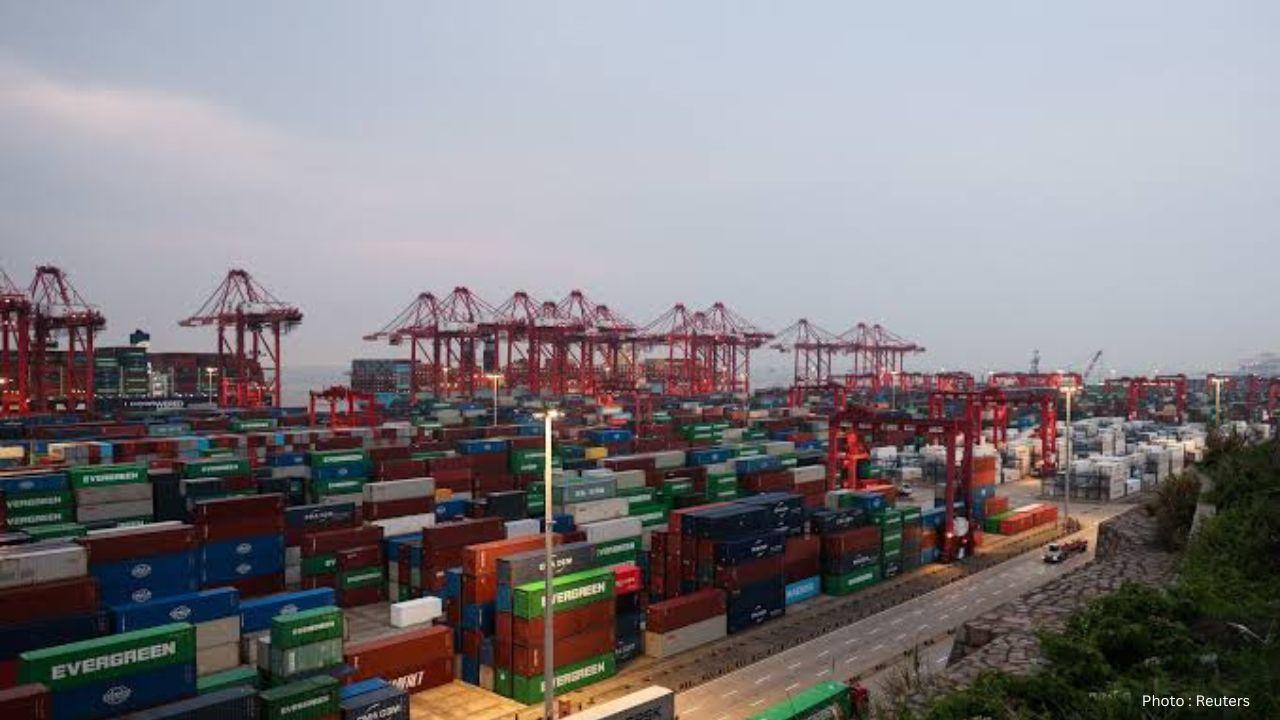
Exports remain one of the most important drivers of China's economic growth in 2026. Overseas demand for Chinese manufactured goods, including electric vehicles and technology-related products, has helped factories maintain production despite weak domestic consumption.
China's trade surplus increased more than expected in September as exports recorded strong growth. The country is on course to exceed its record trade surplus of $1.2 trillion recorded in the previous year, although the growing imbalance could create additional friction with major trading partners.
However, China's export-led growth strategy faces several challenges. Trade disputes with the European Union could affect shipments of Chinese vehicles, while cooling investment in artificial intelligence-related industries may weaken demand in some high-tech sectors.
The European Union and China have also reached an understanding concerning hybrid-vehicle trade, which could influence future shipments and market access for Chinese automakers.
Despite these risks, overseas sales continue to provide important support to Chinese manufacturers and the wider economy.
China's economic recovery remains uneven, with strong factory output and exports contrasting with subdued household consumption and private investment.
Retail sales growth is expected to have edged up to 0.6% in September from 0.4% in August. Although the forecast points to a slight improvement, it also highlights the continuing weakness in domestic demand.
Industrial output growth is projected to have increased to 5.5% in September from 5.2% a month earlier. Meanwhile, fixed-asset investment is expected to have fallen 7.3% during January-September, compared with a 7.2% decline in the first eight months of the year.
The property sector remains a significant source of economic pressure. Beijing has redirected financial resources towards advanced manufacturing and high-tech industries, but weakness in property-related activity and private investment continues to weigh on broader growth.
Strengthening household incomes, employment and consumer confidence will be important if China wants to reduce its reliance on exports.
Read more: South Korea Plans Incentives to Boost Long-Term Stock Investment and Stabilize Currency Market
Chinese authorities have introduced several measures to support economic activity and help the country meet its annual growth target.
In late September, the government announced targeted interest-rate reductions and mortgage subsidies. These steps were intended to ease financial pressure on borrowers, support housing demand and encourage economic activity.
Earlier in October, authorities also allocated 550 billion yuan, equivalent to approximately $82 billion, in unused government debt quotas. The funding is intended to ease financial pressure on local governments and support infrastructure investment.
Economists believe further fiscal support may be needed if economic momentum weakens towards the end of the year. Potential measures could include policies to improve employment, increase household incomes and encourage domestic consumption.
The central bank may have less room for aggressive interest-rate cuts as factory-gate prices and consumer inflation show signs of increasing. Economists surveyed expect China's benchmark lending rates and banks' reserve requirement ratio to remain unchanged through the first quarter of 2027.
Forecasts suggest China's economic growth could reach 4.5% in the fourth quarter, bringing the full-year rate to around 4.5% in 2026. Growth is then expected to ease slightly to 4.4% in 2027.
These projections indicate that China may achieve the lower end of its annual growth target, but maintaining that pace will depend on continued export demand and effective government support.
Upcoming policy discussions, including the Politburo meeting and the annual Central Economic Work Conference in December, could provide further details about Beijing's economic priorities for 2027.
The main challenge for China will be to turn export strength and industrial recovery into broader domestic growth. Stronger consumer spending, stable investment and measures to support employment will be essential to making the recovery more sustainable.
#trending #latest #China #ChinaEconomy #ChinaGDP #GDPGrowth #ChinaExports #ChineseEconomy #GlobalEconomy #EconomicGrowth #TradeNews #Manufacturing #ChinaTrade #ElectricVehicles #Investment









Advances in Aerospace Technology and Commercial Aviation Recovery
Insights into breakthrough aerospace technologies and commercial aviation’s recovery amid 2025 chall

Defense Modernization and Strategic Spending Trends
Explore key trends in global defense modernization and strategic military spending shaping 2025 secu

Tens of Thousands Protest in Serbia on Anniversary of Deadly Roof Collapse
Tens of thousands in Novi Sad mark a year since a deadly station roof collapse that killed 16, prote

Canada PM Carney Apologizes to Trump Over Controversial Reagan Anti-Tariff Ad
Canadian PM Mark Carney apologized to President Trump over an Ontario anti-tariff ad quoting Reagan,

The ad that stirred a hornets nest, and made Canadian PM Carney say sorry to Trump
Canadian PM Mark Carney apologizes to US President Trump after a tariff-related ad causes diplomatic

Bengaluru-Mumbai Superfast Train Approved After 30-Year Wait
Railways approves new superfast train connecting Bengaluru and Mumbai, ending a 30-year demand, easi