Post by : Saif
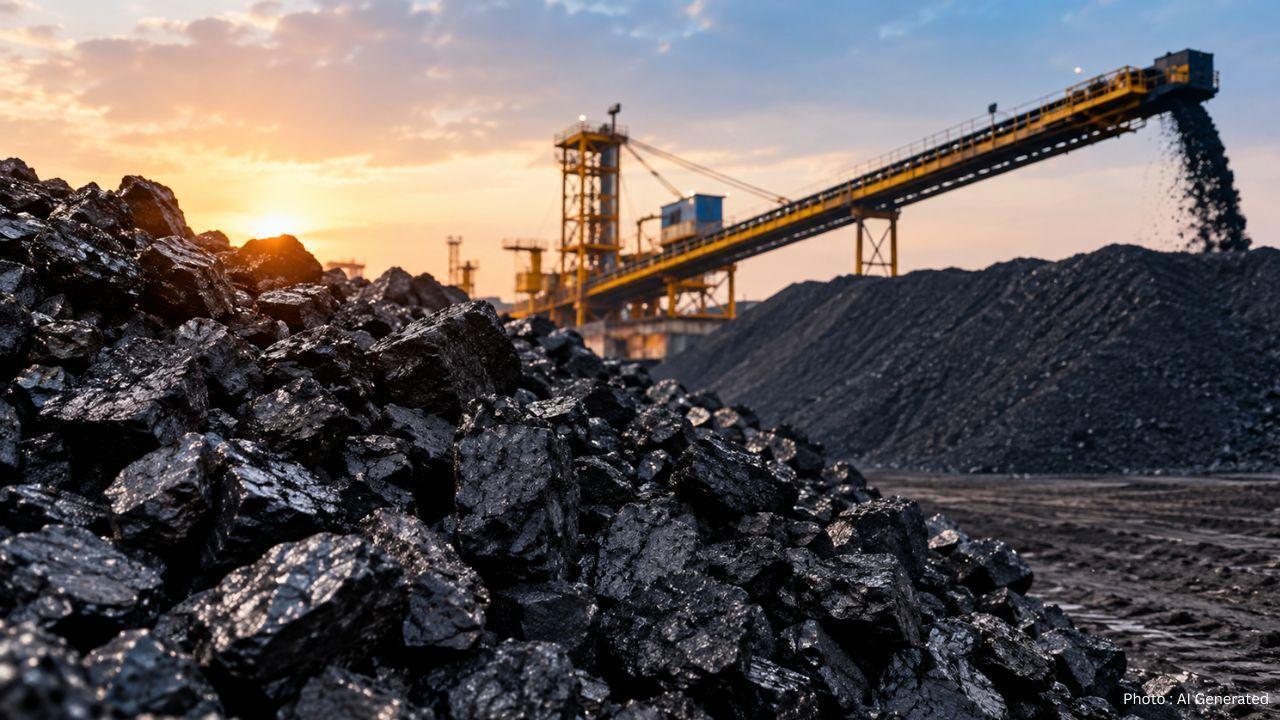
China has canceled most of the overseas coal power projects it had planned in 2021, showing progress on President Xi Jinping’s promise to stop funding new coal plants abroad. However, loopholes in the policy are allowing Chinese companies to continue investing in coal projects in several countries.
The issue comes as governments across Asia face growing pressure to secure reliable energy supplies. Rising energy demand and disruptions linked to the Russia-Ukraine war and the Iran war have pushed some countries to rely more heavily on coal, even as renewable energy continues to expand.
China was once the world’s largest overseas financier of coal power. In 2021, Xi announced that China would stop funding new coal-fired power plants overseas as part of efforts to address climate change.
According to a report from the Centre for Research on Energy and Clean Air and People of Asia for Climate Solutions, China has canceled 67% of the coal power capacity planned overseas in 2021.
The canceled projects represented about 61.5 gigawatts of capacity, which the report estimates could prevent around 6.4 billion tons of carbon dioxide emissions over their lifetime.
Experts say China’s pledge mainly covers government-backed financing, leaving room for private Chinese companies to invest in overseas coal projects.
This has become particularly visible in Indonesia, where Chinese companies are financing coal plants designed to provide electricity directly to industrial facilities such as nickel and aluminum processing plants. These facilities are known as “captive coal” projects because they are not connected to the national electricity grid.
Indonesia currently has 17.1 gigawatts of China-backed coal capacity planned, according to the report. Vietnam and Pakistan follow, with less than 4 gigawatts each.
Read more: China Plans Stronger Fiscal Policy for the Next Five Years
Southeast Asia is one of the world’s fastest-growing energy markets. The region is expected to account for nearly 20% of global energy demand growth through 2035, according to the International Energy Agency.
Energy disruptions have made the situation more difficult. The closure of the Strait of Hormuz affected Southeast Asian countries that depend heavily on imported fossil fuels from the Middle East. Several governments responded by increasing coal use while also exploring solar power, electric vehicles and nuclear energy.
This creates a difficult balance for countries that want to reduce emissions while also keeping electricity supplies stable.
China remains a major force in the global clean-energy transition. It is the world’s largest producer of solar panels and wind turbines and has become a dominant player in electric vehicles. At the same time, China continues to build new coal infrastructure domestically.
Experts say China’s rapid expansion of renewable energy could encourage Beijing to place greater emphasis on clean energy in its international investments.
Global coal demand is showing signs of leveling off, but Southeast Asia is moving in the opposite direction as its energy needs grow. The region’s governments are facing pressure to secure affordable and dependable electricity, particularly for expanding industries.
The combination of energy security concerns and private investment means China’s 2021 overseas coal pledge has not completely stopped coal expansion.
China has made significant progress by canceling many planned projects, but the remaining loopholes continue to allow Chinese companies to support coal development abroad. The future of the pledge will depend partly on whether both China and its overseas partners continue moving toward cleaner energy systems.
#trending #latest #China #Coal #CoalPower #ChinaCoal #EnergySecurity #CleanEnergy #RenewableEnergy #ClimateChange #CoalInvestment #SoutheastAsia #EnergyTransition #GlobalEnergy #CoalProjects #SolarEnergy #WindEnergy






Advances in Aerospace Technology and Commercial Aviation Recovery
Insights into breakthrough aerospace technologies and commercial aviation’s recovery amid 2025 chall

Defense Modernization and Strategic Spending Trends
Explore key trends in global defense modernization and strategic military spending shaping 2025 secu

Tens of Thousands Protest in Serbia on Anniversary of Deadly Roof Collapse
Tens of thousands in Novi Sad mark a year since a deadly station roof collapse that killed 16, prote

Canada PM Carney Apologizes to Trump Over Controversial Reagan Anti-Tariff Ad
Canadian PM Mark Carney apologized to President Trump over an Ontario anti-tariff ad quoting Reagan,

The ad that stirred a hornets nest, and made Canadian PM Carney say sorry to Trump
Canadian PM Mark Carney apologizes to US President Trump after a tariff-related ad causes diplomatic

Bengaluru-Mumbai Superfast Train Approved After 30-Year Wait
Railways approves new superfast train connecting Bengaluru and Mumbai, ending a 30-year demand, easi



