Post by : Saif
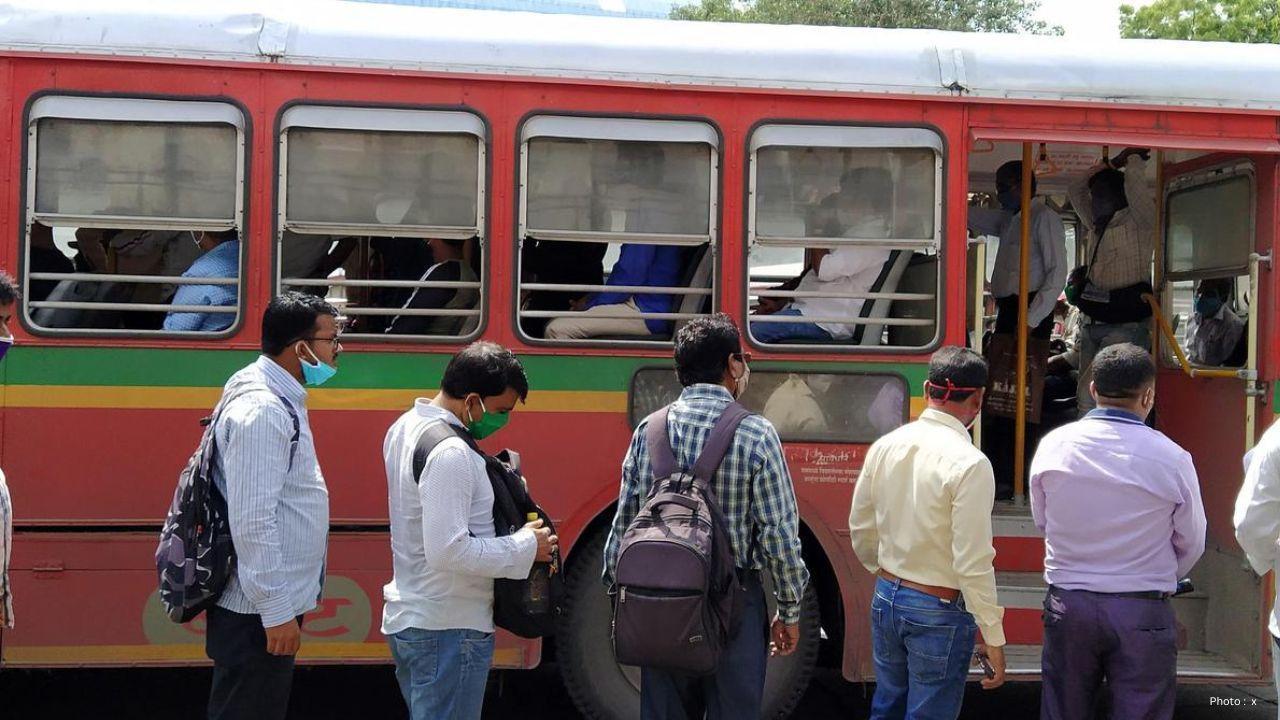
Mumbai's effort to encourage the use of public transportation in the Bandra-Kurla Complex (BKC) has once again drawn attention to a long-standing urban challenge. While authorities hoped that BKC Public Transport Day would motivate more people to leave their private vehicles at home and choose buses, trains, metro services, or shared transport, the initiative received only a limited response from commuters. The experience highlighted a problem that many daily travelers say remains unresolved: the lack of efficient last-mile connectivity.
For thousands of office workers who travel to BKC every day, reaching the business district is often only part of the journey. Even after arriving at nearby railway stations or metro stops, many still face difficulties covering the final stretch to their workplaces. This gap between major transit hubs and office destinations continues to discourage people from fully embracing public transportation.
The initiative was introduced with a clear objective. Traffic congestion in BKC has become a serious concern as the area has grown into one of Mumbai's most important commercial and financial centers. Home to corporate headquarters, banks, government offices, and business institutions, the district attracts tens of thousands of workers daily. Reducing the number of private vehicles on the roads is seen as an important step toward easing congestion, lowering pollution, and improving overall mobility.
However, the latest public transport campaign demonstrated that changing commuter behavior is not as simple as encouraging people to use trains or buses. Many travelers pointed out that the biggest obstacle begins after they leave the station. Long waiting times for feeder buses, limited shuttle services, expensive auto-rickshaw rides, and overcrowded transport options make the final leg of the journey inconvenient and time-consuming.
Several commuters noted that public transportation works well for covering long distances across Mumbai. The city's suburban railway network remains the backbone of urban mobility, carrying millions of passengers every day. The metro network has also expanded significantly in recent years, providing faster and more comfortable travel options. Yet many workers argue that these systems lose some of their effectiveness when passengers struggle to reach their offices after getting off at the nearest station.
The concerns raised during BKC Public Transport Day are not unique to Mumbai. Cities around the world face similar challenges when attempting to reduce dependence on private vehicles. Urban planners often describe last-mile connectivity as one of the most critical factors in determining whether people choose public transportation. Even a highly efficient rail or metro system can fail to attract maximum users if the final segment of the journey remains difficult.
In BKC, the challenge is particularly noticeable because the district was developed as a major business hub rather than a traditional residential neighborhood. Its layout, road network, and office clusters require efficient feeder services to connect workers with larger transport systems. Without reliable options, many commuters continue to prefer private cars, taxis, or app-based ride services despite higher costs.
The issue also carries environmental implications. One of the primary goals of promoting public transport is reducing carbon emissions and improving air quality. Every commuter who switches from a private vehicle to public transportation contributes to lower fuel consumption and reduced traffic congestion. However, when last-mile connectivity remains weak, these environmental benefits become harder to achieve because people are less willing to change their travel habits.
Transport experts have long argued that successful public transportation systems require seamless integration between different modes of travel. This means trains, metro services, buses, feeder shuttles, cycling infrastructure, and pedestrian pathways should work together as a single network. When one link in the chain is weak, the overall system becomes less effective.
In recent years, Mumbai has invested heavily in infrastructure projects aimed at improving urban mobility. New metro corridors, road improvements, and transit-oriented development plans are part of a broader strategy to modernize transportation. While these investments have produced visible improvements, commuters believe more attention must be given to the everyday practicalities of travel, particularly within major employment zones such as BKC.
Many office workers participating in the initiative suggested increasing the number of feeder buses connecting railway stations and metro stops with office complexes. Others recommended dedicated shuttle services operating at higher frequencies during peak hours. Some commuters also emphasized the need for safer and more comfortable walking routes, noting that better pedestrian infrastructure could encourage people to walk short distances rather than rely on vehicles.
Technology could also play an important role in addressing these challenges. Real-time information systems, integrated ticketing platforms, and smart mobility solutions can help commuters plan their journeys more efficiently. Several cities worldwide have successfully used digital tools to coordinate multiple transportation services, making travel more convenient and predictable.
The limited response to BKC Public Transport Day should not necessarily be viewed as a failure. Instead, it provides valuable feedback for policymakers and urban planners. The event has highlighted the areas where improvements are needed and offered an opportunity to better understand commuter concerns. Public participation initiatives often reveal practical issues that may not be fully visible through planning documents or traffic studies.
From a broader perspective, the experience serves as a reminder that transportation policy must focus not only on major infrastructure projects but also on the smaller details that shape daily travel experiences. Large investments in rail and metro systems can deliver significant benefits, but those benefits are maximized only when commuters can complete their journeys smoothly from start to finish.
As Mumbai continues to grow, the need for efficient and sustainable transportation will become even more important. Business districts such as BKC play a critical role in the city's economy, and ensuring easy access to these areas is essential for productivity, environmental sustainability, and quality of life.
The discussion generated by BKC Public Transport Day ultimately points toward a simple but important lesson. People are willing to use public transportation when it is reliable, affordable, and convenient. Encouraging commuters to leave their cars behind requires more than awareness campaigns. It requires solving the last-mile problem that many travelers encounter every day.
If city authorities can address these concerns through better feeder services, improved pedestrian infrastructure, and stronger integration between transport modes, future public transport initiatives may receive a far more positive response. The success of Mumbai's mobility future will depend not only on how quickly people can travel across the city but also on how easily they can reach their final destination.
#trending #latest #BKC #Mumbai #PublicTransport #BKCPublicTransportDay #MumbaiTraffic #LastMileConnectivity #MumbaiMetro #MumbaiLocal #UrbanMobility #TransportNews #SmartCity #PublicTransit



Advances in Aerospace Technology and Commercial Aviation Recovery
Insights into breakthrough aerospace technologies and commercial aviation’s recovery amid 2025 chall

Defense Modernization and Strategic Spending Trends
Explore key trends in global defense modernization and strategic military spending shaping 2025 secu

Tens of Thousands Protest in Serbia on Anniversary of Deadly Roof Collapse
Tens of thousands in Novi Sad mark a year since a deadly station roof collapse that killed 16, prote

Canada PM Carney Apologizes to Trump Over Controversial Reagan Anti-Tariff Ad
Canadian PM Mark Carney apologized to President Trump over an Ontario anti-tariff ad quoting Reagan,

The ad that stirred a hornets nest, and made Canadian PM Carney say sorry to Trump
Canadian PM Mark Carney apologizes to US President Trump after a tariff-related ad causes diplomatic

Bengaluru-Mumbai Superfast Train Approved After 30-Year Wait
Railways approves new superfast train connecting Bengaluru and Mumbai, ending a 30-year demand, easi



