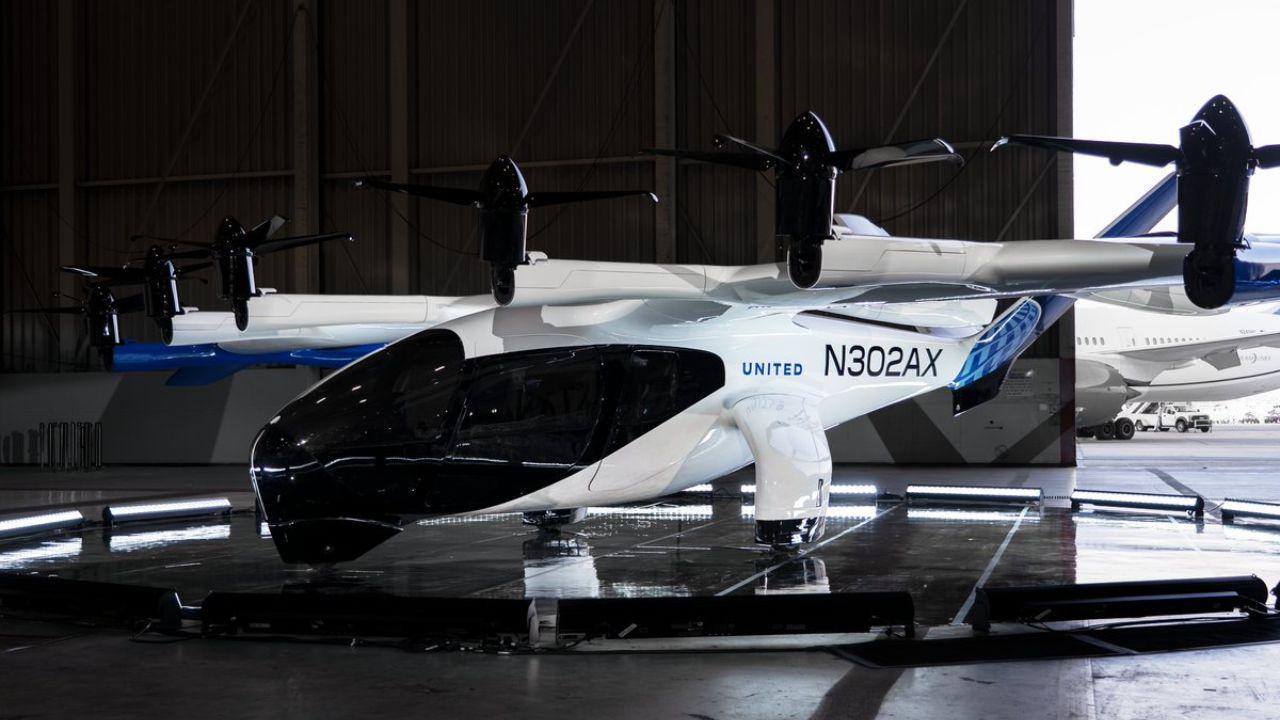
Post by : Avinab Raana
Photo : X / Archer
Archer Aviation is preparing to launch trial operations of its Midnight electric vertical takeoff and landing aircraft at night under a new US federal pilot programme. The company will partner with United Airlines and selected US cities. The aim is to test Midnight’s performance, safety, noise and scalability well before full certification. These early trials may begin as early as next year under the eVTOL Integration Pilot Program created by the US Department of Transportation and Federal Aviation Administration. This marks a major milestone for urban air mobility and signals that eVTOLs may soon take to skies after dark.
The federal framework gives cities, aircraft manufacturers and operators permission to conduct pre-certification operations of electric air taxi aircraft. The US DOT and FAA developed the programme via Presidential Executive Order issued in June. This order directed creation of the Integration Pilot Program for eVTOLs so that these operations can be tested safely and responsibly. The trial allows testing in real urban environments to gather operational data, measure community effects, noise signatures, and explore how an air taxi system might scale once regulations and certifications are fully in place.
Archer’s Midnight aircraft is slated to be one of the featured models in the pilot program. Midnight is a four-passenger eVTOL using a unique “twelve-tilt-six” propeller configuration. It is designed for short-distance urban hops of around 20 miles (32 km). It can travel longer in optimal conditions—up to 100 miles (160 km) in best case range. Charging is expected to take about 10 minutes when using fast charging infrastructure. The aircraft has already logged another milestone: in August it completed a piloted flight of approximately 55 miles (89 km) in 31 minutes at speeds exceeding 126 mph (203 km/h) from Archer’s facility. That flight strengthens confidence in its performance and endurance.
Key issues in the trial operations will center on safety and noise. Night flights are especially sensitive to noise concerns, visual disturbance and lighting regulations in urban zones. Archer will need to prove that Midnight can fly quietly, safely and reliably under varied weather and light conditions. The FAA will supervise trial operations. Cities will play a role in assessing community acceptance. Public feedback will shape rules for routes, timings, flight volumes and mitigation measures. Safety certification still lies ahead, but these trials will generate data to inform certification.
United Airlines has invested in Archer since 2021. United sees eVTOLs like Midnight as part of its strategy to integrate air taxi services into its broader transportation ecosystem. The airline aims for a future where customers may get from city center to airport or between nearby cities using eVTOLs. United’s involvement gives credibility to Archer’s plans and helps with logistics, route planning and scaling. The partnership also may unlock advantages for infrastructure investment, charging, maintenance and public acceptance.
The programme rests on recent policy moves. The executive order from the US President and regulation by FAA provide a legal route for pre-certification trials. Policymakers are trying to ensure the US stays competitive in next-generation aviation technologies. Regulatory clarity will be deeply important. Rules for night operations, pilot training, maintenance, safety certification, noise limits, and route permissions all must evolve. Archer and United must work with local governments and agencies to ensure that permits, airspace rules and community concerns align.
Most existing eVTOL development focuses on daytime operations. Testing at night brings special challenges. Visual references are reduced; navigation, collision avoidance and lighting must be more robust. Noise perception changes when ambient sound is lower. Flight operations in darkness require more from avionics, sensors, navigation aids, lighting and pilot training. If Archer can succeed at night, it opens wider operational windows. That means more flights per day, more utility, and more value in urban mobility networks.
Midnight’s flight tests will assess battery performance in cooler night air, cooling and thermal management under lower ambient temperatures, lighting and sensor systems for navigation, rotor noise propagation, and reliability across repeated take-offs and landings. Charging infrastructure will need to work under low-light conditions. Noise assessments will likely use both instrumentation and human feedback. Observing how the aircraft handles wind, temperature differentials and possibly fog or low visibility will be essential. All of this in service of demonstrating that Midnight can operate not just safely but in everyday conditions.
The trial programme will involve selected cities which will host operations, possibly including vertiports, charging stations and ground support infrastructure. Urban air mobility depends not just on the aircraft but also on where it takes off and lands, how passengers access vertiports, how charging is managed, how regulatory oversight is handled within cities. Selected cities will give input into permitting, zoning, flight corridors and community outreach. Infrastructure investment will be required in many cases. These trials will help define realistic infrastructure needs, cost, logistics and impact.
There are multiple challenges ahead. Certification of aircraft takes time. Approval of noise and safety levels may require redesign or mitigation. Infrastructure may lag behind aircraft readiness. Cities may have concerns about noise, safety, privacy, visuals or environmental impact. Battery performance and weight remain critical. Weather and visibility at night pose risks. Pilot training may need special standards. Charging infrastructure must be robust and safe. All of these factors make the trials ambitious. But the trial framework gives Archer and partners a path to work through those challenges with public oversight.
Urban air mobility is emerging as a part of future transportation networks. If Midnight proves viable, it could push forward market confidence in eVTOLs. Investors will watch closely. Other eVTOL makers will be evaluated against how well they meet safety, noise and community acceptance benchmarks. Demonstration of viable night operations could be a competitive advantage. Airlines, municipalities, tech investors may view Archer as a leader. Demand from cities and operators ready to deploy air taxis may accelerate.
Midnight trials could generate jobs in aircraft maintenance, pilot training, infrastructure build-out, vertiport operation, community planning. It offers potential environmental benefit through reduced reliance on combustion-engine ground transport in congested cities. Reduced traffic-based emissions, faster transit times and novel mobility options may improve urban livability. If flights are quiet and safe, social acceptance could grow. That in turn could lead to regulatory momentum, investment in charging, green electricity and sustainable energy sourcing.
The August flight of Midnight covering 55 miles in 31 minutes showed that performance is promising. That test exceeded speed expectations and challenged distance assumptions. The aircraft’s proprietary twelve-tilt-six propeller configuration has shown capability in flight test settings. That flight, along with local approvals or early agreements for infrastructure, set the stage for trials under the new programme. Archer has demonstrated that hardware and design advances are not just lab performance but are proving usable in real testing environments.
No matter how capable the aircraft is, if communities don't accept it, deployment will slow. Noise at night is deeply felt by people. Flight paths over neighborhoods, lights, rotor sound, pilot error or unexpected events will be scrutinized. Archer’s promise to demonstrate quiet operation must be met with rigorous testing and transparency. Communities will want information, data, hearing voices in planning and regulation. Incorporating feedback may lead to changed routes, restricted hours, adjusted operations. That is part of what the trial programme seeks to learn.
Key milestones include the first night trial flights, availability of infrastructure in trial cities, regulatory permits, data collected on safety and noise, community feedback, and announcements from FAA or DOT on certification progress. Also important will be deployment costs, aircraft availability, maintenance schedules under operational conditions. The success of Midnight may depend not just on flight performance but operational economics. Can charging, vertiports, pilot staffing, regulatory compliance be done at scale?
Urban air mobility has long been promised but often delayed by regulation, infrastructure and public acceptance. Trials like this may point the way toward new mobility networks including air taxis. Midnight might connect city centers to airports, cross-city hops, or serve neighborhoods underserved by ground transport. If safe night operations become common, schedules become more flexible. If that happens many of the claims of urban air mobility begin to feel real rather than futuristic.
Archer’s participation in the Night-trial eVTOL trial under the US pilot program is a defining moment. It signals that air taxis are no longer just daytime demonstration flights but may soon be part of routine operations even at night. If Archer can prove safety, quiet flight and public acceptance then Midnight might shift from hopeful pioneer to aviation disruptor.
This trial will be watched by regulators, competitors, investors and communities alike. It may define whether urban air mobility takes off in cities across America with credibility. For Archer, for United Airlines, for the cities involved this is more than a test flight. It could mark the start of everyday electric flight after dark.
Midnight eVTOL, Urban air mobility, Night operations trial








Advances in Aerospace Technology and Commercial Aviation Recovery
Insights into breakthrough aerospace technologies and commercial aviation’s recovery amid 2025 chall

Defense Modernization and Strategic Spending Trends
Explore key trends in global defense modernization and strategic military spending shaping 2025 secu

Tens of Thousands Protest in Serbia on Anniversary of Deadly Roof Collapse
Tens of thousands in Novi Sad mark a year since a deadly station roof collapse that killed 16, prote

Canada PM Carney Apologizes to Trump Over Controversial Reagan Anti-Tariff Ad
Canadian PM Mark Carney apologized to President Trump over an Ontario anti-tariff ad quoting Reagan,

The ad that stirred a hornets nest, and made Canadian PM Carney say sorry to Trump
Canadian PM Mark Carney apologizes to US President Trump after a tariff-related ad causes diplomatic

Bengaluru-Mumbai Superfast Train Approved After 30-Year Wait
Railways approves new superfast train connecting Bengaluru and Mumbai, ending a 30-year demand, easi



