Post by : Saif
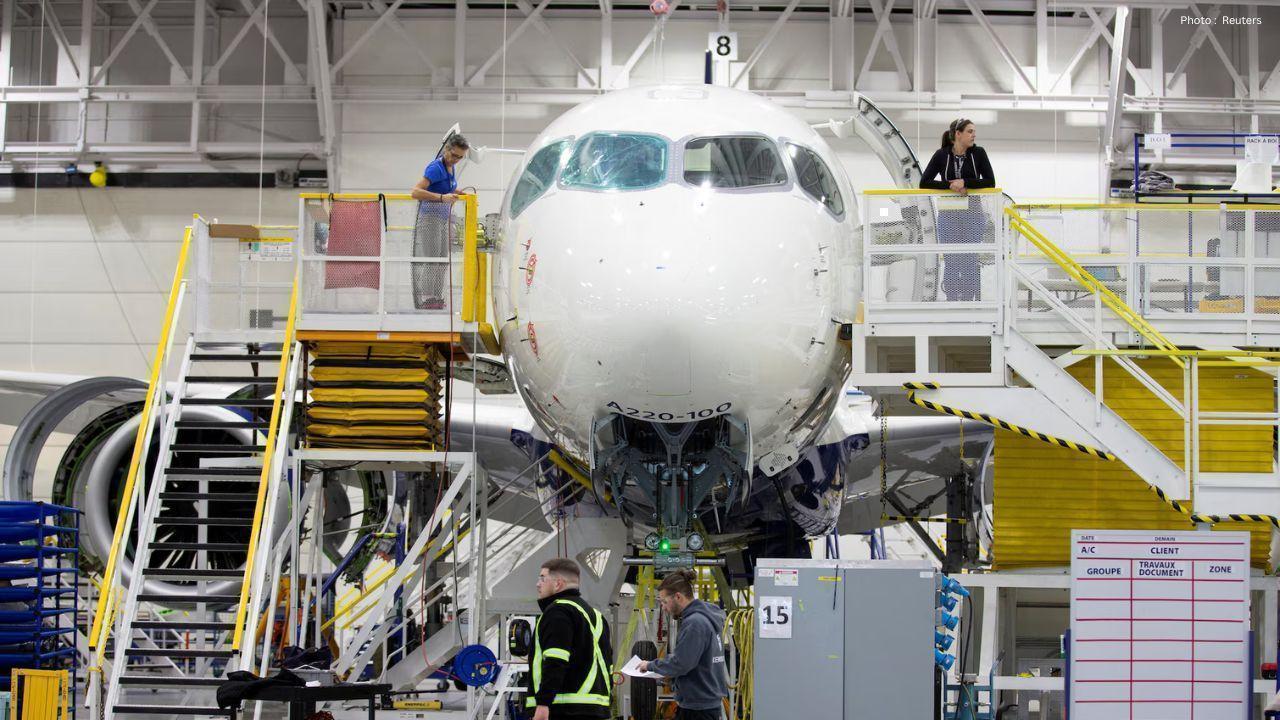
Airbus is facing an important decision about the future of its A220 aircraft family as the company considers whether to move ahead with a larger version of the popular jet. The European aerospace manufacturer has spent years expanding the A220 program, but recent discussions suggest that executives are carefully reviewing the timing of any major announcement. The decision comes as airlines seek more efficient aircraft while manufacturers work to balance customer demand, production costs, and long-term profitability.
The proposed aircraft, commonly known within the aviation industry as the A220-500, would be a stretched version of the existing A220 models. The larger jet is expected to carry more passengers than current variants, giving airlines the opportunity to reduce operating costs on busy routes. Industry experts believe such an aircraft could fill an important gap between smaller regional jets and larger single-aisle aircraft already available in the market.
Earlier expectations suggested that Airbus might move quickly toward launching the project. Interest from several airlines created optimism that the company could soon introduce the new model. However, recent developments indicate that executives are taking a more cautious approach. The company is studying market conditions and gathering feedback from customers before making a final commitment.
One of the key issues involves passenger capacity and aircraft range. A larger jet would allow airlines to transport more travelers on each flight, improving efficiency and potentially increasing profits. At the same time, carrying additional passengers could affect the aircraft's maximum flying distance. Some airlines view the trade-off as acceptable, while others prefer greater flexibility for longer routes. These different priorities have made it more difficult to build complete industry support for the project.
Engine reliability also remains an important consideration. Airlines continue to monitor performance improvements involving engines used on the current A220 fleet. While manufacturers have worked to address technical concerns, some operators prefer to see further progress before supporting a larger version. Confidence in long-term reliability plays a major role whenever airlines invest billions of dollars in new aircraft.
The company recently received strong support for the existing A220 program through major aircraft orders from airline customers. These deals demonstrate that demand for the current models remains healthy across different regions. Strong sales have reduced pressure on Airbus to rush development plans and have allowed management to focus on making the right strategic decision rather than moving quickly.
Financial factors are also influencing discussions. Since taking control of the A220 program from Canada's Bombardier, Airbus has invested significant resources in improving production efficiency and reducing costs. A larger version could strengthen the business case by spreading development expenses across more aircraft and improving profitability over time. However, launching a new model requires substantial investment, making careful planning essential.
Competition within Airbus' own product lineup presents another challenge. A stretched A220 could overlap with aircraft already offered by the company, particularly in the single-aisle market. Executives must determine whether the new model would attract additional customers or simply shift demand away from existing products. Finding the right balance is important for maintaining a strong and profitable portfolio.
Aircraft leasing companies are also paying close attention to the discussion. Leasing firms purchase large numbers of aircraft and rent them to airlines around the world. Their support often plays a major role in the success of new aviation programs. Some lessors remain cautious about how a larger A220 could affect the value of existing aircraft fleets and future market demand.
The broader aviation industry continues to experience significant change as passenger traffic grows and airlines look for more efficient ways to operate. Fuel efficiency, lower operating costs, and environmental considerations have become major priorities for carriers. Any new aircraft must meet these expectations while offering clear advantages over competing models.
For Airbus, the question appears to be less about whether a larger A220 is possible and more about when the right moment will arrive. The company continues to study customer requirements, market trends, and financial realities before making a final decision. Industry observers believe the project remains under serious consideration, even if an immediate launch is no longer expected.
outcome of this decision could shape the future of the A220 family and influence competition in the global aviation market for years to come. Whether Airbus moves forward soon or waits for stronger market signals, the company faces an important strategic choice that could affect airlines, investors, leasing firms, and passengers around the world.
#trending #latest #Airbus #A220 #A220Aircraft #AviationNews #AirlineIndustry #CommercialAviation #AircraftManufacturing #Aerospace #AirbusA220 #AviationMarket #AirlineBusiness #AircraftDevelopment #GlobalAviation









Advances in Aerospace Technology and Commercial Aviation Recovery
Insights into breakthrough aerospace technologies and commercial aviation’s recovery amid 2025 chall

Defense Modernization and Strategic Spending Trends
Explore key trends in global defense modernization and strategic military spending shaping 2025 secu

Tens of Thousands Protest in Serbia on Anniversary of Deadly Roof Collapse
Tens of thousands in Novi Sad mark a year since a deadly station roof collapse that killed 16, prote

Canada PM Carney Apologizes to Trump Over Controversial Reagan Anti-Tariff Ad
Canadian PM Mark Carney apologized to President Trump over an Ontario anti-tariff ad quoting Reagan,

The ad that stirred a hornets nest, and made Canadian PM Carney say sorry to Trump
Canadian PM Mark Carney apologizes to US President Trump after a tariff-related ad causes diplomatic

Bengaluru-Mumbai Superfast Train Approved After 30-Year Wait
Railways approves new superfast train connecting Bengaluru and Mumbai, ending a 30-year demand, easi



