Post by : Saif
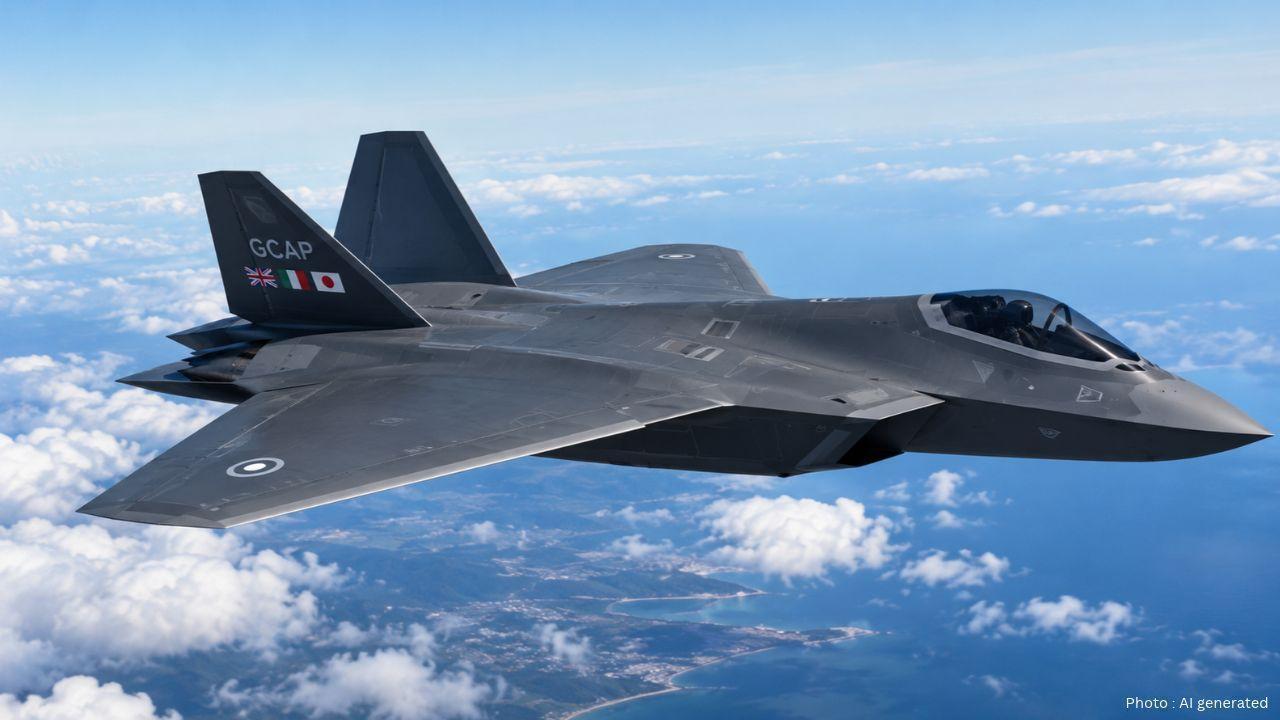
Airbus is preparing to hold talks with British defence company BAE Systems about a possible role in the Global Combat Air Programme (GCAP), an international project aimed at developing a next-generation stealth fighter jet by 2035. The discussions could open new opportunities for European defence cooperation and shape the future of military aircraft manufacturing.
According to a Financial Times report published on October 25, 2026, Airbus executives are expected to meet their counterparts at BAE Systems to explore possible ways for the European aircraft manufacturer to participate in the programme.
Airbus has said it is open to partnerships, provided German, Spanish and other European industries receive substantial and equal participation in development, production and operational use.
The Global Combat Air Programme was launched in 2022 by the United Kingdom, Italy and Japan. Its main objective is to develop an advanced combat aircraft capable of meeting future military requirements, with a target of entering service in 2035.
The programme is led by three major defence companies: BAE Systems of the UK, Japan’s Mitsubishi Heavy Industries and Italy’s Leonardo.
The planned aircraft is expected to feature stealth technology, advanced sensors, digital communications and the ability to operate alongside unmanned aircraft. These capabilities are intended to improve situational awareness, information sharing and performance in complex combat environments.
GCAP is also designed to strengthen cooperation among the participating countries and support their domestic aerospace and defence industries.
Airbus has indicated that any involvement in GCAP would require clear arrangements for industrial participation.
The company said German and Spanish political leaders would need to make timely policy decisions to establish the programme’s development roadmap and industrial structure, regardless of the partnership model selected.
This reflects the importance of national government support in major defence projects, where funding, technology sharing, production responsibilities and military requirements must be agreed upon by participating countries.
Germany and Spain have significant aerospace industries, and Airbus wants their interests to be represented in any potential cooperation arrangement.
However, no final agreement on Airbus joining the programme has been announced, and the details of any expanded partnership remain uncertain.
The discussions between Airbus and BAE Systems could extend beyond the main fighter jet, according to the Financial Times report.
One possible area of cooperation is the development of autonomous collaborative combat aircraft. These unmanned systems could operate alongside crewed fighter jets, supporting missions through surveillance, reconnaissance and other military functions.
Another potential area is the development of a combat cloud, a digital network designed to connect aircraft, drones, ground-based radar and other sensors.
Such a system would allow participating platforms to exchange information more effectively, helping military personnel build a clearer picture of activity across the operational environment.
Cooperation in these areas could provide opportunities for Airbus even if its role in the main GCAP fighter aircraft remains unresolved.
British Prime Minister Andy Burnham said earlier in October that the UK was open to Germany joining the GCAP programme.
The initiative has already expanded its international engagement. Canada joined as an observer in July 2026, potentially creating a pathway for deeper involvement in the future.
Greater participation could strengthen the programme’s industrial base and bring additional expertise, investment and manufacturing capacity. However, any expansion would require agreement on governance, funding, technology access and the distribution of work among partners.
The role of Germany and Spain could become particularly important if Airbus moves towards formal participation.
Read more: Colombia Signs $3.6 Billion Deal with Saab for New Gripen Fighter Jets
Potential cooperation between Airbus and BAE Systems comes as European countries seek to strengthen defence capabilities and maintain advanced aerospace manufacturing expertise.
A broader partnership could bring together additional engineering resources and industrial capacity. It could also create new opportunities in autonomous aircraft, digital battlefield systems and next-generation military aviation.
However, different national priorities and demands for equal industrial participation could complicate negotiations.
For now, the reported talks represent an exploratory step rather than a confirmed agreement. The future of Airbus’s involvement will depend on negotiations with BAE Systems, government decisions and the programme partners’ willingness to adjust the existing industrial structure.
#trending #latest #Airbus #BAESystems #GCAP #FighterJet #DefenceIndustry #MilitaryAircraft #StealthFighter #Japan #UnitedKingdom #Italy #Germany #Spain #Aerospace #DefenceTechnology









Advances in Aerospace Technology and Commercial Aviation Recovery
Insights into breakthrough aerospace technologies and commercial aviation’s recovery amid 2025 chall

Defense Modernization and Strategic Spending Trends
Explore key trends in global defense modernization and strategic military spending shaping 2025 secu

Tens of Thousands Protest in Serbia on Anniversary of Deadly Roof Collapse
Tens of thousands in Novi Sad mark a year since a deadly station roof collapse that killed 16, prote

Canada PM Carney Apologizes to Trump Over Controversial Reagan Anti-Tariff Ad
Canadian PM Mark Carney apologized to President Trump over an Ontario anti-tariff ad quoting Reagan,

The ad that stirred a hornets nest, and made Canadian PM Carney say sorry to Trump
Canadian PM Mark Carney apologizes to US President Trump after a tariff-related ad causes diplomatic

Bengaluru-Mumbai Superfast Train Approved After 30-Year Wait
Railways approves new superfast train connecting Bengaluru and Mumbai, ending a 30-year demand, easi