Post by : Avinab Raana
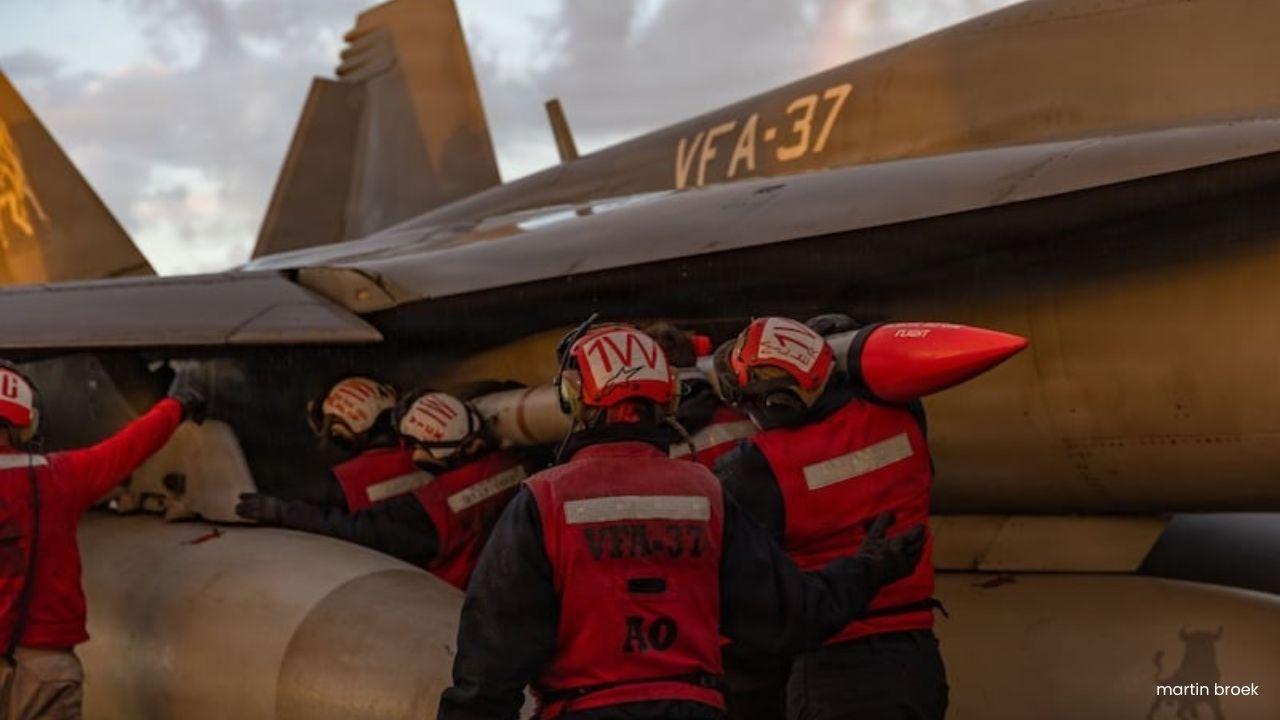
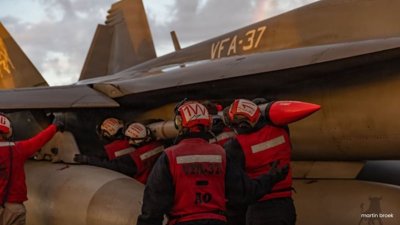
Photo : X / martin broek
In a stark escalation of hostilities in the Middle East, three United States Air Force F-15E Strike Eagle fighter jets were shot down over Kuwaiti airspace during active military operations linked to the ongoing conflict with Iran. The US Central Command confirmed that the losses occurred due to an apparent friendly-fire incident, with Kuwaiti air defence systems misidentifying the American aircraft amid high-intensity combat conditions. Fortunately, all six crew members from the three aircraft successfully ejected and were recovered in stable condition, according to military officials.
The incident took place as part of a broader military campaign involving the United States and allied forces, under the operational name “Operation Epic Fury.” This campaign has seen a dramatic uptick in combat activity, with Iranian forces launching waves of drones, ballistic missiles and other aerial threats in response to strikes and strategic actions by US and allied militaries.
The downing of the F-15s highlights the increasing complexity and volatility of aerial operations over conflict zones in the Middle East. As Iranian drones, missiles and aircraft saturate airspace across multiple countries including Kuwait and neighbouring Gulf states. The risk of misidentification and unintended engagements has sharply risen. With multiple allied and coalition aircraft flying in close proximity to sophisticated, layered air defence networks, the fog of war has grown denser, complicating even routine combat and support missions.
Kuwaiti authorities acknowledged their air defence systems were responsible for the incident and stated a joint investigation with US forces was underway to determine exactly how the misidentification occurred. Such friendly-fire events are rare, particularly involving high-performance fighter jets like the F-15E, underscoring both the high stakes of modern aerial warfare and the challenges of integrated coalition air operations in contested environments.
The loss of multiple airframes, even in non-combat engagements carries significant operational and symbolic weight. The F-15E Strike Eagle remains one of the air force’s most capable multirole fighter platforms, and its unexpected loss underscores the growing intensity of the Iran-US confrontation. Military analysts say incidents like these could prompt reviews of air command and control procedures, particularly when allied air defence networks are operating under stress.
Beyond the immediate tactical implications, the event also highlights how dispersed regional conflict can draw in support and defensive systems from multiple nations, increasing the risk of miscommunication and unintended engagements. As the conflict widens and air operations continue across multiple fronts, both coalition commanders and partner nations may reassess coordination mechanisms to reduce the likelihood of similar incidents in the future.
This friendly-fire incident comes amid a broader pattern of escalation in the region. Iranian forces have intensified strikes targeting US positions and allied facilities, while the United States and its partners have carried out significant counter-operations designed to diminish Tehran’s aerial threat capabilities. The downing of US aircraft in friendly fire reflects a conflict that has moved beyond precision strikes and is now characterised by high tempo, complex air defence engagement zones and rapidly evolving combat dynamics.
Despite the loss of aircraft, the safe recovery of all aircrew offers a rare positive note amid escalating tensions. Still, the event serves as a sobering reminder of how quickly modern conflicts can evolve, and how even well-coordinated allies can face unintended consequences in the chaos of high-intensity warfare.
US F-15 jets shot down, Iran conflict escalation, friendly fire aviation losses





Advances in Aerospace Technology and Commercial Aviation Recovery
Insights into breakthrough aerospace technologies and commercial aviation’s recovery amid 2025 chall

Defense Modernization and Strategic Spending Trends
Explore key trends in global defense modernization and strategic military spending shaping 2025 secu

Tens of Thousands Protest in Serbia on Anniversary of Deadly Roof Collapse
Tens of thousands in Novi Sad mark a year since a deadly station roof collapse that killed 16, prote

Canada PM Carney Apologizes to Trump Over Controversial Reagan Anti-Tariff Ad
Canadian PM Mark Carney apologized to President Trump over an Ontario anti-tariff ad quoting Reagan,

The ad that stirred a hornets nest, and made Canadian PM Carney say sorry to Trump
Canadian PM Mark Carney apologizes to US President Trump after a tariff-related ad causes diplomatic

Bengaluru-Mumbai Superfast Train Approved After 30-Year Wait
Railways approves new superfast train connecting Bengaluru and Mumbai, ending a 30-year demand, easi



