Post by : Avinab Raana
Photo : X / The Global Eye
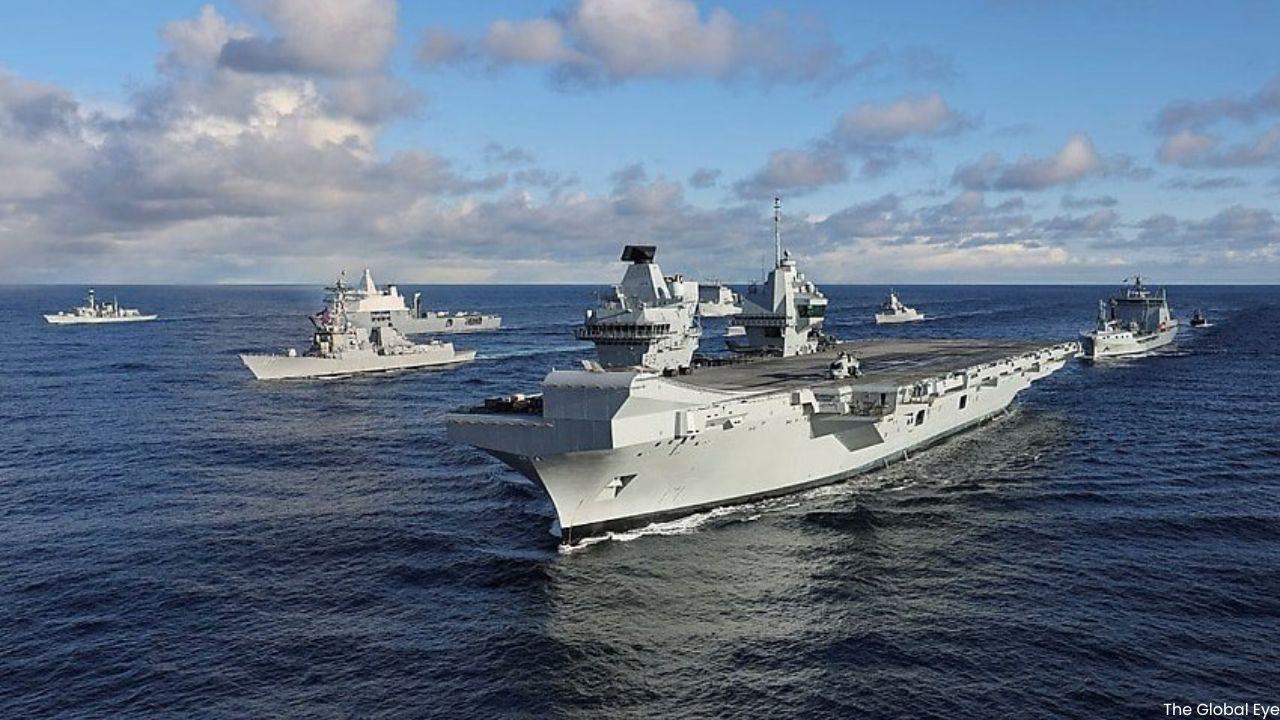
In a decisive move reflecting the urgency of the global shipping crisis, the United Kingdom and France are spearheading a multinational initiative to secure the Strait of Hormuz, one of the world’s most critical maritime chokepoints. The plan, led by the Royal Navy alongside French naval forces, aims to restore confidence among commercial shipping operators navigating increasingly dangerous waters. With tensions escalating in the region, the coalition is being designed as a stabilizing force rather than a direct military intervention, signaling a shift toward coordinated maritime security efforts rooted in international cooperation.
The emerging coalition is not limited to European powers, as over 30 allied nations are being drawn into discussions to build a unified response. France is expected to host a high-level multinational conference, bringing together partners from across Europe, Asia, and the Middle East to align operational strategies and share responsibilities. This growing alliance underscores the global stakes involved, as countries dependent on uninterrupted energy and commodity flows increasingly recognize the need for collective action to protect maritime trade routes.
The strategic importance of the Strait of Hormuz cannot be overstated, as it handles a significant share of global oil and gas shipments, making it indispensable to energy markets worldwide. Recent disruptions, coupled with escalating geopolitical tensions, have exposed the vulnerability of this narrow passage. Shipping traffic has already been severely impacted, with heightened risks from drone strikes, missile threats, and potential mining operations forcing operators to reconsider transit routes. The situation has transformed the strait into a high-risk zone, where even routine voyages now carry extraordinary uncertainty.
What sets this initiative apart is its carefully calibrated approach focused on safeguarding shipping without escalating conflict. France has made it clear that it will not participate in offensive operations but remains committed to securing maritime routes in accordance with international law. The UK, meanwhile, is exploring options including deploying specialized vessels and mine-clearance capabilities to ensure safe passage. This defensive posture is critical in maintaining diplomatic balance while still addressing the urgent need for maritime security.
For the global shipping industry, the crisis in the Strait of Hormuz represents one of the most severe operational challenges in recent years. Insurance costs have surged, routes are being reassessed, and shipping companies are grappling with the dual pressures of safety and supply commitments. The uncertainty surrounding the strait has already begun to disrupt global energy flows and trade timelines, reinforcing the need for a coordinated international response to prevent long-term economic fallout.
As the UK and France push forward with their coalition-building efforts, the outcome could redefine how the world responds to maritime crises in strategic chokepoints. Beyond immediate security concerns, this initiative represents a broader shift toward collaborative defense of global trade infrastructure. If successful, it may not only restore stability in the Strait of Hormuz but also set a precedent for managing future disruptions in an increasingly volatile geopolitical landscape.
Strait of Hormuz security, UK France coalition, maritime security alliance, global shipping crisis, oil trade disruption, naval escort mission, maritime logistics risk




Advances in Aerospace Technology and Commercial Aviation Recovery
Insights into breakthrough aerospace technologies and commercial aviation’s recovery amid 2025 chall

Defense Modernization and Strategic Spending Trends
Explore key trends in global defense modernization and strategic military spending shaping 2025 secu

Tens of Thousands Protest in Serbia on Anniversary of Deadly Roof Collapse
Tens of thousands in Novi Sad mark a year since a deadly station roof collapse that killed 16, prote

Canada PM Carney Apologizes to Trump Over Controversial Reagan Anti-Tariff Ad
Canadian PM Mark Carney apologized to President Trump over an Ontario anti-tariff ad quoting Reagan,

The ad that stirred a hornets nest, and made Canadian PM Carney say sorry to Trump
Canadian PM Mark Carney apologizes to US President Trump after a tariff-related ad causes diplomatic

Bengaluru-Mumbai Superfast Train Approved After 30-Year Wait
Railways approves new superfast train connecting Bengaluru and Mumbai, ending a 30-year demand, easi



