Post by : Saif
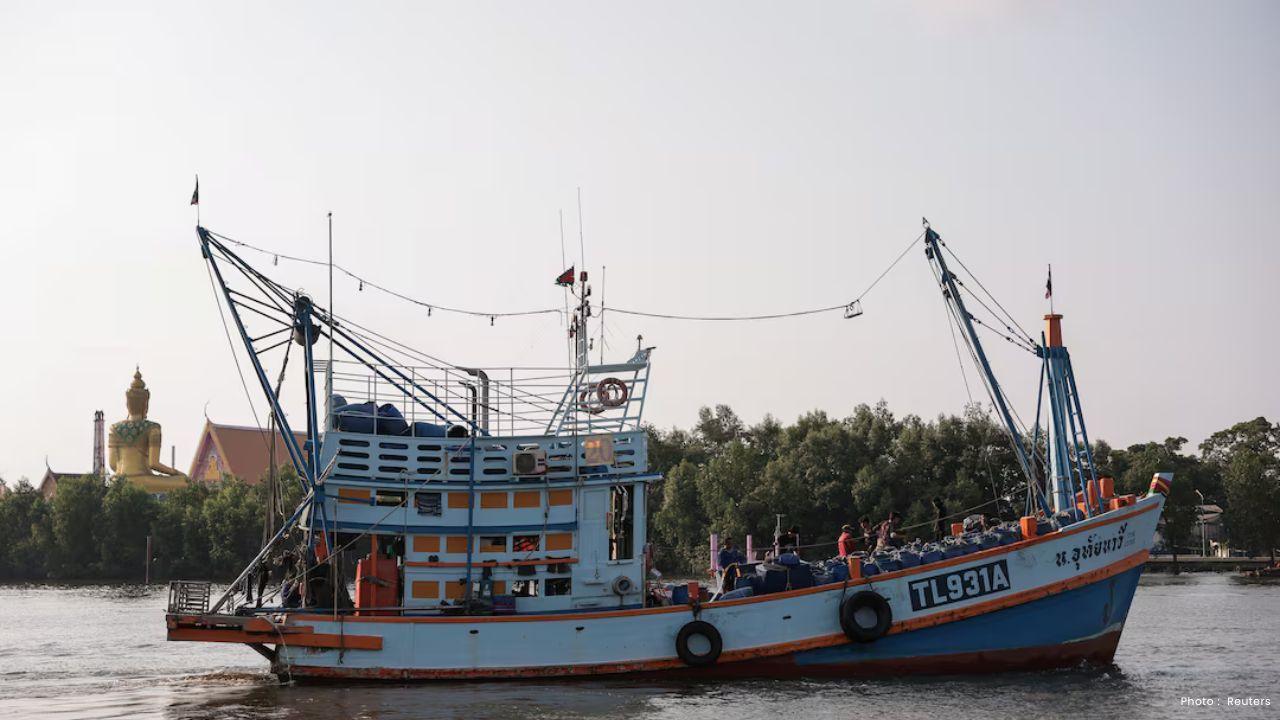
Thailand’s fishing industry is facing one of its toughest moments in recent years. Rising fuel prices, driven by the ongoing war involving Iran, are pushing the industry close to a complete standstill.
Fishing boats across the country are struggling to operate as diesel costs continue to climb. Fuel is one of the biggest expenses for fishing crews, and the sudden increase in prices has made many trips too expensive to continue.
Recent reports show that diesel prices in Thailand have risen sharply to about 38.94 baht per litre, up from around 29.94 baht in February before the conflict escalated. This sharp jump came after government subsidies ended and global oil markets reacted to disruptions caused by the war.
For many fishermen, the situation has become unbearable. Some have already stopped going out to sea because they cannot afford the cost of fuel. Others are trying to adapt by reducing their travel speed or shortening trips, but this has led to smaller catches and lower income.
One fisherman explained that slower sailing saves fuel but results in less fish being caught. This creates a difficult cycle where even those who continue working earn much less than before.
The situation could worsen if prices continue to rise. Experts warn that if diesel reaches around 40 baht per litre, many fishing operations will become completely unviable. This means more boats could remain docked, leading to job losses and reduced seafood supply.
Thailand depends heavily on its fishing industry, not only for jobs but also for food. Fish is a major part of the country’s diet and provides an important source of protein for millions of people. If fishing slows down, it could affect both local markets and exports.
The root of the problem lies far beyond Thailand. The ongoing war in the Middle East has disrupted global oil supply chains. The conflict has affected key shipping routes like the Strait of Hormuz, which carries a large portion of the world’s oil.
As oil supplies become uncertain, prices rise. These increases are felt strongly in countries like Thailand, which rely on imported fuel. Even though Thailand has some reserves, the global nature of oil markets means it cannot escape rising costs.
The impact is not limited to fishing. Across Asia, higher fuel prices are affecting transport, farming, and industry. Businesses are facing higher costs, and consumers are paying more for everyday goods.
In Thailand, the fishing crisis is a clear example of how global events can affect local communities. Fishermen who once went out to sea daily are now staying on land, unsure of when conditions will improve.
There are growing calls for government support to help the industry survive. Some experts suggest that temporary fuel subsidies or financial aid could help fishermen continue their work during this difficult time.
However, such measures may only provide short-term relief. The larger issue is the global energy crisis caused by the war. As long as the conflict continues, fuel prices are likely to remain high and unpredictable.
This situation highlights how deeply connected the world has become. A conflict in one region can quickly affect industries and livelihoods thousands of kilometers away.
Thailand’s fishing industry now stands at a critical point. If conditions do not improve soon, the damage could take years to repair. Jobs may be lost, food supply may shrink, and small fishing communities could struggle to survive.
The crisis is a reminder that economic stability depends not only on local policies but also on global peace. Without stability in energy markets, industries like fishing will continue to face serious risks.
#trending #latest #Thailand #FishingIndustry #IranWar #FuelCrisis #GlobalEconomy #OilPrices #AsiaNews #BreakingNews





Advances in Aerospace Technology and Commercial Aviation Recovery
Insights into breakthrough aerospace technologies and commercial aviation’s recovery amid 2025 chall

Defense Modernization and Strategic Spending Trends
Explore key trends in global defense modernization and strategic military spending shaping 2025 secu

Tens of Thousands Protest in Serbia on Anniversary of Deadly Roof Collapse
Tens of thousands in Novi Sad mark a year since a deadly station roof collapse that killed 16, prote

Canada PM Carney Apologizes to Trump Over Controversial Reagan Anti-Tariff Ad
Canadian PM Mark Carney apologized to President Trump over an Ontario anti-tariff ad quoting Reagan,

The ad that stirred a hornets nest, and made Canadian PM Carney say sorry to Trump
Canadian PM Mark Carney apologizes to US President Trump after a tariff-related ad causes diplomatic

Bengaluru-Mumbai Superfast Train Approved After 30-Year Wait
Railways approves new superfast train connecting Bengaluru and Mumbai, ending a 30-year demand, easi



