Post by : Avinab Raana
Photo : X / Reuters
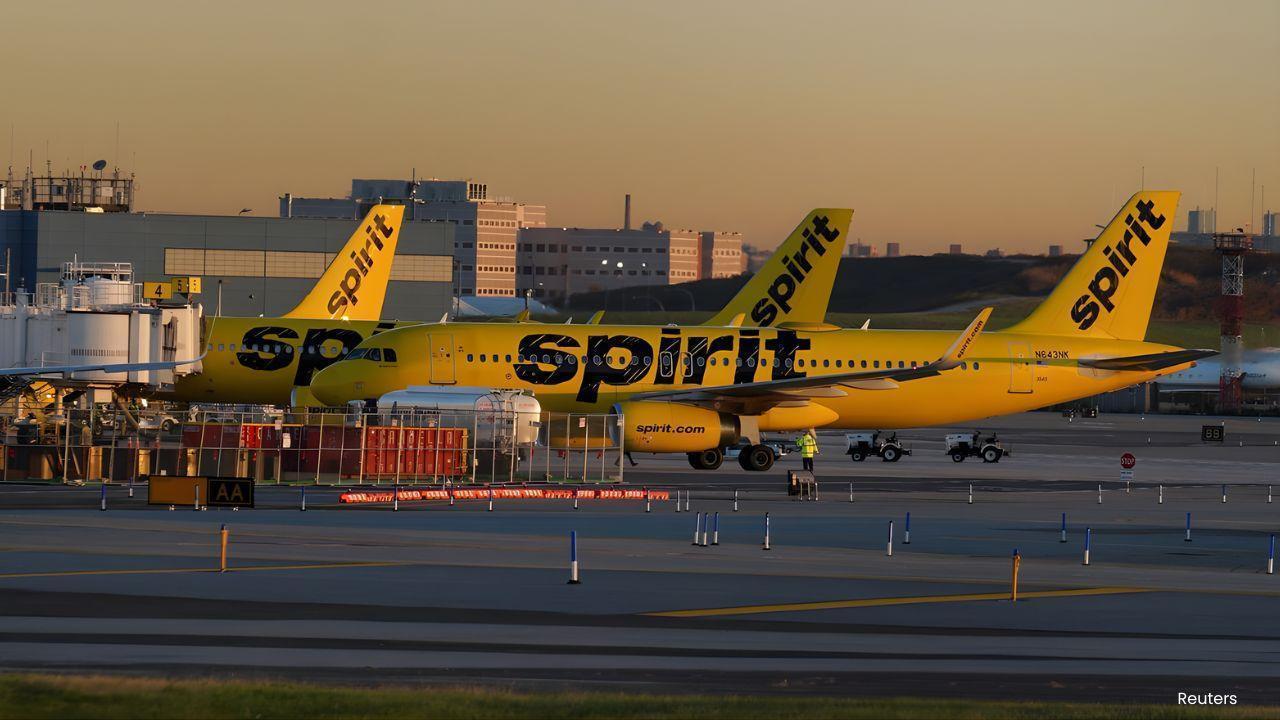
Spirit Airlines is preparing for a major operational shift as the ultra-low-cost carrier plans to operate 80 or fewer Airbus A320-family aircraft by the third quarter. The move marks a decisive step in the airline’s broader restructuring effort aimed at stabilizing its finances and reshaping its long-term operational model.
For years, Spirit built its reputation on aggressive expansion and a rapidly growing fleet of narrowbody aircraft. However, economic pressure, rising operational costs, and changing travel dynamics have forced the airline to rethink that strategy. The new fleet target signals a transition toward a leaner and more controlled operating structure.
Industry observers see this as a strategic reset designed to help the airline rebuild financial strength while maintaining its competitive position in the low-cost aviation market.
The Spirit A320 fleet strategy is closely tied to the airline’s ongoing financial restructuring plan. By significantly reducing the number of aircraft in operation, the company aims to lower leasing costs, maintenance expenses, and overall operational complexity.
Operating a smaller fleet allows airlines to streamline scheduling, simplify crew deployment, and improve cost management. For Spirit, this restructuring approach could help restore financial stability after a turbulent period in the aviation industry. While the reduction may appear dramatic, it reflects a growing trend across global airlines that are prioritizing efficiency and profitability over rapid expansion.
Alongside the fleet reduction, Spirit Airlines is expected to refine its route network by focusing on destinations that generate consistent demand and higher passenger loads. Instead of maintaining a wide but uneven route map, the airline is shifting toward routes where its ultra-low-cost model performs best.
Major leisure markets and high-traffic corridors are likely to remain central to Spirit’s operations. Concentrating aircraft on these routes allows the airline to maximize seat occupancy while maintaining its trademark low fares. The streamlined fleet will also allow Spirit to manage capacity more effectively during periods of fluctuating demand.
Despite reducing its aircraft count, Spirit is not abandoning its ambitions for future growth. The restructuring phase is intended to create a stronger operational foundation that could eventually support expansion once financial stability is restored.
The airline is also exploring ways to enhance passenger offerings, including adjustments to seating options and onboard services. These changes aim to attract a broader range of travelers while preserving the airline’s core identity as an affordable carrier. By balancing cost discipline with selective improvements to the passenger experience, Spirit hopes to redefine its role in the competitive low-cost airline market.
The decision to operate 80 or fewer Airbus A320 aircraft reflects a pivotal moment in Spirit Airlines’ journey. Instead of chasing rapid growth, the airline is prioritizing operational resilience and financial recovery.
If the strategy succeeds, Spirit could emerge as a leaner but more sustainable airline capable of adapting to the rapidly changing aviation landscape. For now, the focus remains clear stabilize operations, strengthen finances, and rebuild momentum for the next chapter in the airline’s evolution.
#trending #latest, Spirit Airlines fleet reduction, Spirit A320 fleet strategy, Spirit Airlines restructuring plan, Airbus A320 Spirit fleet, Spirit Airlines aviation strategy, Spirit Airlines cost efficiency plan, Spirit Airlines fleet restructuring, Spirit Airlines operations strategy








Advances in Aerospace Technology and Commercial Aviation Recovery
Insights into breakthrough aerospace technologies and commercial aviation’s recovery amid 2025 chall

Defense Modernization and Strategic Spending Trends
Explore key trends in global defense modernization and strategic military spending shaping 2025 secu

Tens of Thousands Protest in Serbia on Anniversary of Deadly Roof Collapse
Tens of thousands in Novi Sad mark a year since a deadly station roof collapse that killed 16, prote

Canada PM Carney Apologizes to Trump Over Controversial Reagan Anti-Tariff Ad
Canadian PM Mark Carney apologized to President Trump over an Ontario anti-tariff ad quoting Reagan,

The ad that stirred a hornets nest, and made Canadian PM Carney say sorry to Trump
Canadian PM Mark Carney apologizes to US President Trump after a tariff-related ad causes diplomatic

Bengaluru-Mumbai Superfast Train Approved After 30-Year Wait
Railways approves new superfast train connecting Bengaluru and Mumbai, ending a 30-year demand, easi



