Post by : Avinab Raana
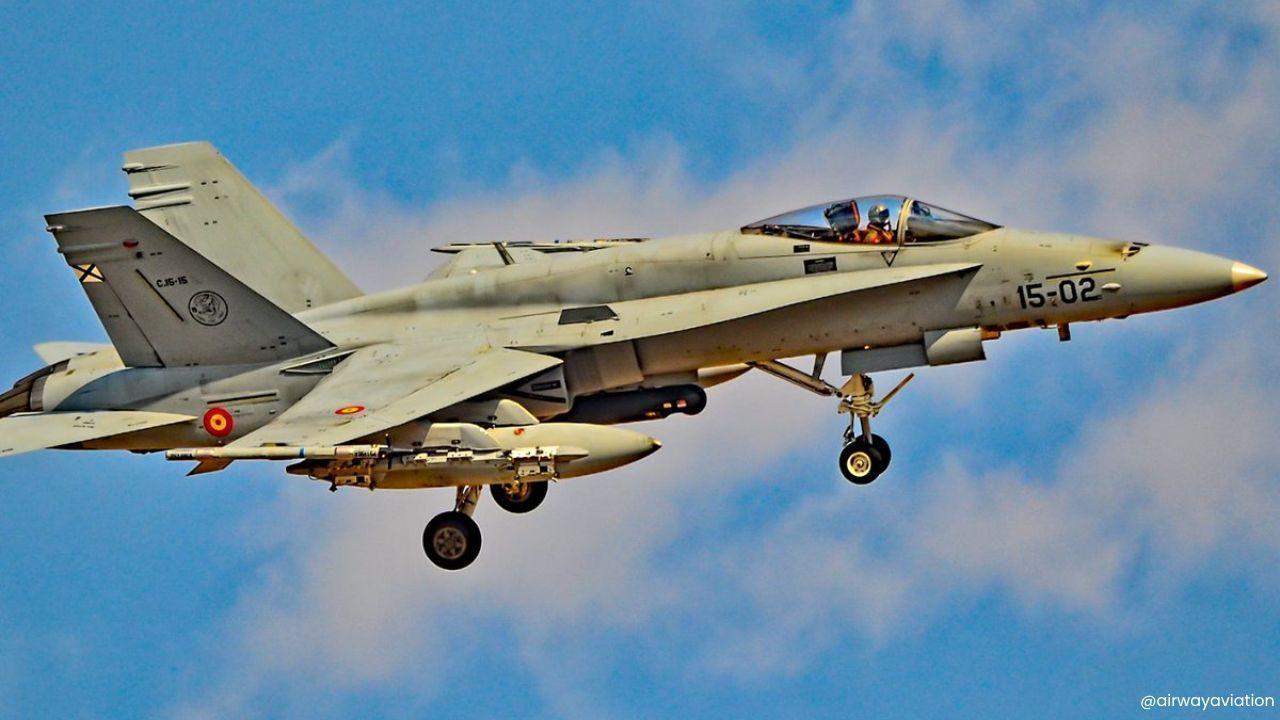
Photo : X / @airwayaviation
In a move that signals both urgency and calculated restraint, Spain has decided to extend the operational life of its ageing F/A-18 Hornet and AV-8B Harrier fighter jets, reshaping its near-term military aviation roadmap. The decision comes at a critical moment when global defense dynamics are shifting rapidly, and European nations are reassessing their reliance on next-generation fighter programs. By pushing the limits of its existing fleet, Spain is prioritizing operational continuity over immediate modernization. An approach that could redefine how mid-tier air forces manage capability gaps.
Spain’s legacy F/A-18 Hornet fleet, originally expected to retire around 2030, will now remain active until approximately 2035–2040. This extension reflects not just a tactical decision, but a necessity driven by delayed replacement programs and geopolitical considerations. With around 60–70 aircraft still in service, the Hornet remains a backbone of Spain’s air combat capability, even as maintenance complexity and costs are expected to rise significantly due to ageing avionics and support systems.This prolonged lifecycle also underscores a deeper challenge: sustaining older platforms in a modern warfare environment. Spain will need to invest in upgraded support infrastructure and advanced maintenance systems to ensure safety and readiness, making the extension both a financial and technological commitment.
Spain’s AV-8B Harrier II fleet is also set to remain in service until at least 2032, placing the country in a unique global position. As other operators phase out the iconic vertical takeoff jets, Spain is poised to become the final operator of the Harrier platform. This decision highlights the absence of viable alternatives, as the F-35B remains the only true successor capable of short takeoff and vertical landing operations. However, Spain’s hesitation to commit to the F-35 program amid political, economic, and strategic considerations has left its naval aviation future uncertain. The continued reliance on Harriers, therefore, is less about preference and more about preserving critical carrier-based capabilities in the absence of a clear replacement.
At the heart of Spain’s decision lies the delayed Future Combat Air System (FCAS), a sixth-generation fighter initiative involving France and Germany. With timelines now stretching into the 2040s and internal disagreements slowing progress, Spain faces a widening capability gap that cannot be filled immediately. In the interim, the Eurofighter Typhoon remains Spain’s primary modern combat aircraft, supported by ongoing procurement programs. Yet, even with additional orders, it cannot fully replace the operational roles of both Hornets and Harriers. This creates a complex balancing act between sustaining legacy systems and preparing for next-generation air combat.
Spain’s decision ultimately reflects a broader strategic philosophy maintaining flexibility in an uncertain defense landscape. By extending the life of its existing fleet, Madrid is buying time to evaluate future options, whether that involves re-engaging with fifth-generation platforms or doubling down on European-led programs.This approach, while pragmatic, comes with risks. Rising maintenance costs, technological obsolescence, and operational limitations could challenge long-term effectiveness. Yet, in a world where defense priorities are constantly evolving, Spain’s calculated delay may prove to be a strategic hedge rather than a compromise.
Spain fighter jets, F-18 Hornet extension, Harrier service life, European defense aviation, FCAS program









Advances in Aerospace Technology and Commercial Aviation Recovery
Insights into breakthrough aerospace technologies and commercial aviation’s recovery amid 2025 chall

Defense Modernization and Strategic Spending Trends
Explore key trends in global defense modernization and strategic military spending shaping 2025 secu

Tens of Thousands Protest in Serbia on Anniversary of Deadly Roof Collapse
Tens of thousands in Novi Sad mark a year since a deadly station roof collapse that killed 16, prote

Canada PM Carney Apologizes to Trump Over Controversial Reagan Anti-Tariff Ad
Canadian PM Mark Carney apologized to President Trump over an Ontario anti-tariff ad quoting Reagan,

The ad that stirred a hornets nest, and made Canadian PM Carney say sorry to Trump
Canadian PM Mark Carney apologizes to US President Trump after a tariff-related ad causes diplomatic

Bengaluru-Mumbai Superfast Train Approved After 30-Year Wait
Railways approves new superfast train connecting Bengaluru and Mumbai, ending a 30-year demand, easi



