Post by : Avinab Raana
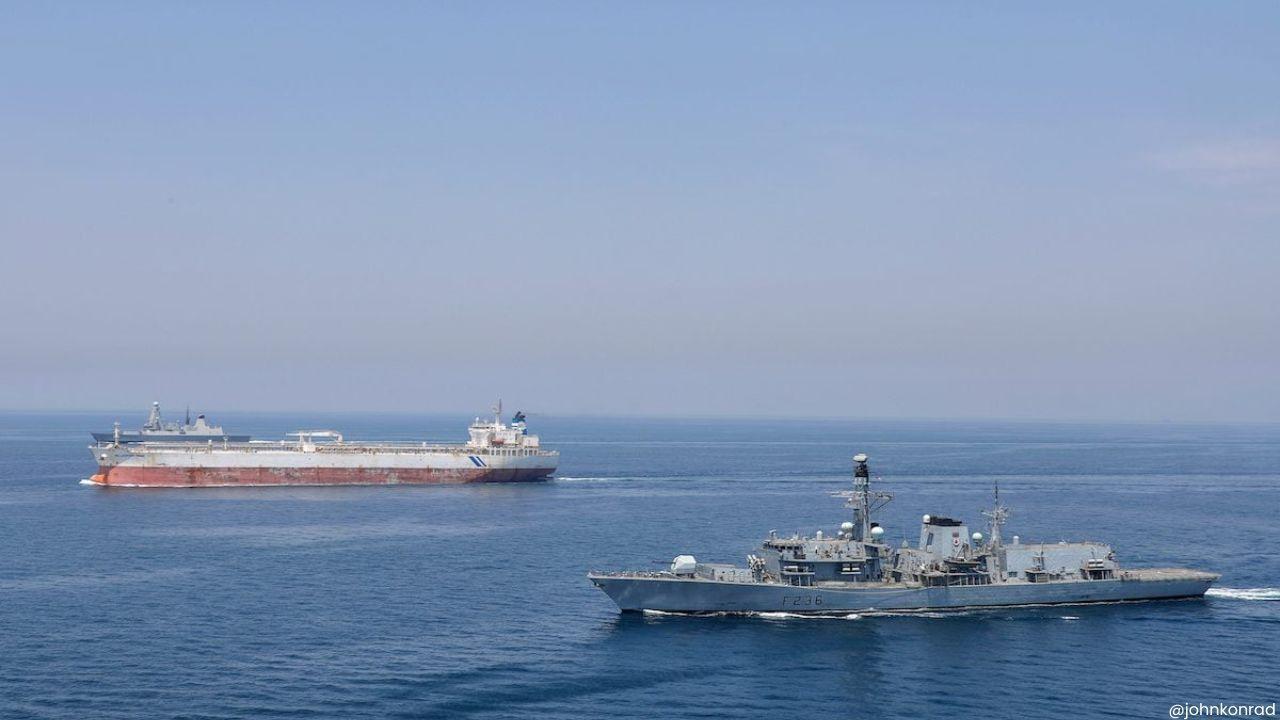
Photo : X / @johnkonrad
Global shipping is facing one of its most critical disruptions in recent years as vessels increasingly seek Iranian clearance to pass through the Strait of Hormuz. Once considered a vital and open maritime artery, the strait has now transformed into a high-risk zone where security concerns, geopolitical tensions, and operational uncertainty dominate decision-making. Shipowners are no longer relying solely on international maritime norms instead, they are navigating a complex environment where clearance from regional authorities has become a practical necessity to ensure safe passage.
As tensions escalate, several vessels are adjusting routes and even sailing closer to Iranian waters to reduce the risk of confrontation.
This emerging pattern highlights a dramatic shift in maritime behavior, where ship operators are prioritizing survival over efficiency. The need to coordinate with Iranian authorities either formally or informally has added a new layer of complexity to global shipping operations.
In some cases, reports suggest that ships are being asked to comply with specific transit conditions or pay substantial fees for safe passage, further complicating logistics planning and cost structures.
Perhaps the most immediate impact of the crisis is the sharp rise in war-risk insurance premiums. Rates have surged dramatically, in some cases reaching multiple percentage points of a vessel’s value levels rarely seen in modern shipping history.
For tanker operators, this translates into millions of dollars in additional costs for a single voyage. The financial burden has forced many shipowners to reconsider whether transiting the Strait of Hormuz is even viable, with some opting to delay shipments or reroute entirely. This surge in insurance costs is not just a financial challenge, it is a signal of how deeply risk perception has reshaped the maritime industry.
The Strait of Hormuz, which typically handles a significant share of global oil and gas shipments, is witnessing a dramatic drop in traffic. Reports indicate that vessel movement has slowed to a fraction of normal levels, with many ships idling at nearby ports or anchorages.
This slowdown is creating a ripple effect across global supply chains. Energy shipments are being delayed, cargo backlogs are building, and alternative routes are proving insufficient to handle the volume. The result is a growing imbalance between supply and demand, pushing energy prices higher and increasing pressure on global markets.
With fewer vessels willing to transit the strait and operational risks escalating, freight rates have surged across multiple shipping segments. Tanker and bulk carrier markets are experiencing heightened volatility, driven by longer routes, increased fuel consumption, and reduced vessel availability.
This cost escalation is cascading through the supply chain, affecting everything from crude oil shipments to consumer goods. For industries dependent on timely deliveries, the disruption is forcing a reassessment of sourcing strategies and inventory planning.
The Hormuz crisis is more than a regional conflict, it is a turning point for global maritime trade. The reliance on a single chokepoint for a significant portion of the world’s energy supply has exposed a fundamental vulnerability in international logistics.
As shipowners seek clearance, pay higher premiums, and navigate uncertain waters, the industry is being forced to adapt to a new reality where geopolitical risk is a constant factor. In the long term, this could accelerate diversification of trade routes, investment in alternative energy corridors, and a rethinking of global supply chain resilience. For now, however, the message is clear: the Strait of Hormuz is no longer just a passage, it is a pressure point shaping the future of global trade.
Strait of Hormuz crisis, shipping insurance surge, Iran clearance ships







Advances in Aerospace Technology and Commercial Aviation Recovery
Insights into breakthrough aerospace technologies and commercial aviation’s recovery amid 2025 chall

Defense Modernization and Strategic Spending Trends
Explore key trends in global defense modernization and strategic military spending shaping 2025 secu

Tens of Thousands Protest in Serbia on Anniversary of Deadly Roof Collapse
Tens of thousands in Novi Sad mark a year since a deadly station roof collapse that killed 16, prote

Canada PM Carney Apologizes to Trump Over Controversial Reagan Anti-Tariff Ad
Canadian PM Mark Carney apologized to President Trump over an Ontario anti-tariff ad quoting Reagan,

The ad that stirred a hornets nest, and made Canadian PM Carney say sorry to Trump
Canadian PM Mark Carney apologizes to US President Trump after a tariff-related ad causes diplomatic

Bengaluru-Mumbai Superfast Train Approved After 30-Year Wait
Railways approves new superfast train connecting Bengaluru and Mumbai, ending a 30-year demand, easi



