Post by : Avinab Raana
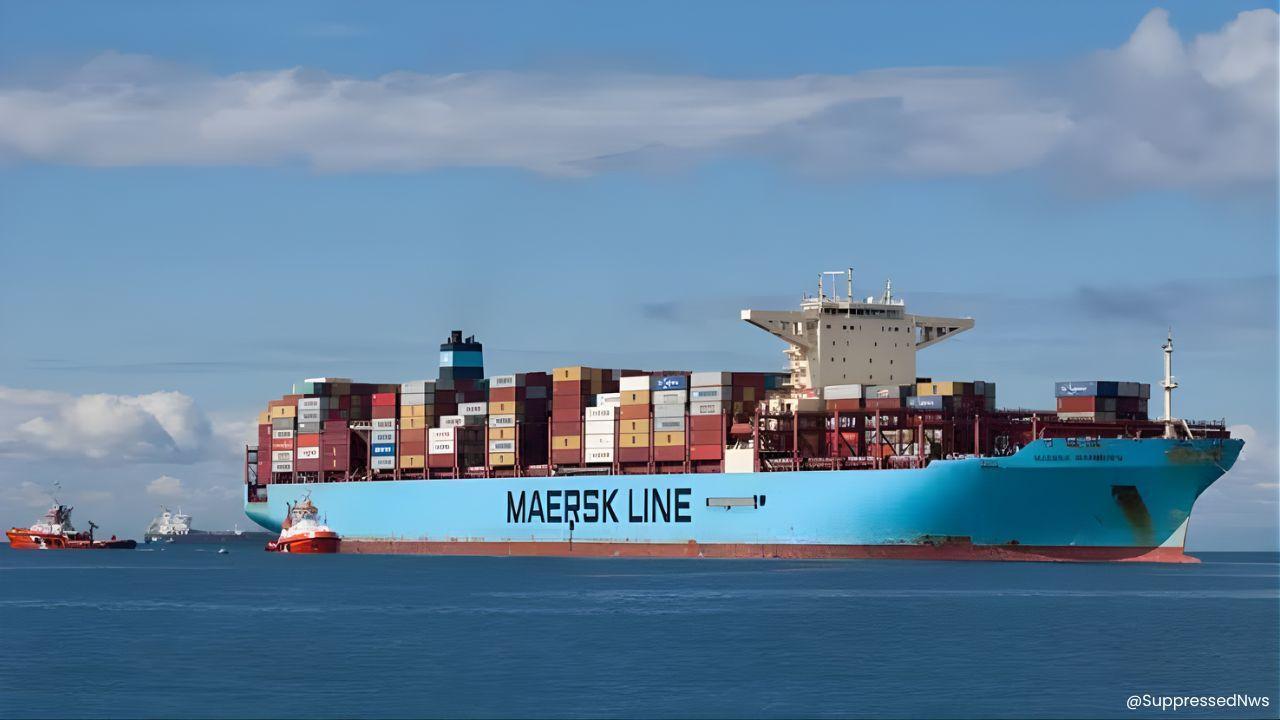
Photo : X / @SuppressedNws
Global shipping is once again navigating turbulent waters as Maersk introduces an emergency fuel surcharge in response to escalating geopolitical tensions. The move comes amid widespread disruption of critical maritime routes, forcing shipping lines to reroute vessels, extend transit times, and absorb surging fuel costs. As one of the world’s largest container carriers, Maersk’s decision sends a strong signal across the logistics ecosystem cost pressures are intensifying, and the ripple effects will be felt across global trade networks.
The emergency surcharge reflects the growing financial burden on shipping operators as vessels are diverted from traditional routes to avoid conflict zones. Longer voyages mean significantly higher fuel consumption, while volatile oil prices further compound the challenge. For carriers like Maersk, maintaining service reliability under these conditions requires immediate cost adjustments, making the surcharge a necessary step rather than a strategic choice.
This development highlights a critical vulnerability in global supply chains heavy dependence on specific maritime corridors. When these routes are disrupted, the cost implications are immediate and far-reaching.
The introduction of additional charges is expected to cascade through the entire supply chain, ultimately impacting businesses and consumers alike. Importers and exporters will face higher freight costs, which could translate into increased prices for goods across industries. From manufacturing inputs to retail products, the cost escalation is likely to be widespread, particularly for economies heavily reliant on maritime trade.
For logistics planners, the challenge is no longer just about efficiency but resilience. Companies are now being forced to rethink routing strategies, inventory management, and supplier diversification to mitigate risks associated with geopolitical disruptions.
Maersk’s move is indicative of a broader industry trend where shipping companies are rapidly adapting to an unpredictable global environment. Carriers are implementing dynamic pricing models, adjusting schedules, and investing in alternative routing strategies to maintain service continuity.
This shift marks a transition from traditional cost structures to more flexible, real-time pricing mechanisms that reflect evolving operational realities. While this approach helps carriers manage risks, it also introduces greater uncertainty for customers who must navigate fluctuating freight rates.
The emergency fuel surcharge underscores a fundamental shift in the economics of global shipping. Stability, once considered a hallmark of maritime trade, is increasingly being replaced by volatility driven by geopolitical and environmental factors. In this new landscape, adaptability and resilience are becoming the defining traits of successful logistics networks.
As the situation unfolds, the industry will be closely watching how long these surcharges remain in place and whether they signal a longer-term restructuring of shipping cost models. One thing is clear global trade is entering a phase where uncertainty is the new constant.
Maersk fuel surcharge, global shipping disruption, marine supply chains crisis, fuel cost shipping








Advances in Aerospace Technology and Commercial Aviation Recovery
Insights into breakthrough aerospace technologies and commercial aviation’s recovery amid 2025 chall

Defense Modernization and Strategic Spending Trends
Explore key trends in global defense modernization and strategic military spending shaping 2025 secu

Tens of Thousands Protest in Serbia on Anniversary of Deadly Roof Collapse
Tens of thousands in Novi Sad mark a year since a deadly station roof collapse that killed 16, prote

Canada PM Carney Apologizes to Trump Over Controversial Reagan Anti-Tariff Ad
Canadian PM Mark Carney apologized to President Trump over an Ontario anti-tariff ad quoting Reagan,

The ad that stirred a hornets nest, and made Canadian PM Carney say sorry to Trump
Canadian PM Mark Carney apologizes to US President Trump after a tariff-related ad causes diplomatic

Bengaluru-Mumbai Superfast Train Approved After 30-Year Wait
Railways approves new superfast train connecting Bengaluru and Mumbai, ending a 30-year demand, easi



