Post by : Avinab Raana
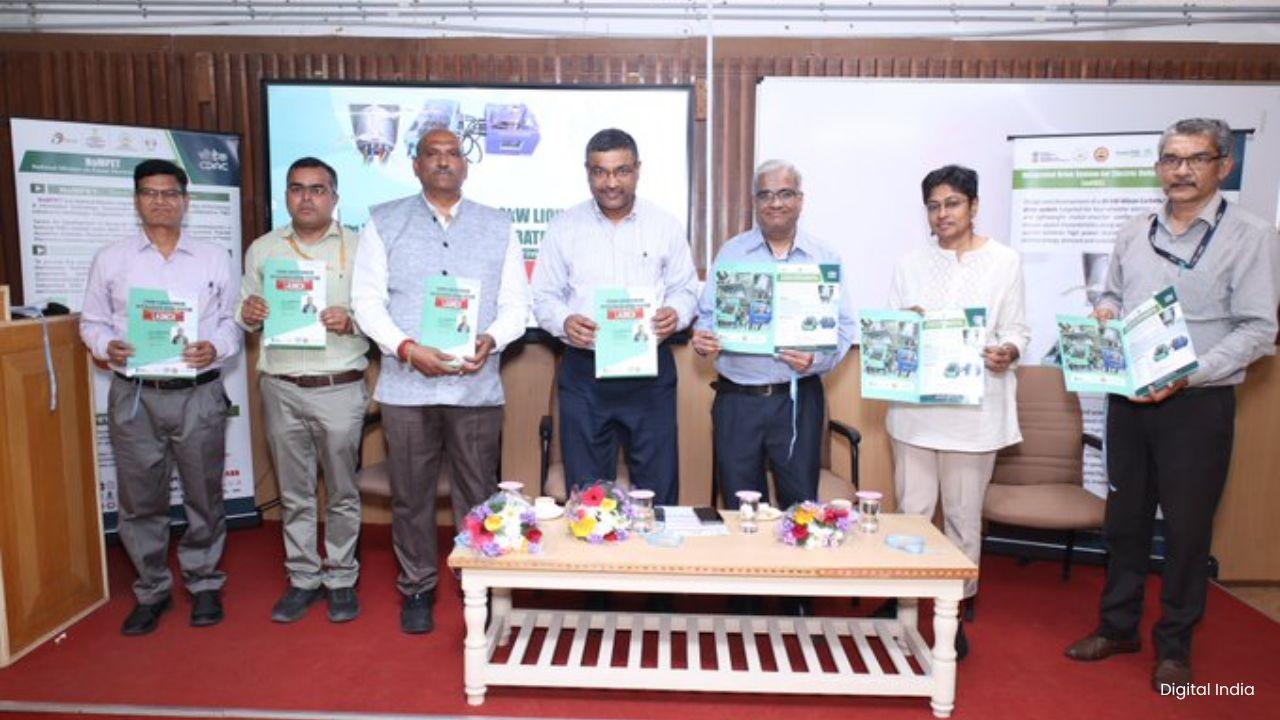
Photo : X / Digital India
In a defining moment for India’s electric mobility ecosystem, researchers and engineers have successfully developed and unveiled an indigenous 30 kW integrated drive system for electric vehicles. The announcement marks a significant stride in domestic electric vehicle technology, underscoring the nation’s intent to not only embrace sustainable transport but to lead in EV powertrain innovation. Designed and produced locally, the new system promises to enhance performance, reliability and affordability for a wide range of electric mobility applications, particularly in the light and mid-range segments.
The unveiling resonates across India’s automotive and clean energy sectors at a time when global EV demand is surging and countries are racing to secure their position in next-generation transport technology. By developing core EV components within national borders, India adds both strategic and economic value while reducing dependency on imported powertrain systems.
At the heart of every electric vehicle lies its drive system- the combination of motor, controller and transmission that converts electrical energy into efficient motion. The newly introduced 30 kW integrated drive system integrates these functions into a single, compact, and optimised unit that is well suited for light-commercial electric vehicles, compact passenger EVs and other urban transportation platforms.
This domestic innovation is a testament to India’s growing capabilities in EV engineering. By combining motor and controller into a streamlined system, manufacturers and assemblers can expect lower production complexity, reduced assembly costs and improved energy efficiency. For EV makers focused on affordability and scalability, such integrated systems are key enablers for broader electric adoption.
The indigenous drive system is not merely a technical milestone; it represents a strategic leap forward for India’s EV supply chain, manufacturing ecosystem and sustainability agenda. With governments pushing for cleaner urban mobility and manufacturers seeking cost-effective components, a locally developed powertrain solution can help accelerate EV deployment across cities and rural markets alike.
Reduced reliance on imported components also strengthens the domestic auto industry against global supply chain disruption, an advantage highlighted in recent years. Furthermore, engineering talent involved in developing such systems reinforces India’s capacity to innovate beyond assembly and into critical EV manufacturing technologies.
By enabling more efficient and cost-effective electric vehicles, the 30 kW integrated drive system contributes directly to reduced tailpipe emissions and cleaner urban air. Lower production costs can translate into more affordable EVs for consumers, enhancing adoption among first-time EV buyers and fleet operators.
In parallel, strengthening local manufacturing can spur job creation, technology diffusion and industrial competitiveness. EV drive systems like this one become building blocks for future innovations including higher-power systems, advanced thermal management and software-defined control architectures.
India’s unveiling of a homegrown EV drive system marks a milestone in its electric mobility journey. As automakers and startups integrate this 30 kW solution into commercial vehicles and passenger EVs, the nation edges closer to a self-reliant, sustainable EV ecosystem. With reduced dependence on imports, empowered local industries and enhanced technological capabilities, this latest advancement could shape the next chapter of India’s sustainable transportation narrative.
indigenous EV integrated drive system, 30 kW EV powertrain, India electric mobility tech








Advances in Aerospace Technology and Commercial Aviation Recovery
Insights into breakthrough aerospace technologies and commercial aviation’s recovery amid 2025 chall

Defense Modernization and Strategic Spending Trends
Explore key trends in global defense modernization and strategic military spending shaping 2025 secu

Tens of Thousands Protest in Serbia on Anniversary of Deadly Roof Collapse
Tens of thousands in Novi Sad mark a year since a deadly station roof collapse that killed 16, prote

Canada PM Carney Apologizes to Trump Over Controversial Reagan Anti-Tariff Ad
Canadian PM Mark Carney apologized to President Trump over an Ontario anti-tariff ad quoting Reagan,

The ad that stirred a hornets nest, and made Canadian PM Carney say sorry to Trump
Canadian PM Mark Carney apologizes to US President Trump after a tariff-related ad causes diplomatic

Bengaluru-Mumbai Superfast Train Approved After 30-Year Wait
Railways approves new superfast train connecting Bengaluru and Mumbai, ending a 30-year demand, easi



