Post by : Avinab Raana
Photo : X / @species_x
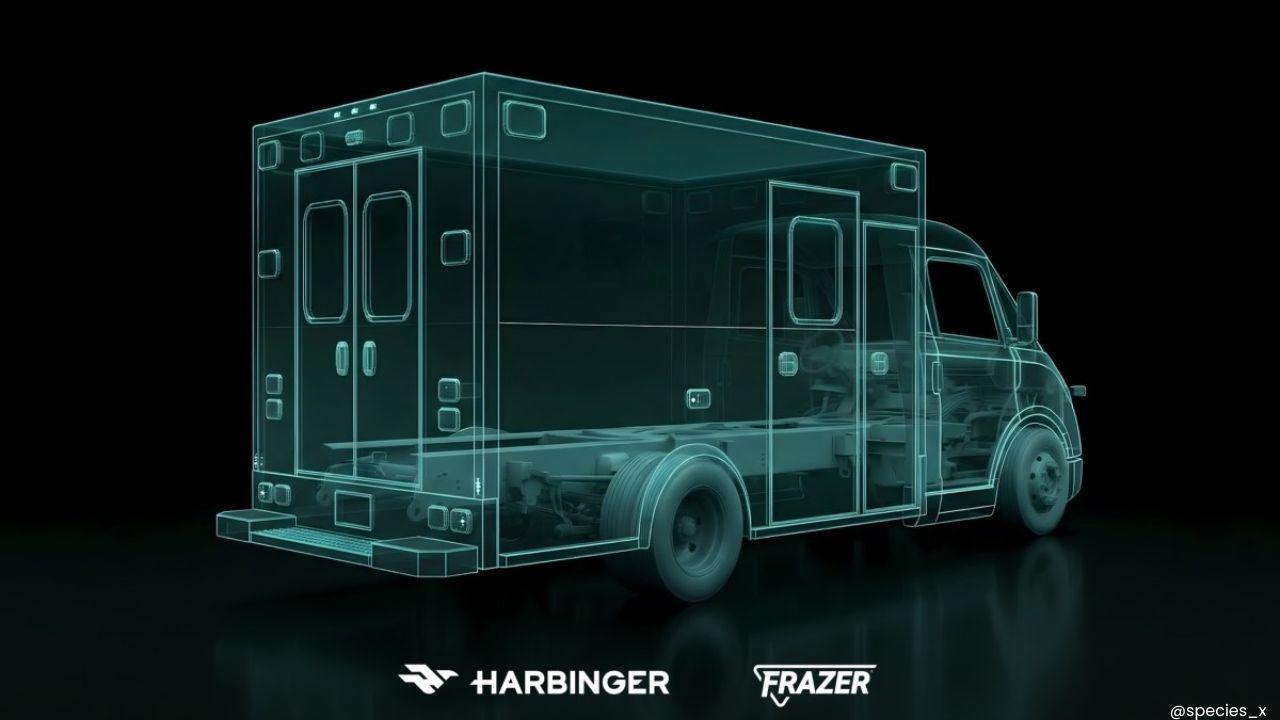
In a bold move that signals the next phase of electrified transportation, California-based startup Harbinger is stepping into the emergency vehicle market with hybrid-powered ambulances and mobile healthcare units. Known for its rapidly evolving electric and hybrid commercial vehicle platforms, the company is now leveraging its flexible chassis technology to serve one of the most demanding sectors emergency response. This transition marks a strategic shift, positioning Harbinger not just as a commercial EV player but as a disruptor in mission-critical mobility solutions where reliability and uptime are non-negotiable.
Unlike fully electric systems that often struggle with unpredictable duty cycles in emergency services, Harbinger’s hybrid architecture introduces a practical solution. The platform combines battery-electric performance with a range-extending engine, ensuring continuous operation even in high-pressure scenarios. This dual-power approach enables emergency vehicles to maintain uninterrupted energy supply for life-saving medical equipment while significantly reducing emissions during idling and operation. The result is a system designed to meet the realities of frontline healthcare logistics without compromising performance or readiness.
Harbinger’s collaboration with established mobile healthcare manufacturer Frazer is central to this expansion. The partnership aims to co-develop next-generation emergency medical service vehicles and mobile clinics that can deliver healthcare directly to communities. These vehicles are being designed with advanced auxiliary power systems, allowing them to function as fully equipped medical environments on wheels. The initiative reflects a broader industry shift toward decentralized healthcare delivery, where mobility and accessibility are becoming just as critical as infrastructure.
What sets Harbinger apart is its modular vehicle architecture, which has already proven adaptable across multiple industries—from delivery vans to recreational vehicles. This same flexibility now enables rapid deployment of emergency vehicles tailored to different operational needs. The company’s vertically integrated design approach, where key components like powertrain and battery systems are developed in-house, ensures better cost control, durability, and performance consistency. Such scalability is crucial as demand grows for specialized vehicles that can operate efficiently across urban and remote environments.
The push into hybrid emergency vehicles aligns with a growing global demand for mobile healthcare services. As hospitals face capacity constraints and healthcare systems seek cost-effective expansion models, mobile units are emerging as a viable alternative. These vehicles can serve as extensions of healthcare infrastructure, delivering diagnostics, treatment, and emergency response capabilities directly to underserved areas. Industry projections suggest that the number of mobile healthcare units could expand significantly over the next decade, reinforcing the strategic timing of Harbinger’s entry into this space.
Harbinger’s latest move is more than just a product launch, it represents a shift in how emergency transportation is conceptualized. By combining electrification with operational resilience, the company is addressing one of the biggest challenges in EV adoption for critical services. As cities and healthcare providers look for sustainable yet dependable solutions, hybrid emergency vehicles could emerge as the bridge between today’s diesel-heavy fleets and a fully electric future. If executed successfully, this innovation has the potential to redefine emergency response standards while accelerating the broader transition toward cleaner mobility.
Harbinger hybrid vehicles, emergency EV technology, hybrid ambulances, mobile healthcare vehicles, electric fleet innovation, sustainable emergency transport, EV startup Harbinger










Advances in Aerospace Technology and Commercial Aviation Recovery
Insights into breakthrough aerospace technologies and commercial aviation’s recovery amid 2025 chall

Defense Modernization and Strategic Spending Trends
Explore key trends in global defense modernization and strategic military spending shaping 2025 secu

Tens of Thousands Protest in Serbia on Anniversary of Deadly Roof Collapse
Tens of thousands in Novi Sad mark a year since a deadly station roof collapse that killed 16, prote

Canada PM Carney Apologizes to Trump Over Controversial Reagan Anti-Tariff Ad
Canadian PM Mark Carney apologized to President Trump over an Ontario anti-tariff ad quoting Reagan,

The ad that stirred a hornets nest, and made Canadian PM Carney say sorry to Trump
Canadian PM Mark Carney apologizes to US President Trump after a tariff-related ad causes diplomatic

Bengaluru-Mumbai Superfast Train Approved After 30-Year Wait
Railways approves new superfast train connecting Bengaluru and Mumbai, ending a 30-year demand, easi



