Post by : Amit
Introduction: UK's Future Combat Readiness Strengthened by F-35A Deliveries
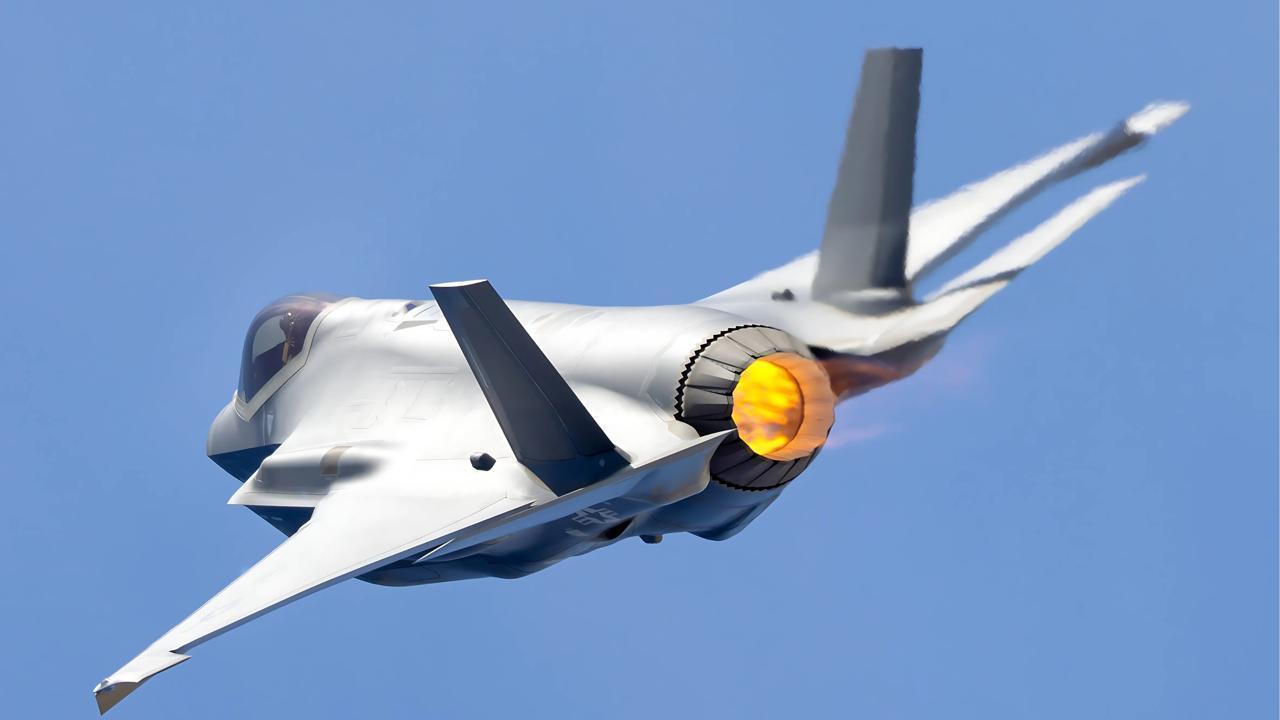
The United Kingdom is poised to bolster its combat air power with the future arrival of the Lockheed Martin F-35A fighter jets, scheduled to commence deliveries towards the end of this decade. The move signals a crucial step in enhancing the Royal Air Force’s (RAF) pilot training capacity and overall defence capabilities, as the country continues to evolve its military aviation strategy in response to global security challenges.
Background: UK’s Current F-35B Fleet and Expanding Capabilities
The UK is already a key operator of the short take-off and vertical landing (STOVL) variant, the F-35B, with the fleet primarily based at RAF Marham in Norfolk. These stealth fighters are central to the air wing of the Royal Navy’s Queen Elizabeth-class aircraft carriers. However, with shifting defence priorities and growing demand for advanced pilot training, the UK is now preparing to acquire the conventional take-off and landing F-35A model, marking a significant expansion of its combat air fleet.
Strategic Significance of F-35A Procurement
The F-35A, the conventional variant, is the most widely operated model globally, used by numerous air forces including those of the United States, Italy, Australia, and Japan. The RAF’s decision to include this variant reflects a strategic intent to align more closely with NATO allies while enhancing operational flexibility. It also signals the UK’s long-term commitment to maintaining cutting-edge airpower amid evolving threats.
Enhanced Pilot Training: A Top Priority
According to Lockheed Martin and British defence officials, one of the key drivers behind the acquisition is the need to expand pilot training capabilities. The UK currently faces a bottleneck in training sufficient numbers of fighter pilots to meet the demands of both the F-35 program and broader air defence operations. With the F-35A's arrival, the RAF plans to establish dedicated training pipelines that will allow new pilots to transition more effectively into frontline service.
Late Decade Deliveries: Building Towards 2030 Defence Goals
Deliveries of the F-35A are expected to begin in the latter part of the 2020s, aligning with the UK's 2030 Integrated Review defence objectives. The Integrated Review, which outlines the UK’s strategic defence ambitions, has emphasized the need for increased investment in advanced air capabilities, cyber warfare, and space operations. The addition of the F-35A complements this roadmap by providing a versatile platform for both training and operational deployments.
Aircraft Features: F-35A’s Technical Edge
The F-35A brings several technical advantages to the table. It offers superior stealth characteristics, advanced sensor fusion, and electronic warfare capabilities that enable pilots to dominate contested airspace. The aircraft's robust mission systems and networked warfare capabilities make it ideally suited for modern multi-domain operations. Additionally, its conventional design allows for longer-range missions and integration with allied air forces using the same platform.
Global Context: Strengthening NATO Interoperability
The UK’s decision to procure the F-35A also strengthens interoperability with NATO allies, many of whom operate or plan to operate the same variant. This strategic alignment is particularly important in the context of increasing security tensions in Eastern Europe and the Indo-Pacific. Commonality of equipment and training platforms ensures that the UK can participate effectively in joint operations and coalition air campaigns.
Domestic Industry Impact: Supporting the UK's Defence Ecosystem
While the F-35 is an American-designed aircraft, the UK plays a significant role in the global F-35 supply chain. BAE Systems, based in the UK, manufactures critical components including the rear fuselage for all F-35 models. The expansion of the UK’s F-35 fleet, including the A variant, is expected to generate additional work for British defence suppliers, supporting thousands of high-skilled jobs and contributing to the economy.
Infrastructure Development: Preparing for F-35A Integration
To accommodate the new aircraft, the Ministry of Defence is expected to invest in infrastructure upgrades at key air bases. Potential sites include RAF Marham and RAF Lakenheath, where joint US-UK operations already take place. New simulators, maintenance facilities, and support equipment tailored to the F-35A's specific requirements will be essential to the smooth integration of these jets into the RAF fleet.
Training Partnerships: Leveraging International Expertise
The UK plans to collaborate with other F-35A operating nations for advanced pilot training and knowledge sharing. Countries such as Italy and the United States have established robust F-35 training pipelines that could serve as models for the UK. Such partnerships are expected to reduce costs, accelerate pilot readiness, and enhance multinational cooperation.
Operational Flexibility: Expanding Mission Profiles
With both the F-35B and F-35A in service, the RAF will be able to deploy fighter squadrons across a broader range of mission profiles. While the F-35B offers unparalleled flexibility for carrier operations, the F-35A is better suited for traditional airbase operations and long-range strike missions. This dual capability allows the UK to respond more dynamically to diverse operational scenarios.
Sustainability and Lifecycle Considerations
The UK’s acquisition of the F-35A also comes with a focus on sustainability and cost control over the aircraft's life cycle. Lockheed Martin has been working to reduce the operational costs of the F-35 program through improved maintenance practices and supply chain efficiencies. The UK is expected to benefit from these advancements, ensuring that the fleet remains affordable and mission-ready over its decades-long service life.
Budget and Policy Implications: Investing in Air Dominance
The decision to procure additional fighters, including a new variant, reflects the UK government’s commitment to increasing defence spending, particularly in high-tech capabilities. The move aligns with the broader trend among NATO nations to boost military readiness in light of emerging geopolitical threats, including the war in Ukraine and tensions in the Indo-Pacific.
Challenges Ahead: Balancing Priorities
While the F-35A brings numerous advantages, defence analysts point out that the UK will need to balance this investment against other pressing defence needs, such as shipbuilding, cyber security, and unmanned systems. Careful management of resources and prioritization will be critical to ensuring the success of the expanded fighter fleet without compromising other strategic capabilities.
Looking Beyond 2030: The Next Generation Air Force
As the RAF integrates the F-35A into its force structure, it also continues to invest in the Future Combat Air System (FCAS), also known as Tempest—a next-generation fighter program expected to enter service in the 2030s. The experience gained from operating the F-35A, with its advanced sensor fusion and multi-role capabilities, is expected to directly benefit the development and operational concepts of future air combat systems.
Public and Political Reactions: Mixed but Supportive
The UK’s continued investment in the F-35 program has garnered a mix of public and political reactions. While there is broad support for maintaining a strong defence posture, some voices have raised concerns about defence spending priorities and transparency in procurement processes. Nonetheless, the government maintains that the F-35 fleet is a cornerstone of national security and international commitments.
Conclusion: A Step Toward a Stronger, Smarter RAF
The UK’s decision to procure the F-35A is more than just an aircraft purchase—it is a strategic investment in future airpower, interoperability, and global security leadership. As the RAF prepares for the aircraft’s arrival in the late 2020s, the focus will remain on building the infrastructure, training capacity, and operational readiness necessary to ensure that the UK remains at the forefront of 21st-century air combat.
With these developments, Britain is not only reinforcing its own defences but also strengthening its role as a key player within NATO and the broader international security framework—charting a flight path toward a more secure and capable future.
NATO, UK, Future Combat










Advances in Aerospace Technology and Commercial Aviation Recovery
Insights into breakthrough aerospace technologies and commercial aviation’s recovery amid 2025 chall

Defense Modernization and Strategic Spending Trends
Explore key trends in global defense modernization and strategic military spending shaping 2025 secu

Tens of Thousands Protest in Serbia on Anniversary of Deadly Roof Collapse
Tens of thousands in Novi Sad mark a year since a deadly station roof collapse that killed 16, prote

Canada PM Carney Apologizes to Trump Over Controversial Reagan Anti-Tariff Ad
Canadian PM Mark Carney apologized to President Trump over an Ontario anti-tariff ad quoting Reagan,

The ad that stirred a hornets nest, and made Canadian PM Carney say sorry to Trump
Canadian PM Mark Carney apologizes to US President Trump after a tariff-related ad causes diplomatic

Bengaluru-Mumbai Superfast Train Approved After 30-Year Wait
Railways approves new superfast train connecting Bengaluru and Mumbai, ending a 30-year demand, easi



