Post by : Avinab Raana
Photo : X / ST Foreign Desk
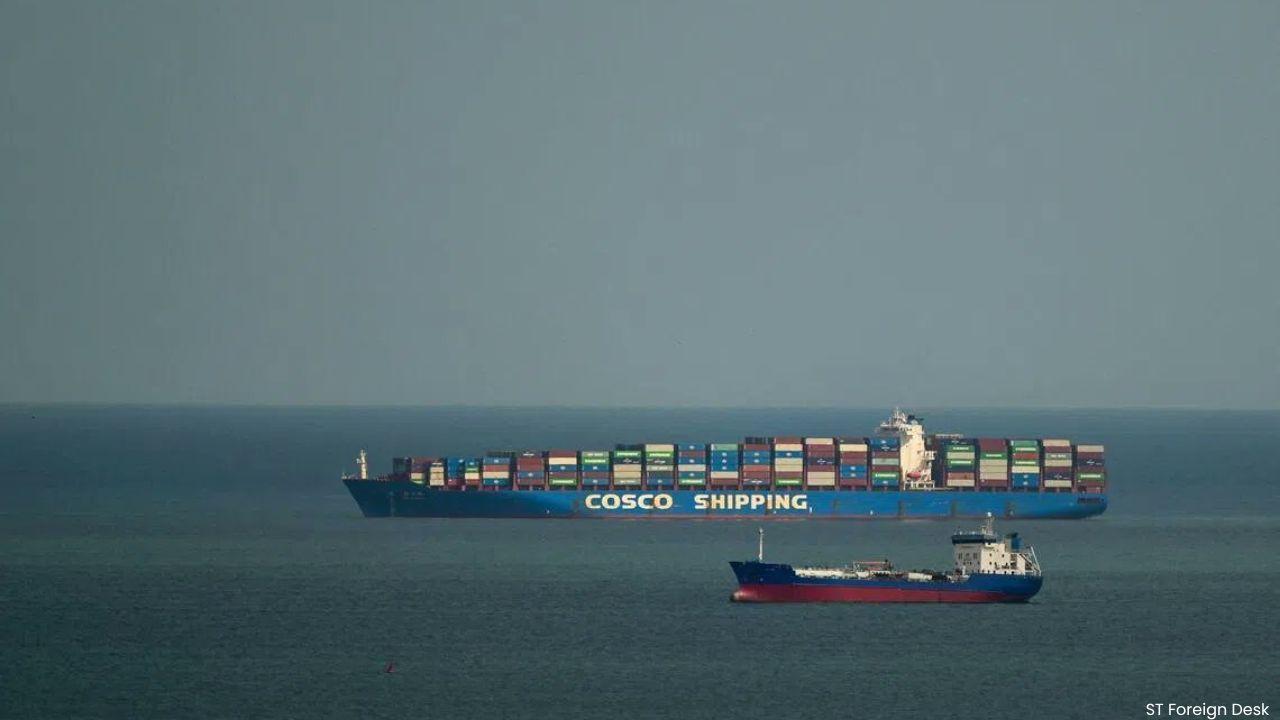
Global container shipping has entered a new phase of disruption as Evergreen and Cosco Shipping move to cancel major services connecting Asia with the Middle East. The decision, affecting critical Ocean Alliance routes, reflects the growing instability across one of the world’s most important trade corridors. With regional conflict intensifying and maritime risks rising, shipping lines are now prioritizing safety and operational viability over maintaining traditional schedules.
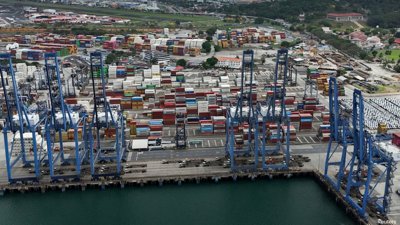
Two out of three major container loops linking Asia to the Gulf region have been discontinued, signaling a sharp contraction in direct shipping capacity. The affected services previously connected some of the busiest ports in Asia including Shanghai, Ningbo, and Singapore with key Middle Eastern hubs such as Jebel Ali, Dammam, and Umm Qasr.This withdrawal represents a significant reduction in connectivity, forcing cargo owners and logistics providers to rethink routing strategies almost overnight.
The cancellations come amid escalating geopolitical tensions that have already left a large number of container vessels stranded in the Arabian Gulf. With maritime traffic facing restrictions and security risks increasing, carriers are unwilling to expose vessels and crew to uncertain operating conditions.
The situation highlights how quickly conflict can disrupt global shipping networks, especially in regions that serve as vital links between production hubs and consumption markets.
With direct services being pulled, shipping lines are rapidly shifting toward alternative routing strategies. Instead of sailing directly into Gulf ports, vessels are increasingly diverting cargo via intermediate hubs such as ports in Oman or the UAE, or even rerouting via longer global pathways. In some cases, overland logistics solutions through Turkey and Red Sea terminals are being explored, reflecting a broader transformation in how cargo is moved when traditional sea routes become unreliable.
Despite the widespread service cancellations, one Asia–Middle East loop within the Ocean Alliance remains operational, albeit with significant adjustments. This service avoids the most high-risk zones, turning back before entering sensitive waters and relying on safer regional ports to maintain limited connectivity. This selective approach underscores a new reality in shipping—services are no longer defined solely by efficiency but by risk management and adaptability.
The suspension of these services is expected to have a cascading impact on global supply chains. Reduced capacity leads to higher freight rates, longer transit times, and increased congestion at alternative hubs. Businesses relying on timely deliveries are now facing delays and rising costs, while logistics providers are scrambling to find viable alternatives in a rapidly changing environment.
The decision by Evergreen and Cosco to cut Asia–Middle East services marks a defining moment in the current shipping crisis. It reflects a broader shift where geopolitical risks are reshaping trade routes, forcing the industry to adapt at an unprecedented pace. As uncertainty continues, the future of global shipping will depend on flexibility, resilience, and the ability to navigate an increasingly complex and fragmented maritime landscape.
Evergreen Cosco services halted, Asia Middle East shipping crisis, container shipping disruption 2026, Ocean Alliance routes cancelled, Gulf trade impact shipping, maritime logistics crisis, container vessel rerouting





Advances in Aerospace Technology and Commercial Aviation Recovery
Insights into breakthrough aerospace technologies and commercial aviation’s recovery amid 2025 chall

Defense Modernization and Strategic Spending Trends
Explore key trends in global defense modernization and strategic military spending shaping 2025 secu

Tens of Thousands Protest in Serbia on Anniversary of Deadly Roof Collapse
Tens of thousands in Novi Sad mark a year since a deadly station roof collapse that killed 16, prote

Canada PM Carney Apologizes to Trump Over Controversial Reagan Anti-Tariff Ad
Canadian PM Mark Carney apologized to President Trump over an Ontario anti-tariff ad quoting Reagan,

The ad that stirred a hornets nest, and made Canadian PM Carney say sorry to Trump
Canadian PM Mark Carney apologizes to US President Trump after a tariff-related ad causes diplomatic

Bengaluru-Mumbai Superfast Train Approved After 30-Year Wait
Railways approves new superfast train connecting Bengaluru and Mumbai, ending a 30-year demand, easi



