
Post by : Saif
Europe’s five main military powers have agreed to work together to develop low-cost air defence systems. The decision was announced after a meeting of defence ministers in Krakow, Poland. The countries involved are France, Germany, Italy, Poland, and Britain.
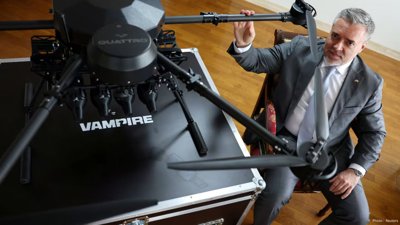
The project aims to bring new and affordable air defence tools into production within 12 months. These systems may include autonomous drones and low-cost missiles designed to stop enemy aircraft or drones. Leaders say the goal is to make defence faster, cheaper, and more effective.
The war in Ukraine has played a big role in this decision. The conflict has shown how small, smart drones can stop larger and more expensive weapons. Ukraine has used interceptor drones to defend its cities and soldiers. European leaders want to learn from this experience and improve their own defence systems.
The initiative is called “Low-Cost Effectors and Autonomous Platforms,” or LEAP. In simple terms, it focuses on building unmanned systems that can act on their own and carry out missions. An “effector” in military language means a tool that creates a physical impact, such as a missile or drone.
British Defence Minister Luke Pollard said the project includes a multi-million euro commitment. He expressed hope that the first systems would be ready for production within a year. Poland’s Defence Minister Wladyslaw Kosiniak-Kamysz also described the agreement as an important step toward joint production and joint purchasing of these systems.
This cooperation comes at a time when Europe is working to strengthen its own security. Some European leaders have raised concerns about relying too much on the United States for protection. By investing in shared defence projects, Europe hopes to become more independent and better prepared for future threats.
Working together also helps lower costs. Instead of each country building separate systems, they can share research, technology, and production. This not only saves money but also speeds up development.
The project’s first results are expected by 2027. Officials believe that these new systems will provide strong protection at a lower price compared to traditional air defence missiles.
The move shows that Europe is adapting to modern warfare. Drones and smart technology are changing how wars are fought. Countries now see the need for faster, flexible, and affordable defence solutions.
In the coming years, this joint effort may shape the future of European security. By focusing on innovation and cooperation, Europe’s top military powers hope to build a safer and more self-reliant continent.
#trending #latest #EuropeDefense #AirDefence #MilitaryTechnology #Drones #UkraineWar #EuropeanUnion #Security #armustnews









Advances in Aerospace Technology and Commercial Aviation Recovery
Insights into breakthrough aerospace technologies and commercial aviation’s recovery amid 2025 chall

Defense Modernization and Strategic Spending Trends
Explore key trends in global defense modernization and strategic military spending shaping 2025 secu

Tens of Thousands Protest in Serbia on Anniversary of Deadly Roof Collapse
Tens of thousands in Novi Sad mark a year since a deadly station roof collapse that killed 16, prote

Canada PM Carney Apologizes to Trump Over Controversial Reagan Anti-Tariff Ad
Canadian PM Mark Carney apologized to President Trump over an Ontario anti-tariff ad quoting Reagan,

The ad that stirred a hornets nest, and made Canadian PM Carney say sorry to Trump
Canadian PM Mark Carney apologizes to US President Trump after a tariff-related ad causes diplomatic

Bengaluru-Mumbai Superfast Train Approved After 30-Year Wait
Railways approves new superfast train connecting Bengaluru and Mumbai, ending a 30-year demand, easi



