Post by : Shivani
The ongoing tensions between Azerbaijan and Russia have drawn global attention, particularly as advancements in drone technology are rapidly transforming modern warfare. This crisis offers a lens into how unmanned systems are changing border conflicts and military strategies worldwide.
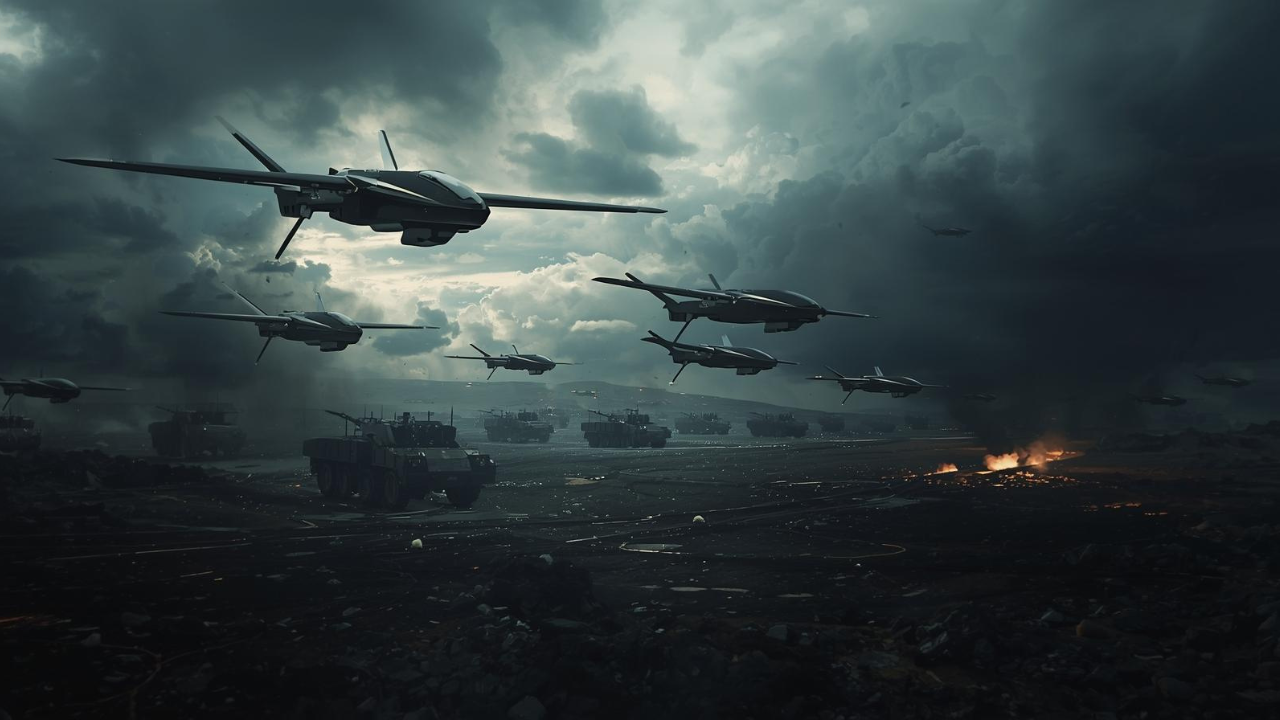
Drones, or unmanned aerial vehicles (UAVs), have evolved from basic surveillance tools to sophisticated platforms capable of precision strikes. In the Azerbaijan-Russia border crisis, these drones have been deployed to gather intelligence, monitor troop movements, and, in some cases, execute targeted attacks without risking human life.
The advantage of drones lies in their agility, cost-effectiveness, and ability to operate in hazardous conditions. Unlike traditional aircraft, drones can loiter over conflict zones for extended periods, providing real-time reconnaissance and rapid-response capabilities to commanders on the ground.
Recent innovations have significantly enhanced the capabilities of military drones. Key technologies include:
The Azerbaijan-Russia scenario exemplifies how drone technology reshapes traditional military tactics. Key impacts include:
The integration of advanced drones in border conflicts has implications beyond the battlefield. Nations are investing heavily in drone research, anticipating that UAVs will redefine regional security balances. This crisis highlights the broader geopolitical concerns:
Despite the advantages, reliance on drones introduces risks:
The Azerbaijan-Russia crisis is a microcosm of a broader transformation in military strategy. Analysts predict drones will continue to play a critical role in border disputes, with future advancements likely including fully autonomous swarms, enhanced AI-driven decision-making, and integration with satellite systems for global reach.
As nations adapt to these changes, policymakers, defense planners, and international organizations must rethink conventional doctrines to address the evolving nature of conflict.
Drone technology is no longer a supplementary asset—it is a central element of modern warfare. The Azerbaijan-Russia crisis illustrates how UAVs are reshaping strategies, redefining military power, and influencing geopolitical calculations. Understanding these trends is essential for anticipating the next wave of border conflicts in an increasingly technologically driven world.
Azerbaijan-Russia Conflict Drone Technology Border Security Military Innovation UAV Warfare Defense Technology Modern Warfare








Advances in Aerospace Technology and Commercial Aviation Recovery
Insights into breakthrough aerospace technologies and commercial aviation’s recovery amid 2025 chall

Defense Modernization and Strategic Spending Trends
Explore key trends in global defense modernization and strategic military spending shaping 2025 secu

Tens of Thousands Protest in Serbia on Anniversary of Deadly Roof Collapse
Tens of thousands in Novi Sad mark a year since a deadly station roof collapse that killed 16, prote

Canada PM Carney Apologizes to Trump Over Controversial Reagan Anti-Tariff Ad
Canadian PM Mark Carney apologized to President Trump over an Ontario anti-tariff ad quoting Reagan,

The ad that stirred a hornets nest, and made Canadian PM Carney say sorry to Trump
Canadian PM Mark Carney apologizes to US President Trump after a tariff-related ad causes diplomatic

Bengaluru-Mumbai Superfast Train Approved After 30-Year Wait
Railways approves new superfast train connecting Bengaluru and Mumbai, ending a 30-year demand, easi



