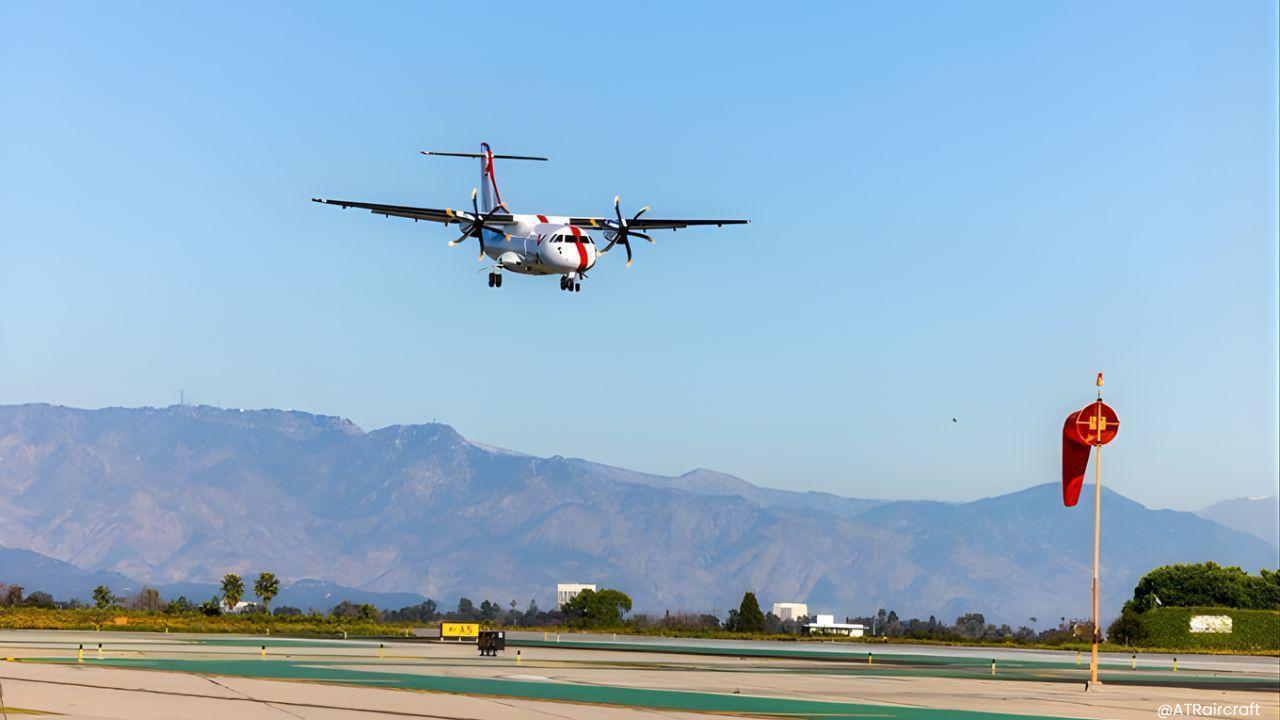
Post by : Avinab Raana
Photo : X / @ATRaircraft
In a significant move that could reshape the economics of regional aviation, ATR is working on extending the interval between its critical C-check maintenance cycles. The initiative reflects a growing industry push to reduce operational costs while maximizing aircraft availability. As airlines continue to face rising maintenance expenses and limited pricing flexibility, ATR’s strategy positions itself as a direct response to one of the sector’s most pressing challenges—keeping aircraft flying longer without compromising safety.
Currently, C-checks, one of the most comprehensive and time-intensive maintenance procedures are typically performed every two years. ATR is now targeting an extension that could stretch this interval to three years initially, with a long-term vision of reaching up to four years between checks.
This shift marks a major departure from conventional maintenance schedules, potentially redefining lifecycle management for turboprop aircraft. The approach is not about eliminating maintenance but optimizing it allowing airlines to operate their fleets more efficiently while consolidating maintenance work into fewer, more impactful sessions.
To achieve this extended interval, ATR is exploring targeted design improvements in specific structural components. The focus is on enhancing resistance to fatigue and corrosion, two critical factors that traditionally require frequent inspections.
Rather than overhauling the entire aircraft, ATR’s strategy involves selective engineering refinements that allow certain components to safely withstand longer operational cycles. This reflects a broader trend in aviation engineering, where smarter design and predictive maintenance are replacing rigid, time-based servicing models.
For operators, the implications are substantial. Fewer C-checks mean reduced downtime, lower labor costs, and improved aircraft availability. In an industry where every hour of flight time translates into revenue, even marginal gains in uptime can have a significant financial impact.
This is especially critical for regional airlines operating ATR 42 and ATR 72 fleets, where profit margins are often tight and ticket pricing remains sensitive. By extending maintenance intervals, ATR is effectively offering airlines a way to improve profitability without increasing fares, a key advantage in competitive markets.
ATR’s move comes at a time when maintenance costs across the aviation sector are climbing due to higher labor rates, supply chain constraints, and increasing component prices.
In response, manufacturers and MRO providers are shifting toward more efficient maintenance models that prioritize predictive analytics, component durability, and optimized scheduling. ATR’s initiative fits squarely within this transformation, signaling a future where maintenance is less frequent but more strategic.
If successfully implemented, ATR’s extended C-check interval could set a new industry benchmark for turboprop maintenance. With a global fleet of over 1,300 aircraft, the potential impact is massive not just for operators, but for the entire MRO ecosystem.
As aviation continues to evolve, efficiency will remain the defining metric of success. ATR’s approach demonstrates that innovation in maintenance, not just aircraft design can unlock new levels of performance, cost savings, and operational resilience. For regional aviation, this could be the beginning of a smarter, more sustainable era.
ATR maintenance interval, C-check extension aviation, turboprop MRO strategy, ATR 72 maintenance, aviation MRO innovation






Advances in Aerospace Technology and Commercial Aviation Recovery
Insights into breakthrough aerospace technologies and commercial aviation’s recovery amid 2025 chall

Defense Modernization and Strategic Spending Trends
Explore key trends in global defense modernization and strategic military spending shaping 2025 secu

Tens of Thousands Protest in Serbia on Anniversary of Deadly Roof Collapse
Tens of thousands in Novi Sad mark a year since a deadly station roof collapse that killed 16, prote

Canada PM Carney Apologizes to Trump Over Controversial Reagan Anti-Tariff Ad
Canadian PM Mark Carney apologized to President Trump over an Ontario anti-tariff ad quoting Reagan,

The ad that stirred a hornets nest, and made Canadian PM Carney say sorry to Trump
Canadian PM Mark Carney apologizes to US President Trump after a tariff-related ad causes diplomatic

Bengaluru-Mumbai Superfast Train Approved After 30-Year Wait
Railways approves new superfast train connecting Bengaluru and Mumbai, ending a 30-year demand, easi



