Post by : Avinab Raana
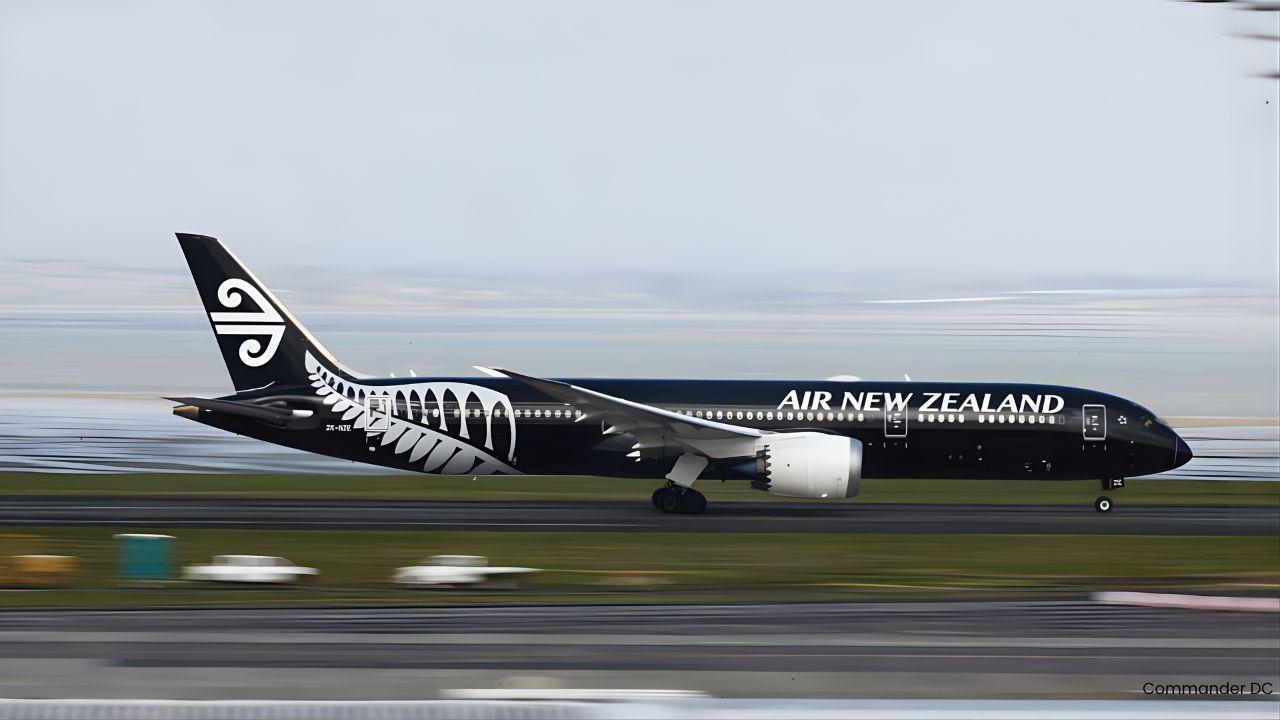
Photo : X / Commander DC
Air New Zealand has revealed a significant half-year financial loss, attributing much of the shortfall to costly engine issues that disrupted operations and inflated maintenance expenditure. In an environment where global airlines are battling rising costs and fluctuating demand, this announcement highlights how technical reliability directly influences an airline’s bottom line particularly when aircraft spend more time in maintenance than in revenue service.
The carrier’s performance figures for the first half of fiscal 2026 underline the challenges faced by legacy airlines managing complex fleets while striving to maintain high service levels and operational reliability.
Air New Zealand’s latest interim financial results show a marked departure from prior profitability, with the airline crossing into the red for the six-month period. While specific numbers vary depending on reporting formats, the core message is clear: earnings were significantly weighed down by unplanned costs and revenue impacts linked to engine performance setbacks.
Analysts note that this loss sizable for a carrier of Air New Zealand’s stature reflects a combination of heightened maintenance spend, flight cancellations, schedule disruptions and underutilised aircraft capacity. For passengers, these operational hiccups translated into delays and reduced availability on certain international and domestic routes.
At the heart of the airline’s difficulties are recurring airline engine issues on select aircraft types. These troubles prompted an uptick in unscheduled shop visits, extended maintenance cycles and parts procurement challenges, all of which added pressure to operating costs. With engines sidelined for extended diagnostics and repairs, the airline was forced to adjust schedules and reassign aircraft, compounding revenue impacts.
The situation underscores one of the most pressing challenges in modern aviation MRO: balancing fleet reliability with cost-effective maintenance strategies. Engines, arguably the most complex and high-value components on commercial aircraft, drive not only technical performance but also significant financial risk when reliability falters.
Operationally, Air New Zealand’s engine woes manifested in schedule instability and service interruptions on key routes, especially those reliant on affected aircraft types. Frequent flyers and holiday travellers alike faced cancellations and rebooking hurdles as the airline grappled with limited availability of serviceable aircraft. These disruptions, while addressed through contingency scheduling, nonetheless eroded customer confidence and added to reputational strain.
Industry observers point out that when core assets like engines require unexpected maintenance, airline operations especially tight long-haul schedules become harder to manage without significant cost and customer experience implications.
In response to the financial headwinds and technical setbacks, Air New Zealand’s leadership emphasised a renewed focus on proactive aviation MRO impact mitigation. This includes deeper collaboration with engine OEM partners, investment in predictive maintenance analytics and revised parts inventory strategies to reduce turnaround times. The airline is also evaluating longer-term MRO partnerships and in-house capability enhancements to better manage future contingencies.
These strategic shifts aim to drive greater reliability and cost transparency in maintenance operations, while aligning with broader efforts to safeguard performance across the airline’s diverse route network.
Air New Zealand’s loss comes at a time when many carriers are balancing post-pandemic travel demand with rising operating costs. Engine reliability challenges, whether linked to specific models, parts availability or service backlogs have ripple effects across global aviation, affecting schedules, customer satisfaction and profitability.
For carriers investing heavily in fleet renewal, electrification exploration and digital transformation, all while maintaining legacy assets managing MRO risk has become a critical strategic imperative.
As the airline moves into the second half of its financial year, restoring operational stability and reinforcing maintenance readiness are expected to take centre stage. Air New Zealand’s leadership has stressed its commitment to regaining profitability through targeted cost control, efficient asset management and improved service reliability.
If the airline successfully navigates its engine challenges and enhances maintenance resilience, it can position itself for a stronger rebound and renewed confidence among travellers and investors alike
Air New Zealand half-year loss, airline engine issues, aviation MRO impact








Advances in Aerospace Technology and Commercial Aviation Recovery
Insights into breakthrough aerospace technologies and commercial aviation’s recovery amid 2025 chall

Defense Modernization and Strategic Spending Trends
Explore key trends in global defense modernization and strategic military spending shaping 2025 secu

Tens of Thousands Protest in Serbia on Anniversary of Deadly Roof Collapse
Tens of thousands in Novi Sad mark a year since a deadly station roof collapse that killed 16, prote

Canada PM Carney Apologizes to Trump Over Controversial Reagan Anti-Tariff Ad
Canadian PM Mark Carney apologized to President Trump over an Ontario anti-tariff ad quoting Reagan,

The ad that stirred a hornets nest, and made Canadian PM Carney say sorry to Trump
Canadian PM Mark Carney apologizes to US President Trump after a tariff-related ad causes diplomatic

Bengaluru-Mumbai Superfast Train Approved After 30-Year Wait
Railways approves new superfast train connecting Bengaluru and Mumbai, ending a 30-year demand, easi



