Post by : Saif
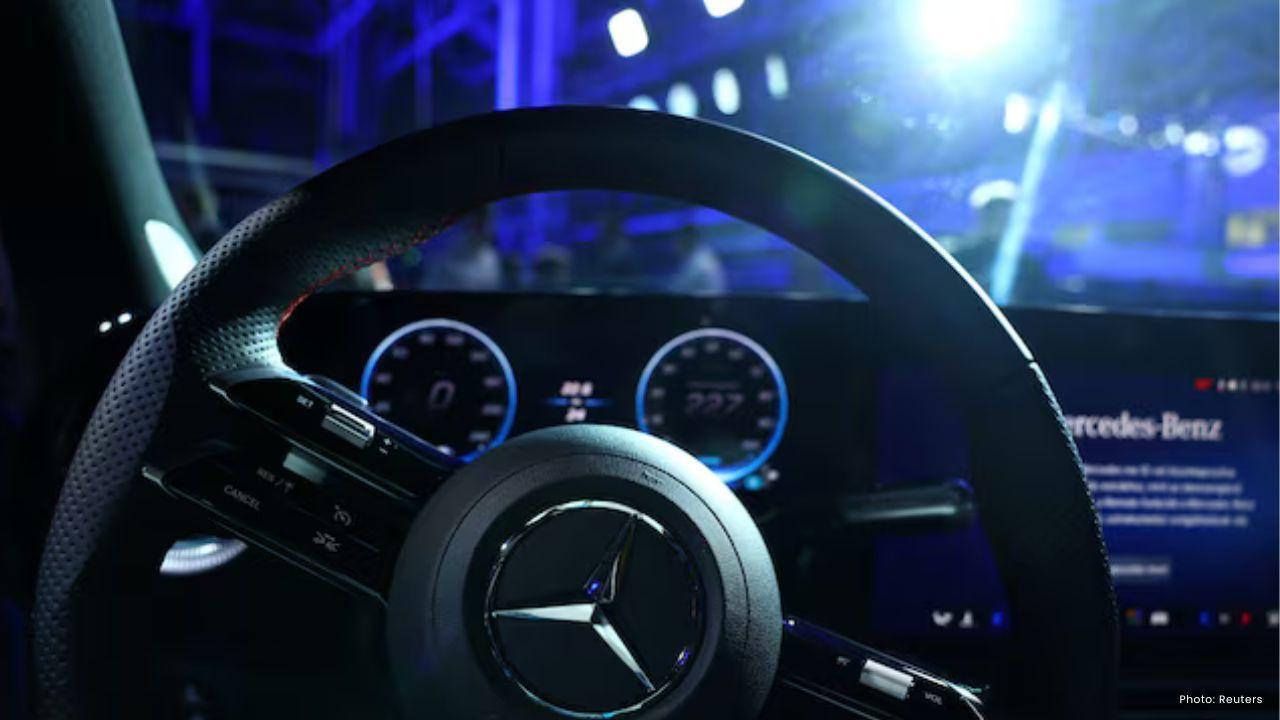
South Korea has imposed a major financial penalty on the German luxury carmaker Mercedes-Benz after regulators found that the company misled consumers about the batteries used in some of its electric vehicles. The country’s antitrust regulator said the company failed to provide accurate information about battery suppliers in certain models, leading to a fine worth millions of dollars.
The Korea Fair Trade Commission (KFTC) announced that Mercedes-Benz and its local unit in South Korea will have to pay 11.2 billion won, or about $7.6 million, for misleading practices related to electric vehicle battery information.
According to the regulator, Mercedes had provided internal sales guidelines to dealers claiming that all EQE and EQS electric vehicles were equipped with battery cells produced by Contemporary Amperex Technology Co Ltd (CATL), the world’s largest EV battery manufacturer.
However, investigators later found that some of these vehicles were actually fitted with batteries supplied by Farasis Energy, a Chinese battery company that is not among the world’s top ten battery producers.
Officials said this important information was omitted from official materials and was not clearly shared with dealers or customers. As a result, the regulator concluded that the company had misled buyers about a key component of the vehicles.
The issue gained attention after a serious electric vehicle fire incident in the city of Incheon in August 2024. The fire started in a Mercedes electric vehicle parked in an underground garage and spread quickly, damaging or destroying many other cars nearby. Investigators later discovered that the vehicle involved used a battery supplied by Farasis Energy.
The incident raised public concerns about the safety of electric vehicles and led authorities to investigate how car companies were communicating battery information to consumers.
During the investigation, regulators found that around 3,000 vehicles containing Farasis battery cells were sold in South Korea between June 2023 and August 2024. These sales generated about 281 billion won in revenue, according to the commission.
The fine imposed on Mercedes represents roughly 4 percent of the revenue from those vehicles, which is the maximum penalty allowed under the country’s consumer protection laws for such cases.
In addition to the financial penalty, the regulator said both Mercedes-Benz headquarters in Germany and its Korean unit would share responsibility for the issue. Authorities also stated that the case would be referred to prosecutors for further review because both organizations were involved in creating and distributing the sales materials.
The decision highlights growing scrutiny of electric vehicle manufacturers as governments and consumers demand greater transparency about vehicle components and safety.
Electric vehicles are becoming more popular around the world as countries try to reduce pollution and move toward cleaner transportation. However, the rapid growth of the EV market has also raised questions about battery safety, supply chains, and consumer information.
Batteries are one of the most important and expensive parts of an electric vehicle. The supplier, quality, and design of the battery can influence a vehicle’s performance, charging speed, durability, and safety.
Because of this, regulators believe consumers should have clear and accurate information about the battery systems used in their vehicles.
In South Korea, concerns about EV battery safety have grown in recent years after several high-profile fire incidents. These events have led the government to introduce stricter rules and encourage car manufacturers to disclose the battery brands used in their vehicles.
Authorities believe that better transparency can help consumers make informed decisions when purchasing electric cars.
The investigation also reflects a broader global trend in which regulators are paying closer attention to how companies advertise and promote electric vehicles. As EV sales grow rapidly, governments are trying to ensure that marketing claims are accurate and that consumers are not misled.
For Mercedes-Benz, the case represents another regulatory challenge. The company is one of the largest luxury car brands in the world and has been investing heavily in electric vehicles as part of its strategy to transition away from traditional gasoline engines.
Many major automakers are currently racing to develop new electric models as countries set deadlines to phase out petrol and diesel vehicles. Electric vehicles are expected to play a key role in reducing carbon emissions and combating climate change.
However, the shift toward electric mobility also requires new levels of transparency about technology and safety standards.
Industry experts say that trust will be crucial as more drivers switch from gasoline cars to electric vehicles. Buyers need confidence not only in vehicle performance but also in the safety and reliability of battery systems.
Regulatory actions like the one taken by South Korea may encourage automakers to provide clearer information about their technology and supply chains.
The fine against Mercedes sends a strong message that misleading information about key vehicle components will not be tolerated.
As the global EV market continues to grow, transparency and accountability are likely to become even more important for both manufacturers and regulators.
#trending #latest #armustnews #MercedesBenz #ElectricVehicles #EVBatteries #SouthKoreaNews #AutoIndustry #EVSafety #CleanEnergyCars #AutomotiveRegulation #GlobalAutoIndustry





Advances in Aerospace Technology and Commercial Aviation Recovery
Insights into breakthrough aerospace technologies and commercial aviation’s recovery amid 2025 chall

Defense Modernization and Strategic Spending Trends
Explore key trends in global defense modernization and strategic military spending shaping 2025 secu

Tens of Thousands Protest in Serbia on Anniversary of Deadly Roof Collapse
Tens of thousands in Novi Sad mark a year since a deadly station roof collapse that killed 16, prote

Canada PM Carney Apologizes to Trump Over Controversial Reagan Anti-Tariff Ad
Canadian PM Mark Carney apologized to President Trump over an Ontario anti-tariff ad quoting Reagan,

The ad that stirred a hornets nest, and made Canadian PM Carney say sorry to Trump
Canadian PM Mark Carney apologizes to US President Trump after a tariff-related ad causes diplomatic

Bengaluru-Mumbai Superfast Train Approved After 30-Year Wait
Railways approves new superfast train connecting Bengaluru and Mumbai, ending a 30-year demand, easi



